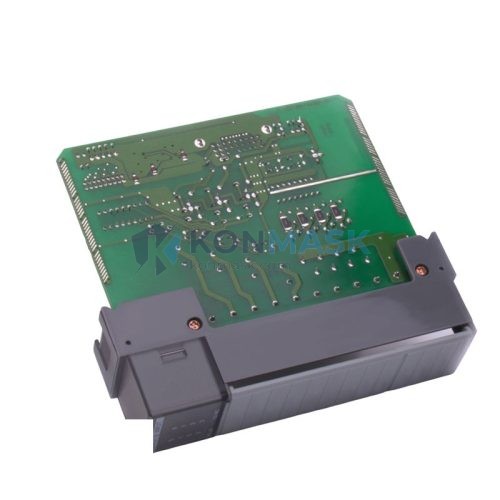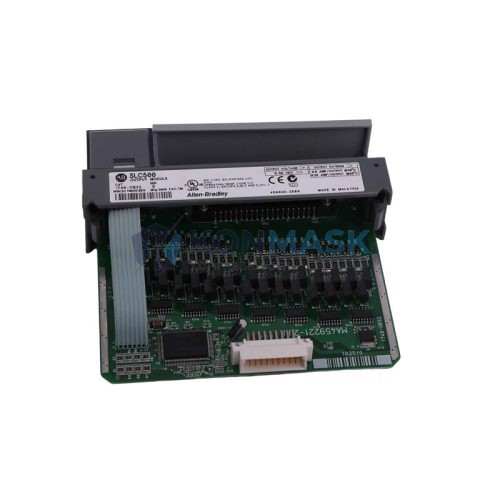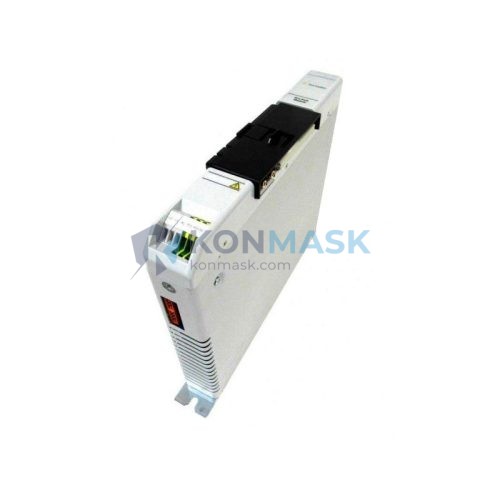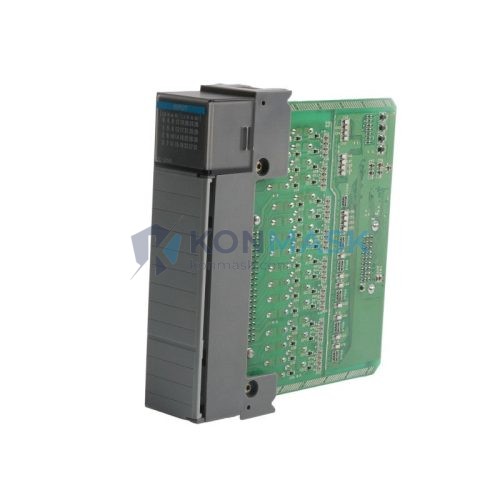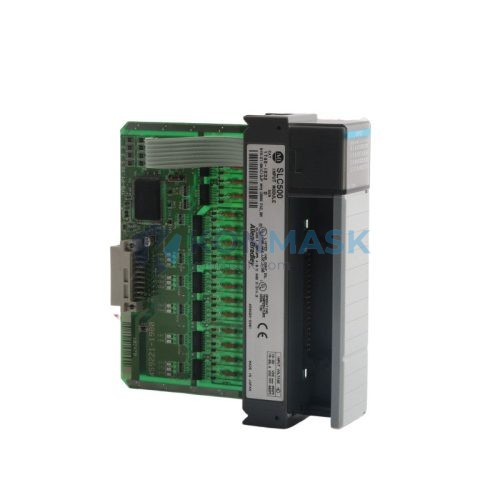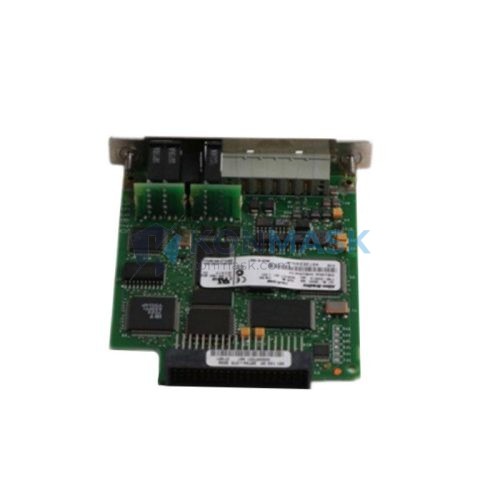

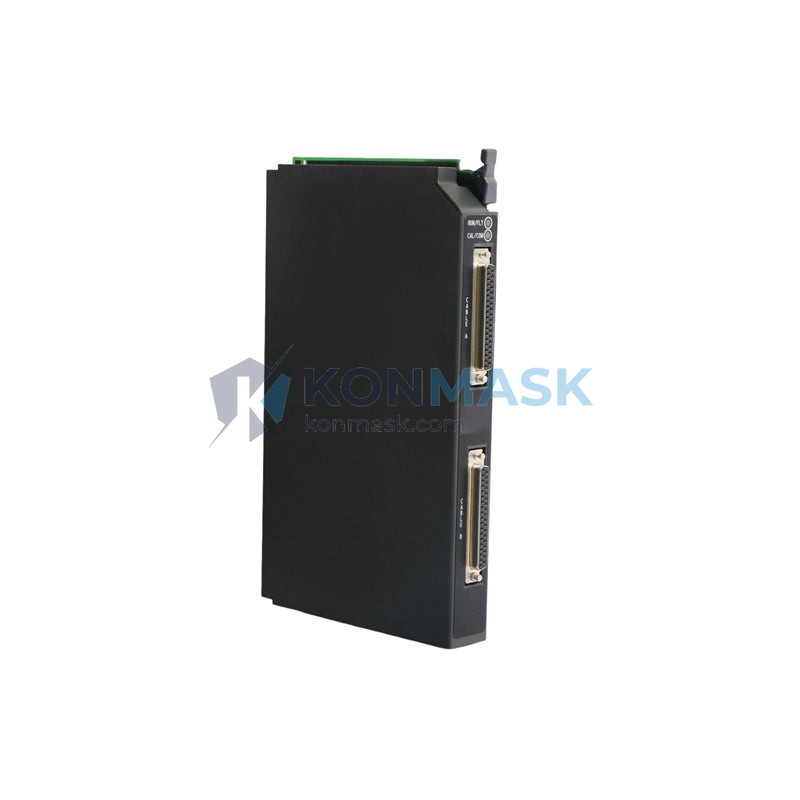
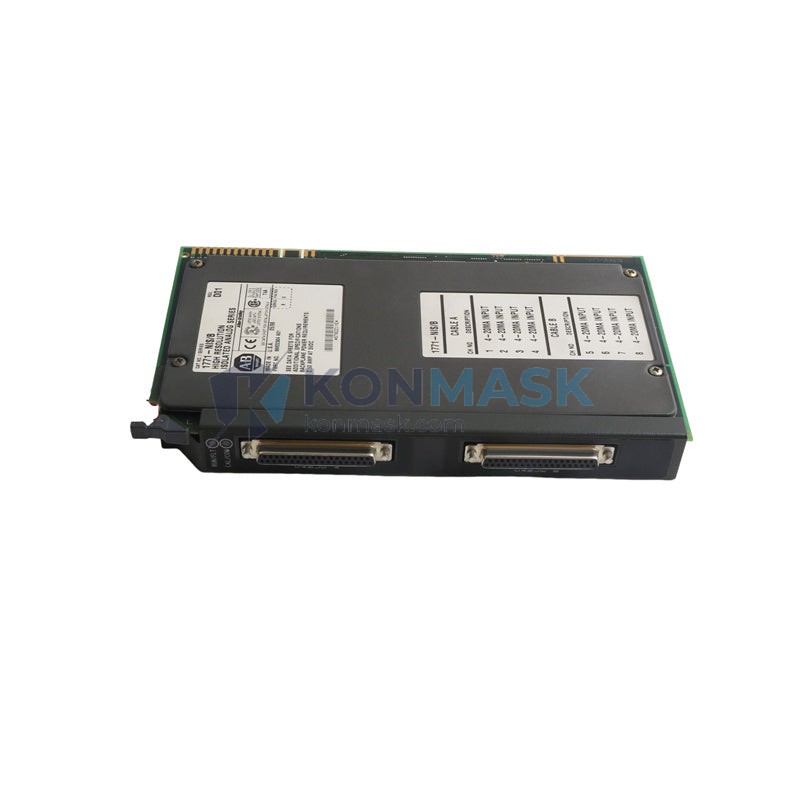
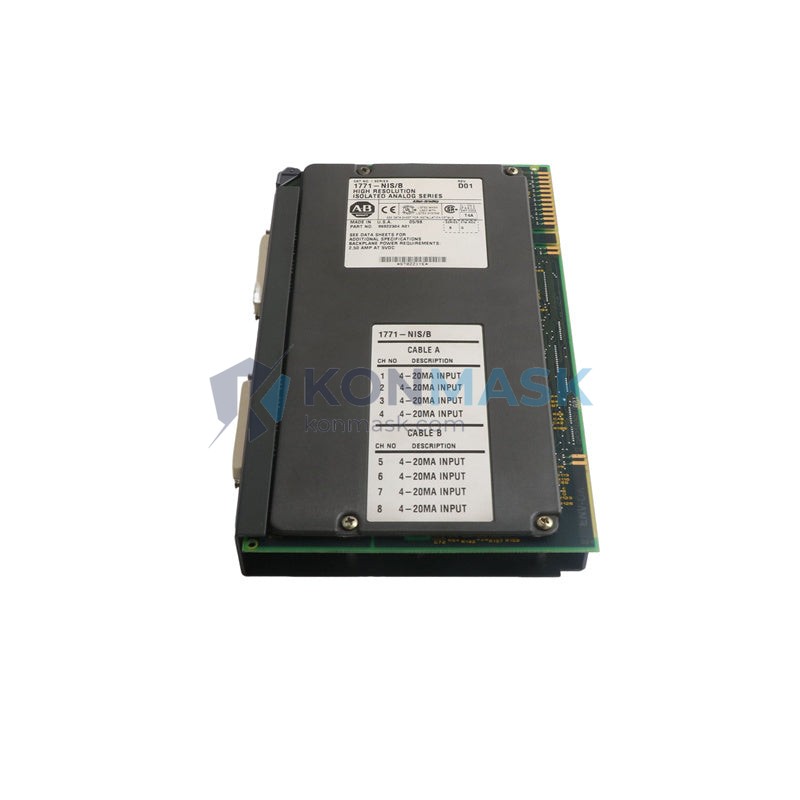
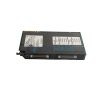
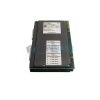
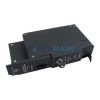
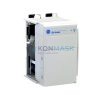
Allen-Bradley 1771-NIS – Remote I/O Scanner Module | PLC-5 1771 I/O Chassis
Engineering Background: The Allen-Bradley PLC-5 platform, built around the 1771 I/O chassis architecture, remains one of the most widely deployed programmable controller systems in continuous-process and discrete-manufacturing environments globally. Within this architecture, the 1771-NIS Remote I/O Scanner Module serves as the communication bridge between the PLC-5 processor and remote I/O racks distributed across the plant floor. It enables deterministic, high-speed data exchange over the Allen-Bradley Remote I/O (RIO) network — a token-passing, coaxial-cable-based fieldbus that underpins thousands of legacy control loops in refineries, power generation facilities, and water treatment plants. Without a functioning 1771-NIS, the PLC-5 processor loses visibility to all remote I/O drops on that scanner channel, making this module a single point of criticality in the control architecture.
Product Positioning: The 1771-NIS is a dedicated Remote I/O Scanner, distinct from the 1771-ASB (Adapter) and the 1771-SN (Scanner for 1771 chassis). It is specifically designed to reside in the 1771 I/O chassis and scan up to 32 remote I/O drops at baud rates of 57.6K, 115.2K, or 230.4K bps. It is not a general-purpose analog input module — the legacy catalog description “Analog Module” is a misclassification. The 1771-NIS is the correct choice when the application requires the PLC-5 processor to communicate with remote 1771 I/O racks over a dedicated RIO link, as opposed to using the processor’s built-in scanner port for local I/O.
Complete Technical Specifications
Electrical
- Backplane Current Draw: 800 mA @ 5 VDC
- Remote I/O Baud Rates: 57.6K / 115.2K / 230.4K bps (switch-selectable)
- Maximum Remote I/O Drops: 32 (logical rack addresses 0–37 octal)
- Maximum I/O Points per Scanner: 1024 input bits / 1024 output bits
- Communication Medium: Belden 9463 (Blue Hose) or equivalent shielded twisted-pair coaxial cable
- Network Topology: Daisy-chain or trunk-and-drop
Mechanical
- Module Width: Single-slot (1771 I/O chassis)
- Weight: 780 g (as listed)
- Connector Type: 3-pin RIO terminal block (Blue Hose connection)
- Chassis Compatibility: 1771-A1B, A2B, A3B, A4B series I/O chassis
- Keying: Configurable via chassis keying bands
Environmental
- Operating Temperature: 0°C to +60°C (32°F to 140°F)
- Storage Temperature: -40°C to +85°C
- Relative Humidity: 5% to 95% non-condensing
- Vibration: 2G @ 5–2000 Hz (IEC 68-2-6)
- Shock: 30G operational (IEC 68-2-27)
- Enclosure Rating: Open-frame (requires installation in rated enclosure)
Certifications
- UL Listed: UL 508 (Industrial Control Equipment)
- CSA Certified: C22.2 No. 142
- CE Marking: EMC Directive 2014/30/EU (where applicable to export markets)
- RoHS: Consult factory for specific revision compliance
Data source: Allen-Bradley Publication 1771-6.5.119 (1771-NIS Remote I/O Scanner Module User Manual), Rockwell Automation Product Certification Database.
Proven Application Environments
- Petroleum Refining: Crude distillation unit | Distributed I/O racks across column instrumentation | Continuous 24/7 operation at elevated ambient temperatures up to 55°C
- Electric Power Generation: Coal-fired boiler control system | Remote I/O drops at burner management and feedwater panels | High-vibration environment with strict determinism requirements
- Municipal Water Treatment: SCADA-integrated PLC-5 system | Remote I/O racks at pump stations up to 300 m from the main control panel | Low-baud-rate (57.6K) operation for extended cable runs
- Chemical Processing: Batch reactor control | Multiple remote I/O drops for valve actuators and transmitters | SIL-assessed loop requiring deterministic scan times
- Automotive Assembly: Body-in-white welding line | High-speed (230.4K bps) RIO network for tight cycle-time control | Frequent start/stop cycling with hot-standby PLC-5 redundancy
- Pulp & Paper: Paper machine drive section | Remote I/O racks in wet, high-humidity areas | Long-term installed base with no planned migration to newer platforms
Engineering Advantages
- For distributed plant layouts with I/O racks 100–3000 m from the processor, this scanner module maintains deterministic communication, because the RIO protocol uses a token-passing scheme that guarantees scan-cycle completion regardless of network load.
- For legacy PLC-5 systems with no approved migration path, this scanner module extends operational life without requiring processor replacement, because it is a direct form-fit-function replacement for the original factory-installed unit.
- For high-vibration environments such as compressor skids and turbine decks, this scanner module maintains reliable backplane contact, because the 1771 chassis locking mechanism and module keying prevent unintended extraction under mechanical stress.
- For applications requiring rapid fault diagnosis, this scanner module provides LED status indicators for RIO communication health and individual drop status, because the onboard diagnostics allow technicians to isolate faults to a specific remote rack without a programming terminal.
- For multi-drop RIO networks with mixed baud-rate requirements, this scanner module allows independent baud-rate selection per scanner channel, because the DIP switch configuration is independent of the processor’s global communication settings.
- For procurement teams managing spare-parts inventory, this scanner module is interchangeable across all PLC-5 processor variants (5/10, 5/12, 5/15, 5/25, 5/40, 5/60, 5/80), because the RIO scanner function is processor-agnostic within the 1771 chassis architecture.
System Architecture & Signal Flow
Signal Flow: PLC-5 Processor (Data Table) → 1771 Backplane → 1771-NIS Scanner → RIO Blue Hose Cable → 1771-ASB Adapter (at remote rack) → Remote 1771 I/O Modules → Field Devices (sensors, actuators, transmitters).
Compatible Modules & Reasons:
- 1771-ASB / 1771-ASBT: Required remote adapter at each drop; the -ASBT variant adds a termination resistor for end-of-line drops.
- 1771-A1B through A4B Chassis: All standard 1771 I/O chassis are compatible as remote racks.
- PLC-5/10, 5/12, 5/15, 5/25, 5/40, 5/60, 5/80: All PLC-5 processor variants support the 1771-NIS in the local chassis.
- 1785-L Series (PLC-5 Enhanced): Compatible; the enhanced processors support up to 3 scanner channels using multiple 1771-NIS modules.
Substitution Conditions: The 1771-SN (Scanner Module for 1771 chassis, older design) can substitute in some configurations but has lower maximum drop counts and is no longer manufactured. The 1771-NIS is the preferred replacement for 1771-SN in all new spare-parts specifications. Migration to ControlLogix with a 1756-DHRIO or 1756-RIO bridge is the recommended long-term path for systems approaching end-of-support.
Sourcing & Quality Verification
All 1771-NIS modules offered through Konmask.com are sourced from decommissioned industrial control panels, authorized surplus distributors, and verified secondary-market channels. Each unit undergoes a structured inspection process before dispatch:
- Visual Inspection: PCB examined for burn marks, corrosion, cracked traces, and damaged connectors. Chassis keying bands and terminal blocks verified intact.
- Label & Revision Verification: Catalog number, series letter, and firmware revision confirmed against Rockwell Automation product records. Counterfeit screening via label font, hologram, and part-number format checks.
- Functional Bench Test: Module installed in a 1771 test chassis with a live PLC-5 processor. RIO communication established at all three baud rates. LED diagnostics verified. Scan of a simulated remote drop confirmed.
- Packaging & ESD Protection: Module shipped in anti-static bag with foam cushioning. Desiccant included for long-distance shipments.
Documentation available upon request: Inspection report, functional test log, high-resolution photographs of PCB and label, Rockwell Automation product lifecycle status sheet, and Certificate of Conformance.
Procurement Process
- Submit Inquiry: Contact support@konmask.com with the required quantity, acceptable series revision, and delivery timeline. Include the target PLC-5 processor model and current RIO baud rate if known.
- Receive Quotation & Stock Confirmation: A response with pricing, available series, inspection photos, and estimated lead time will be provided within 24 hours on business days. Expedited response available for emergency shutdowns.
- Order Confirmation & Dispatch: Upon purchase confirmation, the module is re-inspected, packaged, and dispatched with full tracking. Export documentation (commercial invoice, packing list, country of origin certificate) provided for international shipments.
Technical Support: Pre-sale support includes compatibility verification, baud-rate configuration guidance, and wiring diagram review. Post-sale support includes installation troubleshooting via email or phone (+0086 19859288691) for 30 days from dispatch.
Technical FAQ
Q: Is the 1771-NIS compatible with a ControlLogix (1756) chassis?
A: No. The 1771-NIS is a 1771-backplane module and cannot be installed in a 1756 ControlLogix chassis. For ControlLogix systems that need to communicate with legacy 1771 remote I/O drops, the correct interface is the 1756-RIO (Remote I/O Communication Interface Module).
Q: Can the 1771-NIS replace a 1771-SN in an existing installation?
A: In most cases, yes. The 1771-NIS is the current-generation replacement for the 1771-SN and supports a higher maximum drop count (32 vs. 16 for some 1771-SN revisions). The wiring and configuration procedure differs slightly; consult Publication 1771-6.5.119 and compare with the existing 1771-SN documentation before substitution. Confirm the chassis slot width and keying configuration before installation.
Q: Does the 1771-NIS carry any safety certification for use in SIL-rated loops?
A: The 1771-NIS itself is not SIL-certified as a standalone device. In SIL-assessed applications, the module is typically used in the non-safety portion of the control architecture (standard PLC-5 platform), with safety functions handled by a separate, certified safety system. For SIL 1–2 applications using PLC-5 hardware, consult the system integrator’s safety assessment and Rockwell Automation’s functional safety documentation for the specific processor revision.
© 2026 Konmask.com. All rights reserved.
Original Source: https://Konmask.com
Contact: support@konmask.com | +0086 19859288691