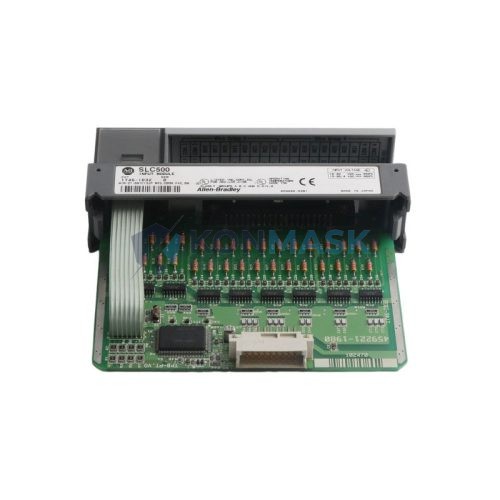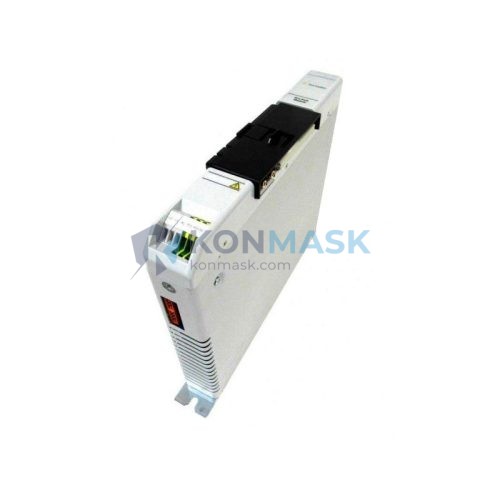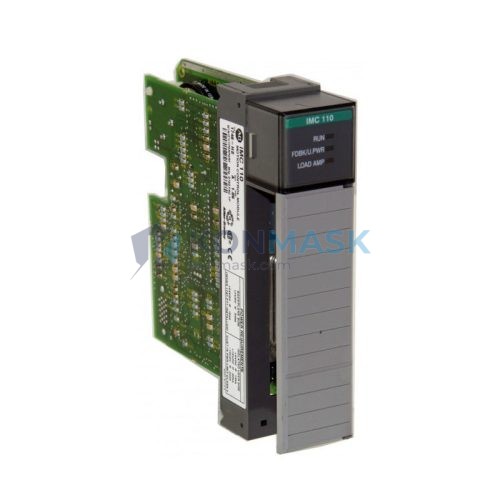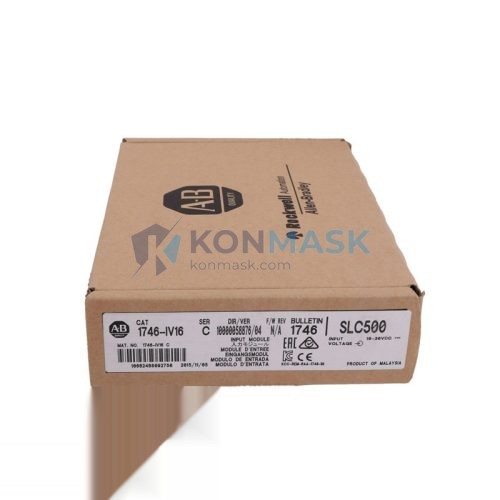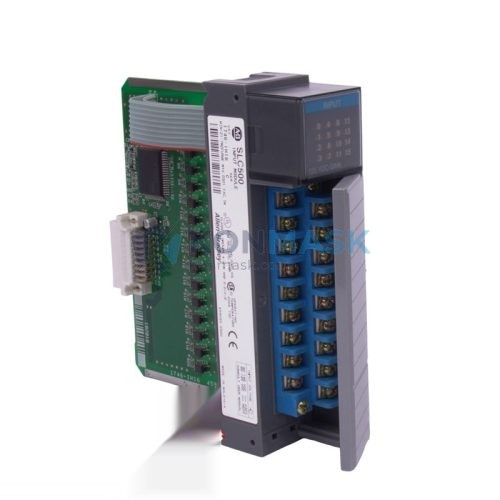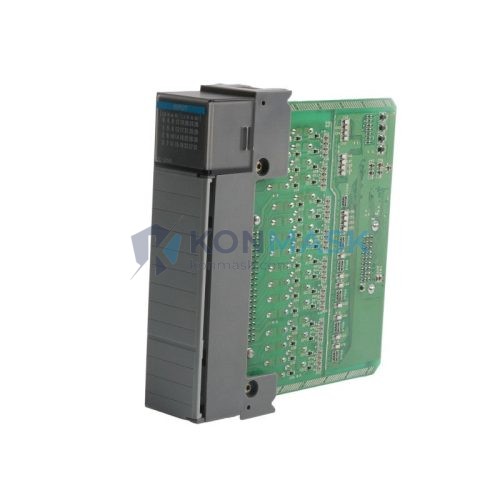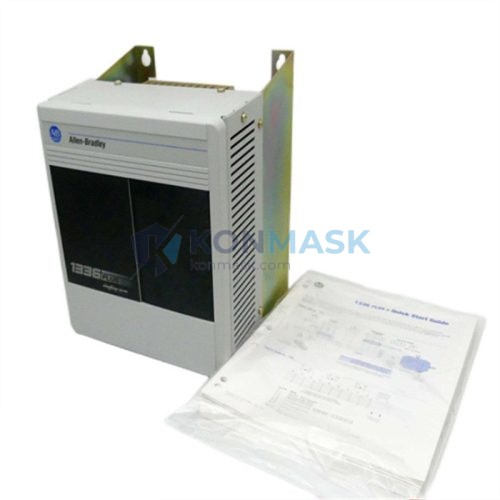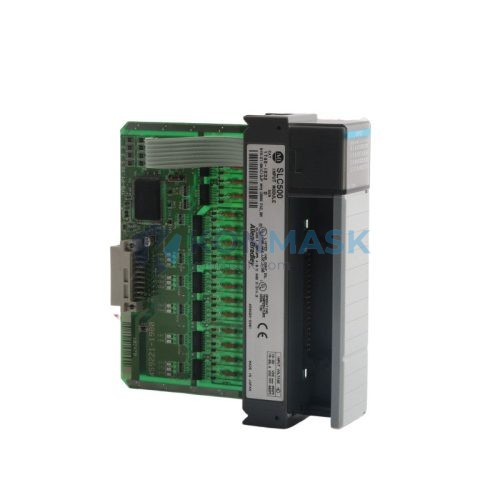

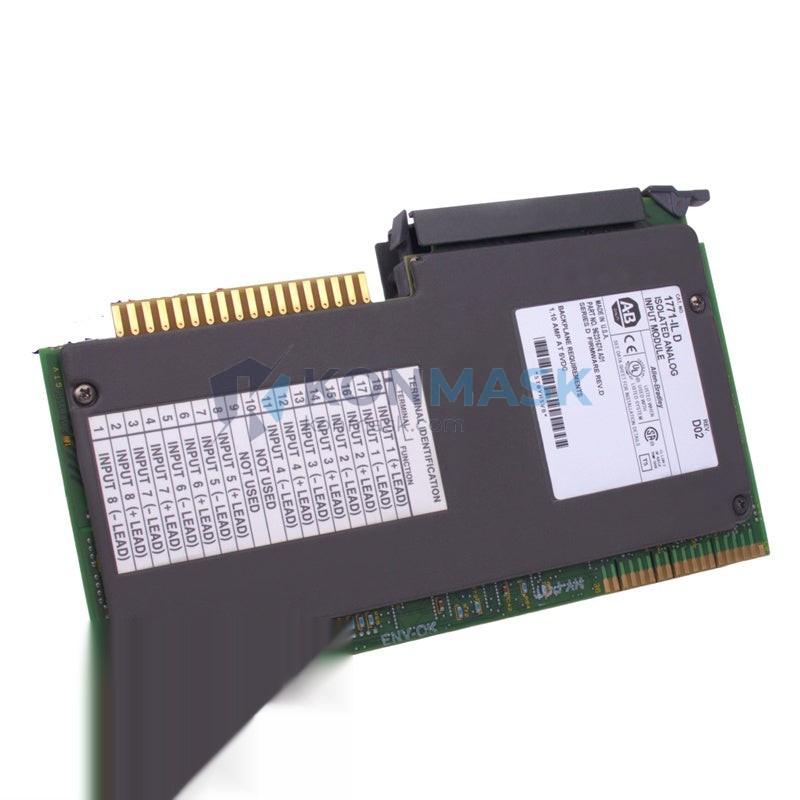
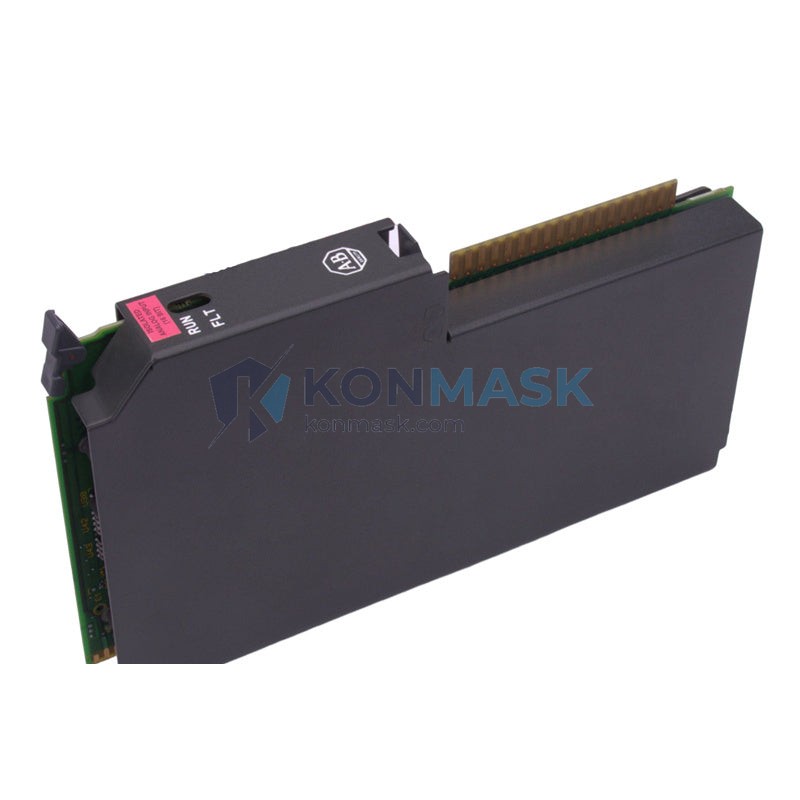
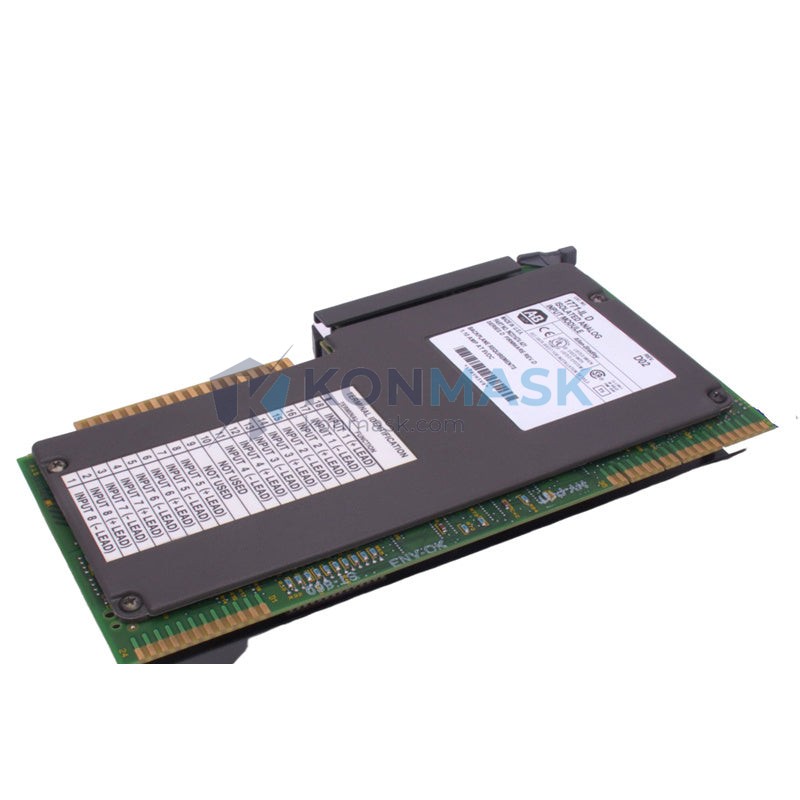
Allen-Bradley 1771-IL Analog Input Module – 1771 PLC-5 Series
When an analog input module fails mid-process, the consequences are immediate and costly: a continuous casting line loses temperature feedback and triggers an emergency shutdown; a chemical reactor can no longer monitor flow rates and defaults to manual override; a water treatment plant’s dosing system goes blind. The 1771-IL is the component that keeps these feedback loops intact. Without it, the PLC-5 controller is operating without senses — receiving no signal from the physical world it is supposed to govern.
Within the 1771 I/O family, the 1771-IL occupies a specific and well-defined role: it accepts low-level analog signals — current loops and voltage inputs — and converts them into digital values the PLC-5 processor can act upon. This module has been deployed in continuous process industries worldwide since the 1980s and remains a critical spare part for facilities that have standardized on the PLC-5 platform. Its longevity in the field is not nostalgia — it reflects the reality that many process-critical installations are designed for 20–30 year lifecycles, and the 1771-IL is engineered to match that expectation.
Technical Specifications
Electrical
- Input Signal Range: 4–20 mA (current) / 1–5 V DC (voltage)
- Number of Input Channels: 4 differential analog input channels
- Resolution: 12-bit (1 in 4,096)
- Input Impedance: 10 MΩ (voltage mode)
- Conversion Method: Successive approximation ADC
- Backplane Current Draw: 800 mA @ 5 V DC (typical)
- Isolation: Channel-to-backplane optical isolation
Mechanical
- Form Factor: Single-slot 1771 I/O chassis module
- Connector: 40-pin keyed I/O chassis backplane connector
- Weight: Approximately 700 g
- Dimensions: Standard 1771 module profile
Environmental
- Operating Temperature: 0°C to 60°C (32°F to 140°F)
- Storage Temperature: -40°C to 85°C
- Relative Humidity: 5% to 95% non-condensing
- Vibration: IEC 68-2-6 compliant
- Enclosure Rating: Open-frame (requires installation in rated enclosure)
Certifications & Standards
- UL Listed, CSA Certified
- CE Marked (EMC Directive)
- Compliant with IEC 61131-2 (Programmable Controllers — Equipment Requirements and Tests)
Key Features & Benefits
- 12-bit resolution ADC — Provides 4,096 discrete steps across the full input range, enabling precise process variable monitoring in applications where ±0.025% accuracy is required for regulatory compliance.
- 4-channel differential input architecture — Rejects common-mode noise up to 120 V AC, a critical advantage in electrically noisy environments such as motor control centers and arc furnace facilities.
- Optical channel-to-backplane isolation — Protects the PLC-5 processor and adjacent modules from ground loops and transient surges originating at field instruments, reducing unplanned downtime caused by electrical faults.
- Dual-mode signal compatibility (4–20 mA / 1–5 V) — A single module accommodates both current-loop transmitters and voltage-output sensors, reducing spare parts inventory and simplifying panel wiring.
- Direct compatibility with PLC-5 processor families — No adapter or bridge required; the module slots directly into any 1771 I/O chassis and is recognized natively by RSLogix 5 programming software.
- IEC 61131-2 compliant design — Meets the international standard for PLC equipment requirements, supporting facilities that must demonstrate compliance during third-party safety audits.
Industry & Equipment Applications
- Oil & Gas — Upstream Production: Wellhead pressure and flow transmitter signal acquisition; SCADA RTU integration for remote monitoring of separator vessels and gas lift systems.
- Chemical Processing — Continuous Reactors: Temperature and pH loop feedback from 4–20 mA field transmitters; feed-forward control in exothermic reaction management systems.
- Pulp & Paper — Stock Preparation: Consistency transmitter signal processing; basis weight control loops on paper machine headboxes requiring stable, low-drift analog input.
- Water & Wastewater Treatment: Dissolved oxygen, turbidity, and flow meter signal conditioning; dosing pump control in chlorination and coagulation stages.
- Metals & Mining — Continuous Casting: Mold level sensor signal acquisition; cooling water flow monitoring in secondary cooling zones where signal integrity is critical to slab quality.
- Power Generation — Balance of Plant: Boiler drum level and feedwater flow signal processing; turbine lube oil pressure monitoring in steam and combined-cycle power plants.
System Integration & Compatible Parts
Upstream (Processors & Chassis):
- Allen-Bradley PLC-5/10, PLC-5/15, PLC-5/20, PLC-5/30, PLC-5/40, PLC-5/60, PLC-5/80 processors
- 1771-A1B, 1771-A2B, 1771-A3B, 1771-A4B I/O chassis (4, 8, 12, 16 slot)
- 1771-P4S, 1771-P6S, 1771-P7 chassis power supplies
Downstream (Field Wiring & Termination):
- 1771-WB wiring arm (required for field termination)
- Standard 4–20 mA two-wire and four-wire transmitters (HART-compatible field devices connect via external HART multiplexer)
Equivalent & Replacement Considerations:
- 1771-IFE — 8-channel enhanced analog input module; direct functional upgrade when additional channel density is required, same chassis compatibility, requires RSLogix 5 reconfiguration.
- 1771-IFE/B — Revision B of the IFE with extended diagnostics; suitable replacement when the application requires module fault reporting at the channel level.
- Note: Cross-replacement between 1771-IL and 1771-IFE requires ladder logic modification to address the different data file structure. Verify processor memory and I/O image table allocation before substitution.
Our Quality Assurance Process
Every 1771-IL module shipped from Konmask.com passes through a four-stage inspection protocol before dispatch:
- Visual & Physical Inspection: Board-level examination for component damage, corrosion, bent connector pins, and label integrity. Modules with evidence of repair or re-marking are rejected at this stage.
- Functional Power-On Test: Module is energized in a 1771 test chassis. Backplane communication, LED status indicators, and internal diagnostics are verified against factory behavior.
- Analog Signal Verification: Each input channel is tested with calibrated 4–20 mA and 1–5 V reference signals. Output data values are compared against expected digital counts to confirm ADC accuracy within specification.
- Documentation & Packaging: Module is assigned a unique inspection record, anti-static packaged, and shipped with available documentation.
Available documentation upon request: Inspection report, functional test data sheet, original Rockwell Automation datasheet reference, certificate of conformance (COC).
How to Order
- Submit Your Inquiry: Contact us via the form on this page or email support@konmask.com with your required quantity, delivery timeline, and any specific revision or date-code requirements.
- Receive Quotation: Our technical team will confirm stock availability, module condition grade, and pricing within 24 hours on business days. We will also advise on compatible accessories if required.
- Confirm & Ship: Upon order confirmation, modules are re-inspected, packaged, and dispatched with full tracking. Export documentation is prepared for international shipments.
Why Choose Konmask.com?
- Specialist focus on industrial automation components: We stock PLC, DCS, and drive components from Allen-Bradley, Siemens, ABB, Schneider, and other major automation vendors — not a general electronics distributor.
- Technical pre-sales support: Our team can advise on module compatibility, revision differences, and system integration requirements before you commit to a purchase.
- Rigorous inspection on every unit: No module ships without passing our four-stage QA process. We do not list modules we cannot verify.
- Responsive global logistics: We ship to manufacturing facilities, EPC contractors, and MRO warehouses worldwide, with experience in export documentation for Asia, Europe, and the Americas.
- Long-term partnership approach: We maintain records of your installed base and can proactively source hard-to-find spares before your next planned maintenance window.
Frequently Asked Questions
Q: Is the Allen-Bradley 1771-IL compatible with all PLC-5 processor variants, including the PLC-5/40L and PLC-5/60L extended local configurations?
A: Yes. The 1771-IL is compatible with all PLC-5 processor families that use the standard 1771 I/O chassis, including extended local (L) and remote (R) configurations. The module occupies one I/O slot and maps to the processor’s analog input data file. No special configuration is required beyond standard RSLogix 5 I/O configuration.
Q: What is the difference between the 1771-IL and the 1771-IFE, and can I use the IFE as a direct drop-in replacement for the IL?
A: The 1771-IFE is an 8-channel enhanced analog input module versus the 4-channel 1771-IL, and it uses a different data file structure in the PLC-5 processor. It is not a direct drop-in replacement — substitution requires modification of the RSLogix 5 program to remap I/O addresses and adjust scaling blocks. If your application requires a like-for-like replacement without program changes, source another 1771-IL.
Q: How can I verify the revision level of a used 1771-IL module, and does the revision affect compatibility with my existing PLC-5 system?
A: The revision level is printed on the module label (e.g., Series A, Series B). In most PLC-5 applications, revision differences between 1771-IL series do not affect functional compatibility — the I/O data structure and backplane interface remain consistent. However, if your system documentation specifies a particular series for a validated process (e.g., FDA-regulated manufacturing), confirm the revision matches your validation records before installation.
© 2026 Konmask.com. All rights reserved.
Original Source: https://Konmask.com
Contact: support@konmask.com | +0086 19859288691
{
“@context”: “https://schema.org/”,
“@graph”: [
{
“@type”: “Product”,
“name”: “Allen-Bradley 1771-IL Analog Input Module”,
“description”: “Allen-Bradley 1771-IL 4-channel analog input module for PLC-5 systems. Accepts 4-20mA and 1-5V DC signals with 12-bit resolution. Compatible with all 1771 I/O chassis configurations.”,
“sku”: “1771-IL”,
“mpn”: “1771-IL”,
“brand”: {
“@type”: “Brand”,
“name”: “Allen-Bradley”
},
“manufacturer”: {
“@type”: “Organization”,
“name”: “Rockwell Automation”
},
“category”: “PLC Analog Input Module”,
“url”: “https://konmask.com/products/ab-1771-il-analog-input-module-plc5”,
“offers”: {
“@type”: “Offer”,
“url”: “https://konmask.com/products/ab-1771-il-analog-input-module-plc5”,
“priceCurrency”: “HKD”,
“availability”: “https://schema.org/InStock”,
“seller”: {
“@type”: “Organization”,
“name”: “Konmask.com”
}
}
},
{
“@type”: “FAQPage”,
“mainEntity”: [
{
“@type”: “Question”,
“name”: “Is the Allen-Bradley 1771-IL compatible with all PLC-5 processor variants, including the PLC-5/40L and PLC-5/60L extended local configurations?”,
“acceptedAnswer”: {
“@type”: “Answer”,
“text”: “Yes. The 1771-IL is compatible with all PLC-5 processor families that use the standard 1771 I/O chassis, including extended local (L) and remote (R) configurations. The module occupies one I/O slot and maps to the processor’s analog input data file. No special configuration is required beyond standard RSLogix 5 I/O configuration.”
}
},
{
“@type”: “Question”,
“name”: “What is the difference between the 1771-IL and the 1771-IFE, and can I use the IFE as a direct drop-in replacement for the IL?”,
“acceptedAnswer”: {
“@type”: “Answer”,
“text”: “The 1771-IFE is an 8-channel enhanced analog input module versus the 4-channel 1771-IL, and it uses a different data file structure in the PLC-5 processor. It is not a direct drop-in replacement — substitution requires modification of the RSLogix 5 program to remap I/O addresses and adjust scaling blocks. If your application requires a like-for-like replacement without program changes, source another 1771-IL.”
}
},
{
“@type”: “Question”,
“name”: “How can I verify the revision level of a used 1771-IL module, and does the revision affect compatibility with my existing PLC-5 system?”,
“acceptedAnswer”: {
“@type”: “Answer”,
“text”: “The revision level is printed on the module label (e.g., Series A, Series B). In most PLC-5 applications, revision differences between 1771-IL series do not affect functional compatibility. However, if your system documentation specifies a particular series for a validated process, confirm the revision matches your validation records before installation.”
}
}
]
}
]
}