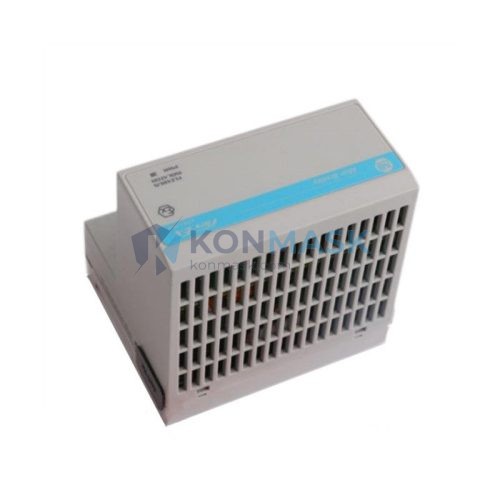

Allen-Bradley 1786-RPFRL – ControlNet Fiber Ring Long Distance Repeater | ControlNet Platform
Engineering Background
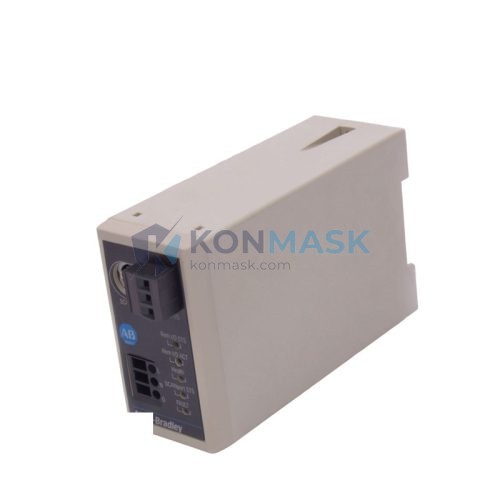
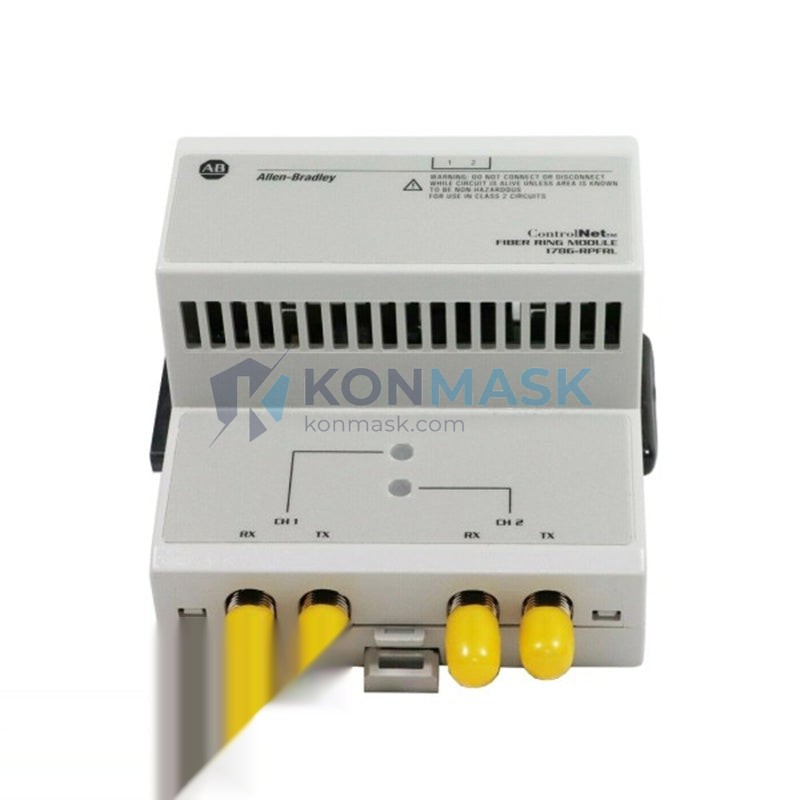
The Allen-Bradley 1786-RPFRL is a purpose-engineered fiber optic repeater designed for Rockwell Automation’s ControlNet deterministic communication platform. ControlNet (IEC 61158 Type 2) operates at 5 Mbps and provides time-critical, repeatable I/O performance alongside peer-to-peer messaging on a single physical medium. In large-scale plant environments—refineries, automotive assembly lines, water treatment facilities—copper-based ControlNet segments frequently fall short of distance and noise-immunity requirements. The 1786-RPFRL resolves both constraints by converting electrical ControlNet signals to 820 nm multimode fiber optic transmission, enabling ring topologies that span distances impossible with coaxial infrastructure.
Product Positioning
The 1786-RPFRL occupies the long-distance fiber repeater tier within the 1786 ControlNet accessories family. It is the preferred solution for engineers who must bridge buildings, cross high-EMI zones (variable frequency drives, arc furnaces, welding cells), or achieve ground-loop isolation between control panels. When deployed in a ring topology, the module provides inherent media redundancy: a single fiber break does not interrupt network communication, making it suitable for SIL-rated and high-availability process control architectures.
Complete Technical Specifications
| Parameter | Specification |
|---|---|
| Catalog Number | 1786-RPFRL |
| Manufacturer | Allen-Bradley / Rockwell Automation |
| Network Protocol | ControlNet (IEC 61158 Type 2) |
| Network Data Rate | 5 Mbps |
| Fiber Type | Multimode, 62.5/125 µm |
| Optical Wavelength | 820 nm |
| Connector Type | ST (IEC 60874-10) |
| Max Segment Distance (Fiber) | Up to 3,000 m (3 km) per fiber segment |
| Topology Support | Ring (redundant), Bus, Star (via hub) |
| ControlNet Ports | 2 × BNC (coaxial, for local copper segment) |
| Fiber Ports | 2 × ST duplex (TX/RX per port) |
| Power Supply Input | 24V DC (±10%), via ControlNet tap or external |
| Power Consumption | ≤ 3.5 W typical |
| Operating Temperature | 0 °C to +60 °C (32 °F to 140 °F) |
| Storage Temperature | -40 °C to +85 °C |
| Relative Humidity | 5% to 95% non-condensing |
| Enclosure Rating | IP20 (panel mount) |
| Dimensions (H × W × D) | Approx. 100 × 45 × 60 mm |
| Weight | Approx. 150 g |
| Certifications | UL Listed, CE Marked, cUL |
| ODVA Conformance | ControlNet conformance tested |
| Country of Origin | USA |
Proven Application Environments
- Automotive Manufacturing: Spanning fiber rings across body shop, paint shop, and general assembly buildings where copper runs exceed 1,000 m and EMI from welding robots is severe.
- Oil & Gas / Petrochemical: Connecting remote wellhead or compressor station PLCs to central DCS/SCADA over long fiber runs with ground-loop isolation requirements.
- Water & Wastewater Treatment: Linking pump stations distributed across large treatment facilities where trenching copper is cost-prohibitive.
- Power Generation & Utilities: Integrating turbine control panels in high-voltage switchgear environments where optical isolation is mandatory.
- Mining & Minerals Processing: Extending ControlNet to crushers, conveyors, and mill drives in electrically noisy, physically expansive sites.
- Pharmaceutical & Food Processing: Providing deterministic I/O performance across cleanroom and production zones with strict EMC compliance requirements.
Engineering Advantages
- 3 km Per Segment: Dramatically extends ControlNet reach beyond the 1,000 m coaxial limit, enabling single-network architectures across large campuses.
- Ring Redundancy: Fiber ring topology provides automatic fault recovery—a single fiber break is tolerated without network disruption, supporting high-availability and SIL-2 architectures.
- Complete EMI Immunity: Optical fiber carries no electrical signal, eliminating susceptibility to VFD switching noise, arc furnace interference, and lightning-induced surges.
- Ground Loop Isolation: Fiber optic medium inherently isolates ground potentials between panels and buildings, preventing ground loop currents that corrupt data on copper networks.
- Deterministic Performance Preserved: The repeater is transparent to ControlNet’s CTDMA scheduling; NUT (Network Update Time) and scheduled bandwidth are unaffected.
- Plug-and-Play Integration: No software configuration required; the repeater is invisible to RSNetWorx for ControlNet and does not consume a node address.
- Mixed Topology Flexibility: Copper coaxial BNC ports allow local copper drops while fiber ports extend the backbone, supporting hybrid copper/fiber architectures.
System Architecture & Signal Flow
The 1786-RPFRL operates as a physical-layer (Layer 1) repeater. ControlNet coaxial signals arrive at the BNC ports from local copper segments. The module’s internal transceiver converts the 5 Mbps electrical signal to an 820 nm optical signal transmitted over 62.5/125 µm multimode fiber via ST connectors. At the remote end, a second 1786-RPFRL (or compatible fiber repeater) performs the reverse conversion, regenerating the electrical ControlNet signal for the downstream copper segment.
In a ring configuration, two fiber paths connect adjacent repeaters in opposite directions. The ring supervisor (typically the ControlNet scanner or a dedicated keeper) monitors both paths. Upon detecting a break on one path, traffic is automatically rerouted over the intact path within the ControlNet NUT cycle, maintaining deterministic communication without PLC intervention.
Typical Ring Node Count: Up to 99 nodes per ControlNet network (including repeaters as transparent devices). Maximum Repeaters in Series: Consult Rockwell Automation Publication 1786-UM009 for cascaded repeater limits based on NUT configuration.
Sourcing & Quality Verification
Konmask.com sources the 1786-RPFRL exclusively from verified surplus channels, authorized distributors, and decommissioned OEM equipment with documented provenance. Every unit undergoes the following pre-shipment process:
- Visual inspection: housing integrity, connector condition, label legibility, no evidence of rework or counterfeit markings.
- Functional power-on test: LED status verification (PWR, NET A, NET B indicators).
- Optical power output measurement on both TX fiber ports using calibrated optical power meter.
- Date code and serial number cross-reference against Rockwell Automation’s published authenticity guidelines.
- ESD-safe packaging with desiccant and anti-static foam for international shipment.
A test report summary is available upon request for orders of 3+ units. Rockwell Automation factory repair and recertification services can be arranged for critical applications.
Procurement Process
- Step 1 – Confirm Quantity & Lead Time: Contact us with your required quantity and project timeline. We maintain stock of common 1786 accessories and can advise on availability within 24 hours.
- Step 2 – Request Quotation: Email support@konmask.com or call +0086 19859288691 for volume pricing, freight options (DHL/FedEx/sea freight), and export documentation (CO, packing list, commercial invoice).
- Step 3 – Order Confirmation: Purchase order accepted via email. Payment terms: T/T, PayPal, or as agreed. Pro-forma invoice issued within 1 business day.
- Step 4 – Shipment & Tracking: Units shipped with full tracking. Typical dispatch: 1–3 business days after payment confirmation. Express delivery to most destinations in 3–7 business days.
- Step 5 – After-Sales Support: 90-day warranty on all tested units. Technical support available for installation and commissioning questions.
Technical FAQ
Q: Can the 1786-RPFRL be used with ControlNet on a 1756 ControlLogix system?
A: Yes. The 1786-RPFRL is compatible with any ControlNet scanner, including the 1756-CNB, 1756-CNBR, and 1756-CN2 modules in ControlLogix chassis. It operates transparently at the physical layer.
Q: What fiber cable specification is required?
A: 62.5/125 µm multimode fiber (OM1 grade minimum). ST connectors with APC or UPC polish. Maximum attenuation budget: consult the optical link budget in Rockwell Publication 1786-UM009. OM2 or OM3 fiber may be used for improved margin.
Q: Does the repeater consume a ControlNet node address?
A: No. The 1786-RPFRL is a physical-layer device and is invisible to the ControlNet network layer. It does not require a node address and does not appear in RSNetWorx for ControlNet.
Q: Can multiple 1786-RPFRL units be cascaded?
A: Yes, within limits defined by the ControlNet NUT and the total propagation delay budget. Refer to Rockwell Automation Publication 1786-UM009 for cascaded repeater design rules.
Q: Is single-mode fiber supported?
A: No. The 1786-RPFRL is designed for multimode fiber at 820 nm. For single-mode fiber applications, consult Rockwell Automation for alternative repeater models.
Q: What is the warranty on units purchased from Konmask?
A: All tested surplus units carry a 90-day functional warranty. Extended warranty and Rockwell factory recertification are available upon request.
© 2026 Konmask.com. All rights reserved.
Original Source: https://Konmask.com
Contact: support@konmask.com | +0086 19859288691