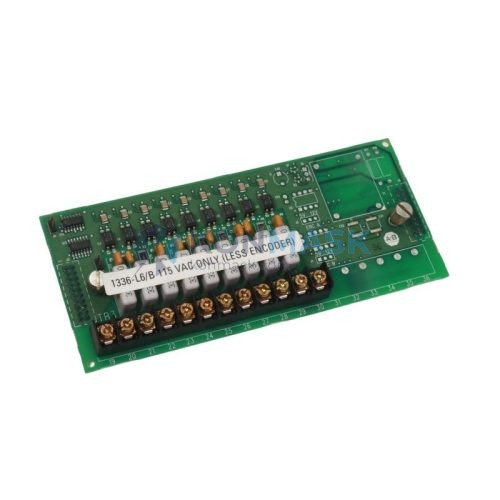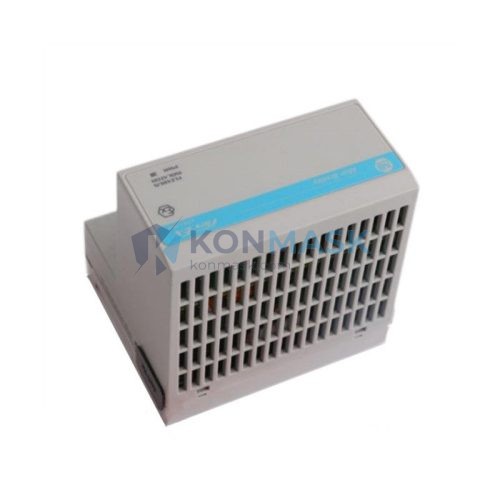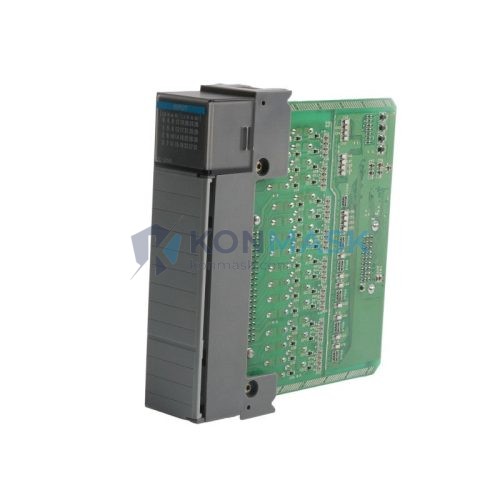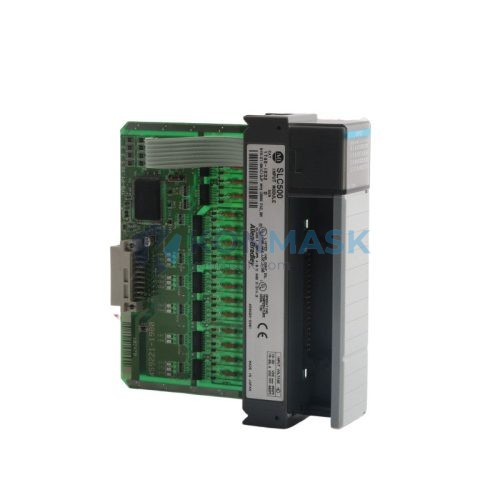

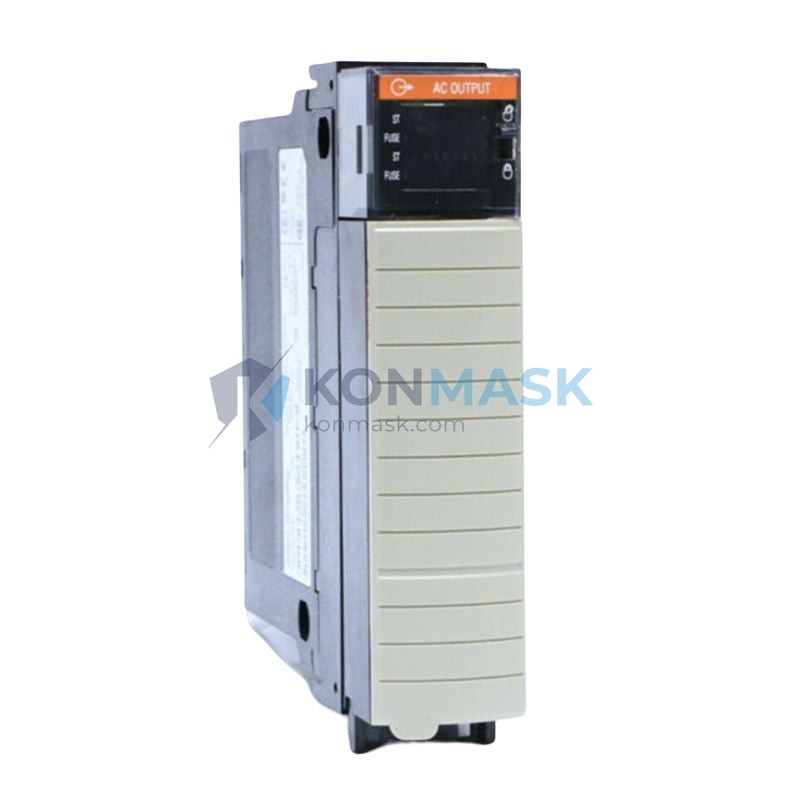
AC Output Control Solution – Allen-Bradley 1756-OA16I | ControlLogix Isolated Output Module
In high-voltage AC control environments — motor starters, solenoid valves, lighting contactors — a single ground fault on a shared output module can cascade across all 16 channels simultaneously, triggering unplanned shutdowns that cost process plants an average of $260,000 per hour in lost production. When output channels share a common return, one wiring fault or load transient doesn’t stay isolated: it propagates. Maintenance teams are left chasing phantom faults across an entire I/O rack while the line sits idle.
The Allen-Bradley 1756-OA16I eliminates this failure mode by design. Each of its 16 AC output channels operates on a fully isolated circuit — no shared neutral, no common return bus. A fault on Channel 3 stays on Channel 3. The remaining 15 channels continue driving their loads without interruption. For process engineers specifying ControlLogix systems in environments where uptime is non-negotiable, this electrical isolation architecture is not a feature — it is a fundamental reliability requirement.
Where This Product Is Used
Oil & Gas Processing
- Wellhead control panels driving solenoid-operated safety valves (SOVs) at 120V AC, where IEC 61511 SIL-rated loops demand channel-to-channel isolation to prevent common-cause failures
- Compressor station motor starter control in Class I Div 2 areas, where transient voltages from large inductive loads require isolated outputs rated to withstand surge without cross-channel contamination
- Pipeline pig launcher/receiver valve sequencing, where simultaneous multi-valve actuation at 240V AC requires independent channel integrity
Automotive Manufacturing
- Body-in-white welding line contactor control, where 200A welding transformers generate severe voltage transients that isolated outputs absorb without affecting adjacent channels
- Paint booth conveyor drive enable signals at 120V AC, operating in solvent-laden atmospheres requiring robust electrical separation per NFPA 33
- Assembly torque tool enable circuits, where each station must be independently de-energized for tooling changeover without affecting the broader line
Water & Wastewater Treatment
- Pump motor starter control across multiple wet wells, where ground potential differences between remote structures make isolated outputs essential for reliable operation per IEEE 1100
- UV disinfection lamp ballast switching at 240V AC, where lamp-end-of-life failures create load faults that must not propagate to adjacent treatment stage outputs
- Chemical dosing pump control in corrosive environments (pH 1–13), where isolated outputs prevent electrochemical interference on shared return conductors
Food & Beverage Processing
- CIP (Clean-In-Place) valve sequencing at 120V AC, where wash-down environments (IP69K) create high leakage current paths that isolated outputs tolerate without nuisance tripping
- Pasteurizer zone heating element control, where independent channel isolation allows individual zone maintenance without full system de-energization per HACCP protocols
- Packaging line reject gate solenoid control, where high-cycle actuation (>1 million cycles/year) demands robust isolated switching
Power Generation & Utilities
- Substation auxiliary relay control at 120V AC, where ground loops between control house and switchyard require isolated outputs per IEEE C37.90
- Generator excitation system auxiliary output control, where high-frequency switching transients from power electronics require isolated channel architecture
- Turbine lube oil pump motor starter sequencing, where SIL 2 safety requirements mandate independent channel verification
Pharmaceutical Manufacturing
- Autoclave sterilization cycle valve control under 21 CFR Part 11 audit requirements, where isolated outputs provide verifiable channel-level fault containment
- Cleanroom HVAC damper actuator control at 120V AC, where isolated channels allow individual zone maintenance without disrupting adjacent ISO classification areas
- Bioreactor agitator motor starter control, where batch integrity requires that a single output fault cannot affect adjacent process stages
Technical Specifications
| Parameter | Value | Application Relevance |
|---|---|---|
| Module Type | AC Output, Isolated | Channel-to-channel fault containment |
| Number of Outputs | 16 points | High-density control in single slot |
| Output Voltage Range | 74–265V AC | Covers 120V and 240V AC systems globally |
| Output Frequency | 47–63 Hz | Compatible with 50 Hz and 60 Hz grids |
| Maximum Load Current | 1A per point continuous; 2A for 1 second | Suitable for solenoids, contactors, small starters |
| Minimum Load Current | 10 mA | Prevents false ON with high-impedance loads |
| Off-State Leakage Current | ≤2.5 mA | Critical for sensitive relay coil loads |
| On-State Voltage Drop | ≤1.5V AC | Minimal power dissipation at load |
| Isolation | Channel-to-channel and channel-to-backplane | Prevents fault propagation; meets IEC 61131-2 |
| Surge Withstand | 600V peak (per IEC 61000-4-5) | Protects against inductive load switching transients |
| Backplane Current (5V DC) | 125 mA | Low rack power budget impact |
| Backplane Current (24V DC) | 2 mA | — |
| Power Dissipation | 5.5W maximum | Thermal management in enclosed enclosures |
| Operating Temperature | 0–60°C (32–140°F) | Standard industrial enclosure range |
| Storage Temperature | -40–85°C | Cold-climate storage and transport |
| Relative Humidity | 5–95% non-condensing | Suitable for humid process environments |
| Vibration | 2g @ 10–500 Hz | Meets IEC 60068-2-6 for mobile/transport applications |
| Shock | 30g operational | Meets IEC 60068-2-27 |
| Wiring | Removable terminal block (RTB) | Hot-swap wiring without module removal |
| Slot Compatibility | Any ControlLogix 1756 chassis slot | Universal placement flexibility |
| Certifications | UL, CE, CSA, C-Tick, ATEX (Zone 2) | Global market access |
| Catalog Number | 1756-OA16I | — |
Specifications per Rockwell Automation Publication 1756-TD002, IEC 61131-2 compliance verified.
Why Engineers Specify This Model
- In oil & gas SIL-rated loops, the 1756-OA16I delivers channel-to-channel isolation that prevents common-cause output failures because each point has an independent switching element and return path, meeting IEC 61511 functional safety requirements.
- In automotive welding lines, the 1756-OA16I delivers 600V peak surge withstand per IEC 61000-4-5 because its isolated architecture absorbs inductive transients from 200A welding contactors without cross-channel contamination, meeting NFPA 79 electrical standard requirements.
- In water treatment multi-structure installations, the 1756-OA16I delivers reliable operation across ground potential differences because channel isolation eliminates ground loop interference on shared return conductors, meeting IEEE 1100 power quality requirements.
- In food processing wash-down environments, the 1756-OA16I delivers nuisance-trip-free operation at ≤2.5 mA off-state leakage because isolated outputs tolerate high leakage current paths from wet surfaces without false actuation, meeting EHEDG hygienic design requirements.
- In pharmaceutical batch processes, the 1756-OA16I delivers verifiable channel-level fault containment because each isolated point can be independently tested and documented, meeting 21 CFR Part 11 audit trail requirements.
- In power generation substation auxiliary control, the 1756-OA16I delivers interference-free relay switching at 74–265V AC because its wide voltage range and isolated architecture accommodate both 120V and 240V AC auxiliary systems, meeting IEEE C37.90 relay standard requirements.
Complete System Bill of Materials
The following components form a complete ControlLogix AC output control system with the 1756-OA16I:
- 1756-L8x ControlLogix Controller — System CPU; executes ladder/FBD logic that drives 1756-OA16I output states via backplane communication
- 1756-PA75 / 1756-PB75 Power Supply — Provides 5V/24V DC backplane power; the 1756-OA16I draws 125 mA at 5V DC from this supply
- 1756-A7 / 1756-A13 / 1756-A17 Chassis — Houses the 1756-OA16I in any available slot; chassis size selected based on total I/O count
- 1756-TBCH / 1756-TBS6H Removable Terminal Block (RTB) — Field wiring interface for the 1756-OA16I; allows wiring to remain in place during module replacement
- 1756-EN2T / 1756-EN3TR EtherNet/IP Communication Module — Connects ControlLogix system to plant network for remote monitoring of 1756-OA16I output status
- 1756-IA16I Isolated AC Input Module — Complementary isolated input module for feedback signals from AC-powered field devices controlled by the 1756-OA16I
- 1756-OA16 (non-isolated) — Lower-cost alternative where channel isolation is not required; specify 1756-OA16I when isolation is a design requirement
- External 120V/240V AC Fusing — Per NEC Article 430 and IEC 60364, each output channel should be individually fused at the field terminal to protect wiring and loads
Compliance & Industry Standards
- UL 508 (Underwriters Laboratories) — Industrial Control Equipment listing; confirms the module meets North American safety requirements for use in UL-listed control panels
- CE Marking / Low Voltage Directive 2014/35/EU — Confirms compliance with EU electrical safety requirements; required for installation in European machinery and process plants
- CSA C22.2 No. 142 (Canadian Standards Association) — Process Control Equipment standard; required for Canadian industrial installations
- IEC 61131-2 — Programmable Controllers Part 2: Equipment requirements and tests; the 1756-OA16I’s electrical isolation and surge withstand specifications are verified against this standard
- ATEX II 3 G (Zone 2) — Confirms suitability for use in Zone 2 explosive atmospheres when installed per Rockwell Automation ATEX installation instructions; relevant for oil & gas and chemical applications
- IEC 61000-4-5 Surge Immunity — 600V peak surge withstand verified; confirms the module withstands inductive load switching transients in industrial environments
- RCM (C-Tick) — Australian/New Zealand electromagnetic compatibility mark; required for installations in the Asia-Pacific region
Quality Assurance & Sourcing
Konmask.com sources the 1756-OA16I through verified industrial automation distributors and authorized channel partners. All units undergo the following inspection process before shipment:
- Authenticity Verification — Physical inspection of Rockwell Automation holographic labels, catalog number markings, and date codes against known-genuine reference units
- Functional Power-On Test — Module is seated in a 1756 chassis and powered; backplane communication, LED status indicators, and output channel response are verified
- Isolation Resistance Test — Channel-to-channel and channel-to-backplane isolation resistance measured with calibrated insulation tester; results logged against specification minimums
- Visual & Mechanical Inspection — RTB connector pins, housing integrity, and firmware revision label inspected; any evidence of prior installation or rework is documented and disclosed
Available Documentation: Test reports, photos of physical unit and labels, firmware revision confirmation, certificate of conformance upon request.
How to Source This Part
- Submit Your Inquiry — Send your requirement via the contact form or email support@konmask.com with your quantity, required delivery date, and any documentation requirements (CoC, test report)
- Receive Quote & Availability Confirmation — Our team responds within 24 hours with pricing, lead time, and stock status; urgent requirements flagged for same-day response
- Confirm Order & Ship — Orders confirmed with pro forma invoice; worldwide shipping via DHL, FedEx, or UPS with full tracking; export documentation provided for international shipments
📧 support@konmask.com | 📞 +0086 19859288691 | Global shipping from China, typically 3–7 business days to major industrial hubs.
Application-Specific FAQ
Q: Can the 1756-OA16I be used to control motor starters in a Class I Division 2 hazardous location?
A: The 1756-OA16I carries ATEX II 3 G certification for Zone 2 (equivalent to Class I Division 2 under NEC 505). The module itself must be installed in a purged or pressurized enclosure per NFPA 496, or in a non-hazardous control room with only the field wiring extending into the hazardous area. Consult Rockwell Automation publication ATEX-IN001 for complete installation requirements before specifying for Div 2 applications.
Q: In a water treatment multi-structure installation, how does the isolated output architecture prevent ground loop problems?
A: In installations where the ControlLogix chassis and field devices are in separate structures (pump stations, wet wells), ground potential differences of 5–50V AC are common due to different grounding electrode systems. Non-isolated output modules with a shared common return conductor create a ground loop path through the I/O wiring, causing nuisance faults or module damage. The 1756-OA16I’s channel-to-channel isolation means each output has its own independent switching element with no shared return — ground potential differences appear across the isolation barrier rather than through the module’s internal circuitry, eliminating the ground loop failure mode.
Q: What is the maximum inrush current the 1756-OA16I can handle when switching motor starter coils in an automotive welding line?
A: The 1756-OA16I is rated for 2A for 1 second (surge rating) per point. Standard IEC contactor coils in the 9–18A frame range (suitable for welding line motor starters) typically draw 6–10× rated current for the first half-cycle (8–16 ms) at energization. For coils with inrush exceeding the module’s surge rating, an interposing relay rated for the inrush current should be used between the 1756-OA16I output and the contactor coil. This is standard practice per NFPA 79 Section 12.7 for machine tool wiring.
© 2026 Konmask.com. All rights reserved.
Original Source: https://Konmask.com
Contact: support@konmask.com | +0086 19859288691