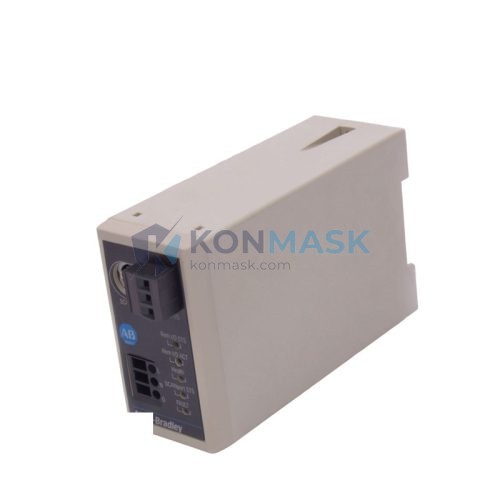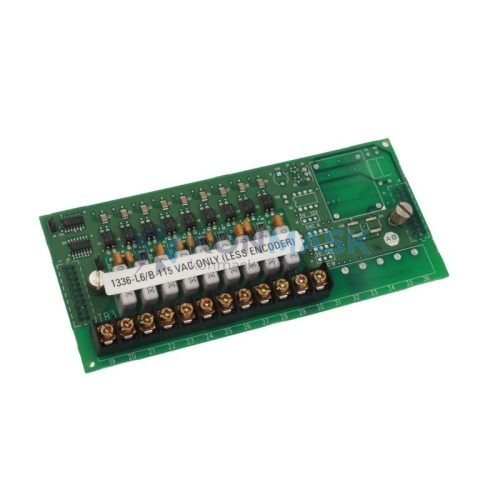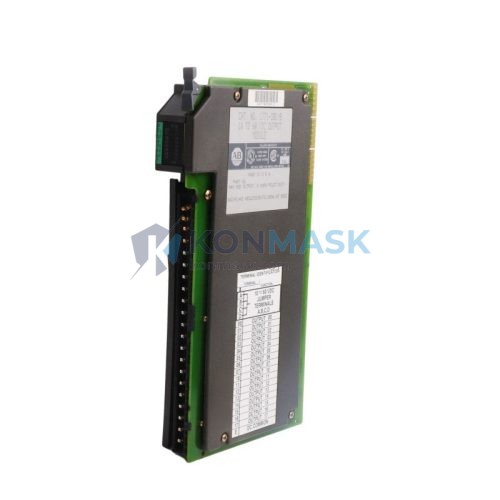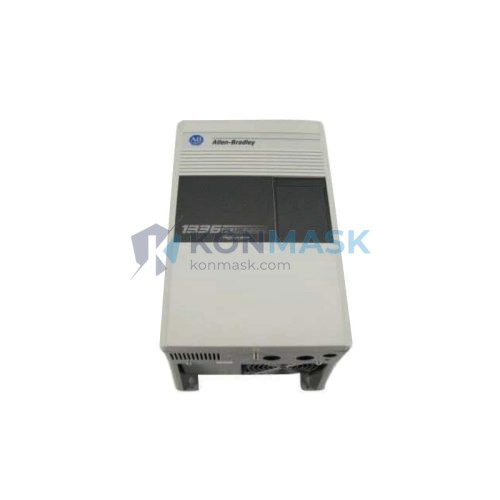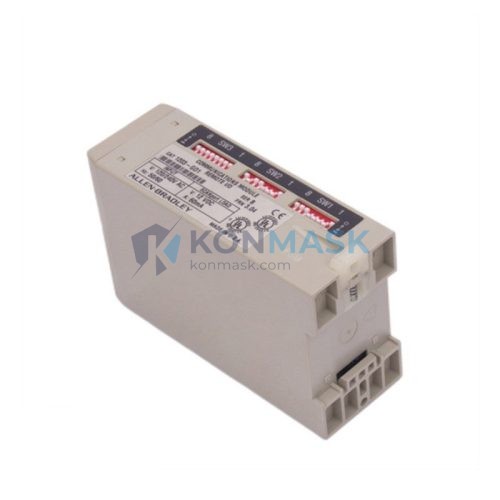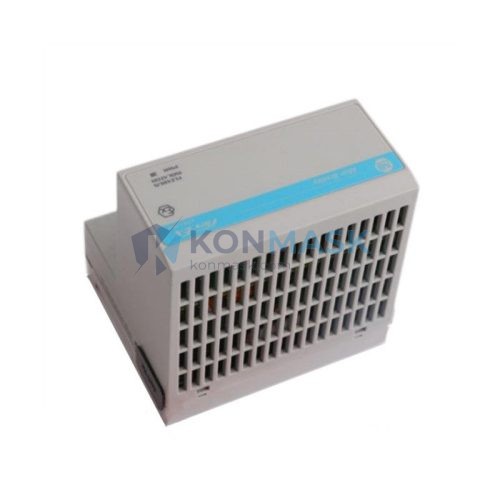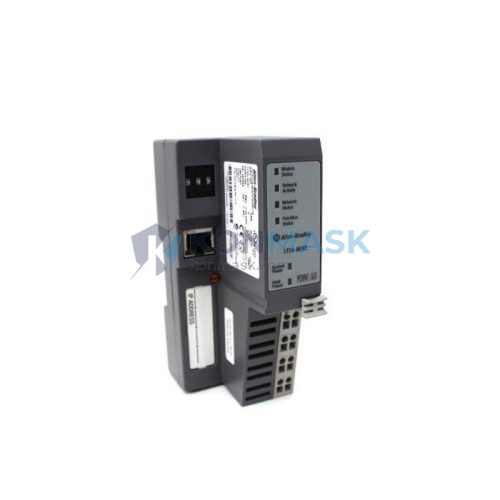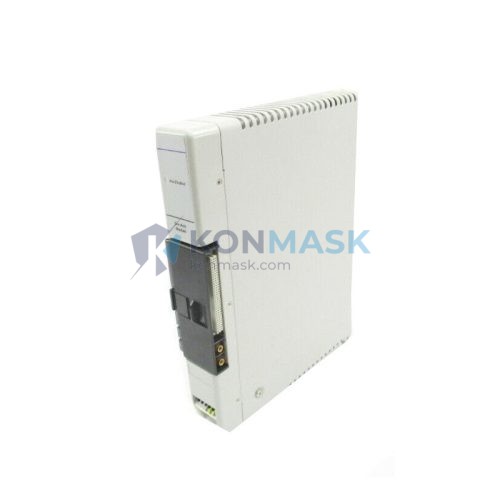

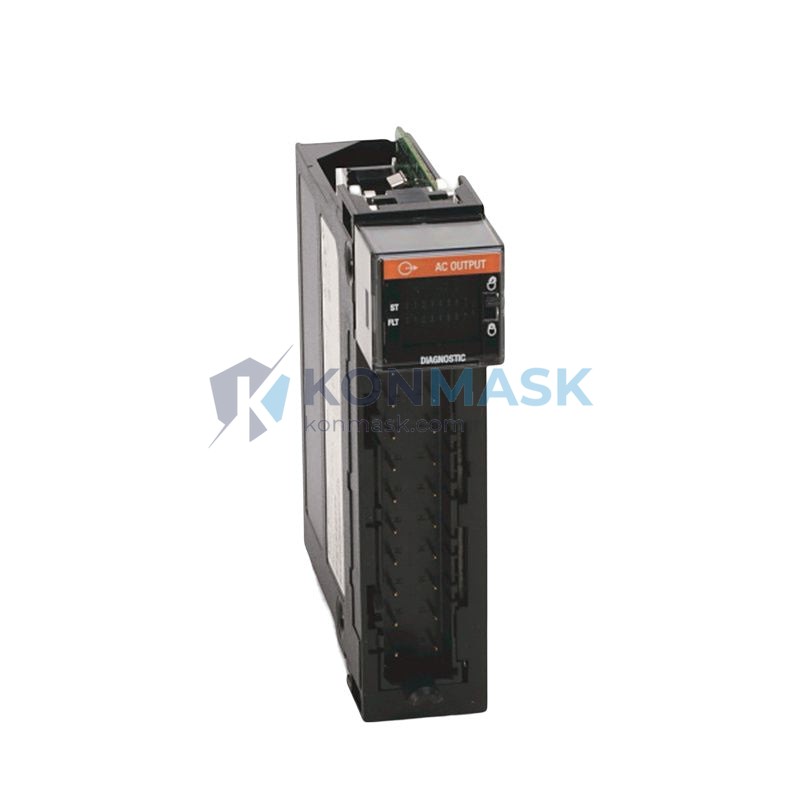
Allen-Bradley 1756-OA8D – Diagnostic AC Output Module | ControlLogix 1756 Platform
Engineering Background: The Rockwell Automation ControlLogix 1756 platform is the backbone of safety-critical and high-availability process control architectures across petrochemical, power generation, and water/wastewater treatment facilities worldwide. Within this platform, output modules serve as the final control element interface — translating controller logic into field-level actuation commands. The 1756-OA8D occupies a specialized role: it is the diagnostic variant of the standard 8-point AC output module, providing real-time field-side fault detection that standard output modules cannot offer. In architectures where undetected output failures carry process safety or regulatory consequences, the 1756-OA8D is the engineered choice.
Product Positioning: The 1756-OA8D is distinguished from the non-diagnostic 1756-OA8 by its per-point diagnostic capability — detecting open-load, short-circuit, and blown-fuse conditions at the field device level without requiring external monitoring hardware. It is appropriate where IEC 61511 functional safety requirements, insurance mandates, or plant reliability standards demand output-state verification. It is not a drop-in replacement for the 1756-OA16 (16-point) or 1756-OA8E (electronically fused) in applications where point density or electronic fusing is the primary constraint.
Complete Technical Specifications
Electrical
- Output Type: AC, sourcing (solid-state TRIAC)
- Number of Output Points: 8
- Operating Voltage Range: 74–265V AC (47–63 Hz)
- Maximum Load Current per Point: 2.0 A continuous
- Maximum Module Current: 8.0 A total (all points on)
- Minimum Load Current: 10 mA (required for diagnostic detection)
- Output Leakage Current: ≤ 2.5 mA @ 265V AC
- Output Voltage Drop (ON state): ≤ 1.5V RMS @ 2.0 A
- Backplane Current Draw: 125 mA @ 5V DC; 3 mA @ 24V DC
- Diagnostic Features: Open-load detection, short-circuit detection, blown-fuse detection (per point)
- Fuse Rating: 3A, 250V, 5×20mm (field-replaceable, per group)
Mechanical
- Form Factor: Single-slot ControlLogix 1756 chassis module
- Wiring: Removable terminal block (RTB), 20-pin, screw-clamp
- Wire Gauge: 14–22 AWG (solid or stranded)
- Approximate Weight: 300 g (module only, without RTB)
- Dimensions: Standard 1756 module form factor
Environmental
- Operating Temperature: 0°C to +60°C
- Storage Temperature: −40°C to +85°C
- Relative Humidity: 5–95% non-condensing
- Vibration: IEC 68-2-6 (operational)
- Shock: IEC 68-2-27 (operational)
- Pollution Degree: 2
- Enclosure Rating: IP20 (chassis-mounted)
Certifications
- UL Listed (UL 508)
- CE Marked (EMC Directive, Low Voltage Directive)
- C-UL Listed
- RCM (Australia/New Zealand)
- ATEX / IECEx: Not rated for Zone 0/1 — requires external barrier for hazardous area use
Data source: Rockwell Automation Publication 1756-TD001 (ControlLogix I/O Modules Technical Data) and 1756-UM058 (1756-OA8D User Manual). Specifications subject to revision — verify against current Rockwell documentation for safety-critical applications.
Proven Application Environments
- Petrochemical / Refinery: Crude distillation unit — motor-operated valve (MOV) actuator control — continuous 24/7 operation with mandatory open-load fault alarming per SIL 2 requirements
- Power Generation: Coal/gas-fired boiler plant — induced draft fan damper actuator control — high-vibration environment with thermal cycling from cold start to full load
- Water & Wastewater Treatment: Lift station — submersible pump motor starter control — high-humidity enclosure with frequent start/stop cycling and remote diagnostic monitoring
- Pharmaceutical Manufacturing: Clean-in-place (CIP) system — solenoid valve bank control — FDA 21 CFR Part 11 environment requiring output state verification and audit trail
- Pulp & Paper: Digester pressure control — steam valve actuator — high-temperature process area with corrosive atmosphere requiring sealed field wiring
- Mining & Minerals Processing: Conveyor belt system — belt drive motor starter control — dusty, high-vibration environment with extended MTBF requirements and minimal maintenance access
Engineering Advantages
- For SIL-rated safety loops, this output module provides per-point open-load and short-circuit diagnostics, because field-side fault detection eliminates the need for external monitoring relays and reduces proof-test interval requirements under IEC 61511.
- For high-availability continuous process plants, this output module supports online module replacement (hot-swap) within a redundant ControlLogix chassis, because the 1756 backplane architecture maintains controller operation during module swap without process interruption.
- For applications with mixed 120V and 240V AC field devices, this output module operates across 74–265V AC on all 8 points simultaneously, because the wide-range TRIAC output eliminates the need for separate module SKUs per voltage level.
- For maintenance teams with limited on-site spares, this output module uses a field-replaceable fuse per output group, because blown-fuse detection with point-level identification reduces fault isolation time from hours to minutes.
- For OEM machine builders targeting global markets, this output module carries UL, CE, C-UL, and RCM certifications on a single catalog number, because multi-certification eliminates the need for market-specific hardware variants.
- For aging DCS migration projects, this output module integrates directly into existing ControlLogix chassis alongside legacy 1756 analog and specialty modules, because the 1756 platform’s backward-compatible backplane preserves existing I/O wiring and ladder logic during phased migration.
System Architecture & Signal Flow
Signal Flow: ControlLogix CPU (1756-L series) → 1756 backplane (serial communication, 5V DC) → 1756-OA8D output module → TRIAC switching element → field terminal block (RTB) → AC load (solenoid, motor starter, actuator). Diagnostic feedback path: field terminal → current sensing circuit → module diagnostic register → controller tag (O.Fault, O.Data) → HMI alarm or program logic.
Compatible Chassis: All 1756 ControlLogix chassis (4, 7, 10, 13, 17-slot: 1756-A4, A7, A10, A13, A17) and GuardLogix chassis (1756-LSP, 1756-L6xS series) — compatible because all share the same 1756 backplane electrical and mechanical standard.
Compatible Controllers: All 1756-L series ControlLogix controllers (L1, L2, L3, L4, L5, L6, L7, L8 families) and 1756-LSP/L6xS GuardLogix controllers. RSLogix 5000 / Studio 5000 Logix Designer required for configuration (v16.00 minimum recommended).
Substitution Conditions: The 1756-OA8 (non-diagnostic) may substitute in non-safety applications where per-point diagnostics are not required and cost reduction is the priority. The 1756-OA8E (electronically fused) substitutes where field-replaceable fuses are unacceptable and electronic fuse reset via software is required. Direct substitution of 1756-OA16 is not possible due to different point count and terminal block configuration.
Sourcing & Quality Verification
Units offered through Konmask.com are sourced from authorized distribution channels and verified surplus inventory from decommissioned industrial facilities. Each unit undergoes a structured 4-step inspection process prior to dispatch:
- Visual Inspection: Housing integrity check, terminal block condition, label legibility, and absence of physical damage, burn marks, or corrosion on connectors.
- Firmware & Revision Verification: Module series letter and firmware revision confirmed against Rockwell Automation compatibility matrices to ensure compatibility with target controller firmware.
- Functional Bench Test: Module installed in a 1756 test chassis with a 1756-L series controller; all 8 output points exercised under load; diagnostic registers verified for correct fault reporting.
- Packaging & Documentation: Anti-static packaging, humidity indicator card, and inspection record included. Original Rockwell documentation (if available) included with shipment.
Available Documentation: Inspection report, functional test record, Rockwell Automation product datasheet (1756-TD001), Declaration of Conformity (CE), and — where available — original factory test certificate.
Procurement Process
- Inquiry Submission: Submit catalog number, required quantity, target delivery date, and any firmware revision requirements via the product page inquiry form or directly to support@konmask.com. Include chassis model and controller firmware version if compatibility verification is required.
- Quotation & Availability Confirmation: A technical response with pricing, lead time, and stock confirmation is provided within 24 hours on business days. Expedited response available for shutdown/turnaround situations — indicate urgency in the subject line.
- Order Fulfillment: Orders confirmed before 14:00 CST are processed same business day. Export documentation (commercial invoice, packing list, country of origin certificate) provided for international shipments. DHL Express, FedEx International Priority, and sea freight consolidation available.
Technical Support: Pre-sale support includes compatibility verification, firmware revision guidance, and system architecture review. Post-sale support includes installation guidance and Rockwell documentation sourcing. Contact: support@konmask.com | +0086 19859288691.
Technical FAQ
Q: Is the 1756-OA8D compatible with a 1756-L73 controller running firmware v30?
A: Yes. The 1756-OA8D is compatible with all 1756-L7 series controllers across all released firmware versions (v20–v35+). No module firmware update is required; the module is configured via the Studio 5000 I/O tree using the standard 1756-OA8D Add-On Profile (AOP). Confirm the AOP version matches the installed Studio 5000 release.
Q: Can the 1756-OA8D directly replace a 1756-OA8 in an existing program without logic changes?
A: Mechanically and electrically, yes — the 1756-OA8D uses the same 20-pin RTB and the same output voltage/current ratings as the 1756-OA8. However, the diagnostic module exposes additional controller tags (O.Fault, O.DiagnosticActive) that the non-diagnostic module does not. Existing ladder logic will continue to function without modification, but diagnostic tags will be unmonitored unless explicitly added to the program. A full logic review is recommended before substitution in safety-instrumented systems.
Q: Is the 1756-OA8D certified for use in Class I, Division 2 (C1D2) hazardous locations?
A: The 1756-OA8D itself is not ATEX or IECEx Zone 0/1 rated, nor is it C1D2 certified as a standalone module. For hazardous area installations, the module must be installed in a purged and pressurized enclosure (Type X or Y per NFPA 496) or behind certified intrinsic safety barriers on the field wiring side. Consult the plant’s area classification drawings and the applicable hazardous area installation standard (IEC 60079-14 or NEC Article 501) before specifying for C1D2 or Zone 2 locations.
© 2026 Konmask.com. All rights reserved.
Original Source: https://Konmask.com
Contact: support@konmask.com | +0086 19859288691