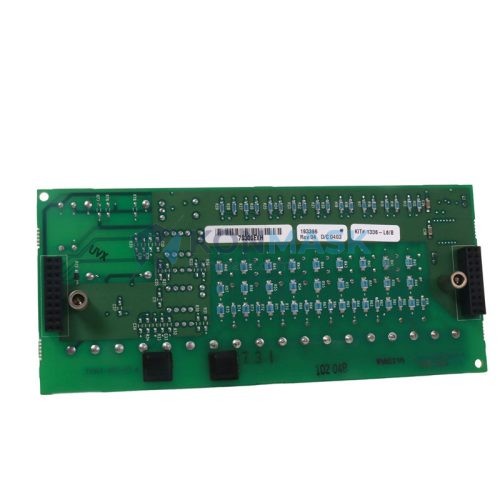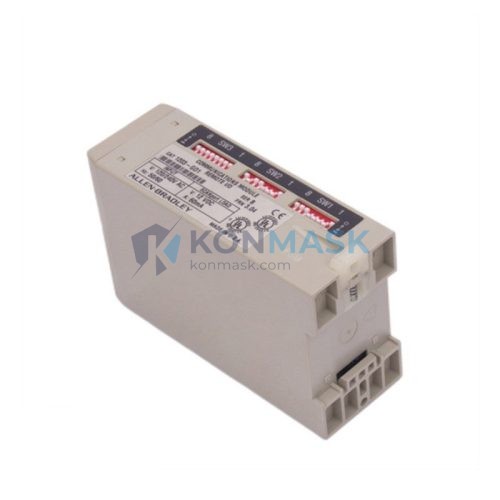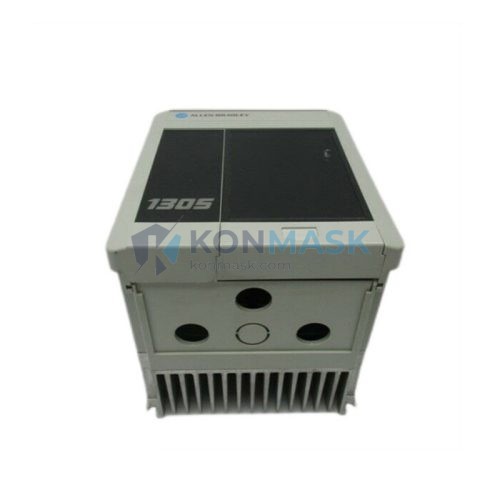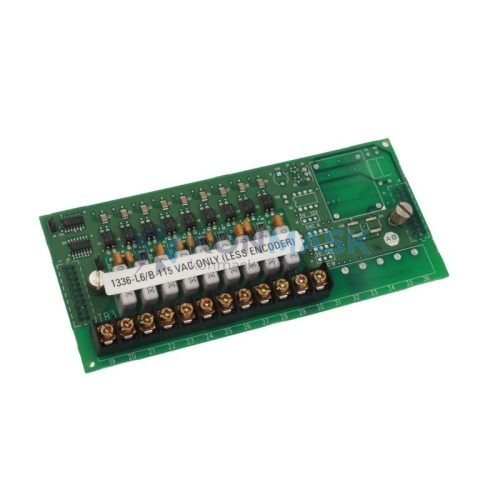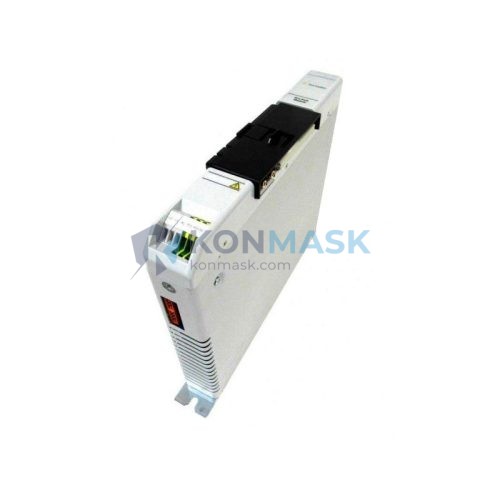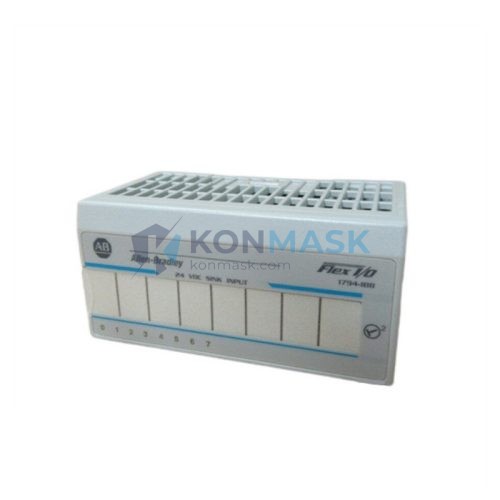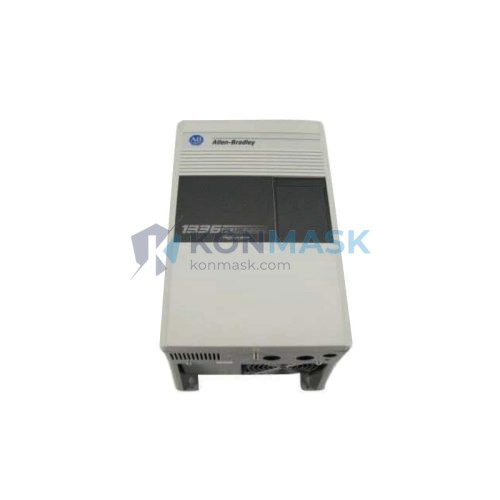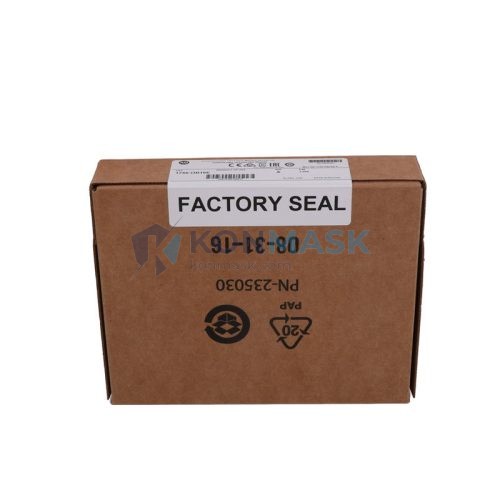

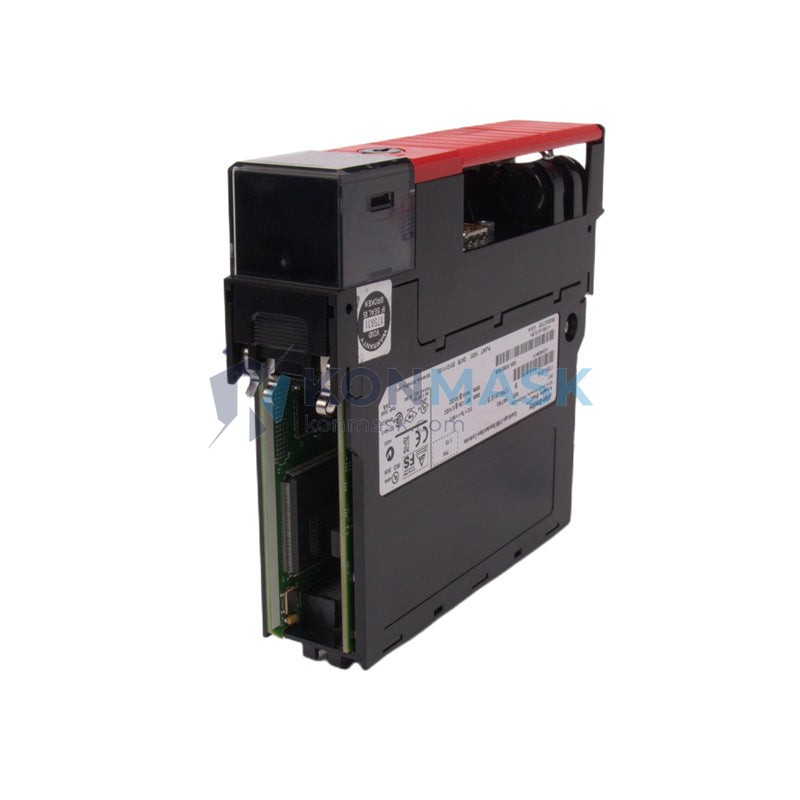
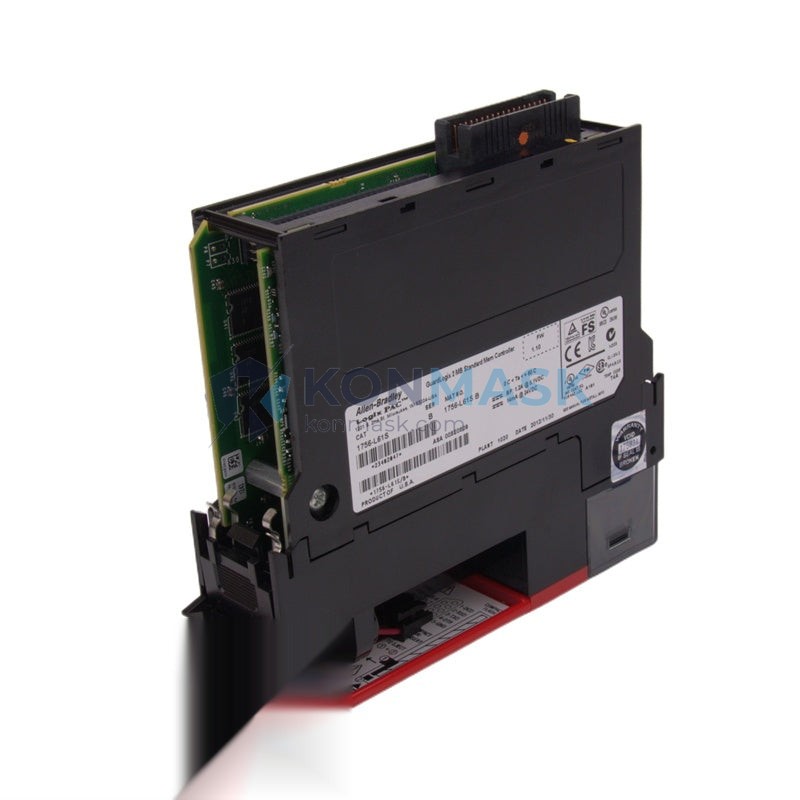
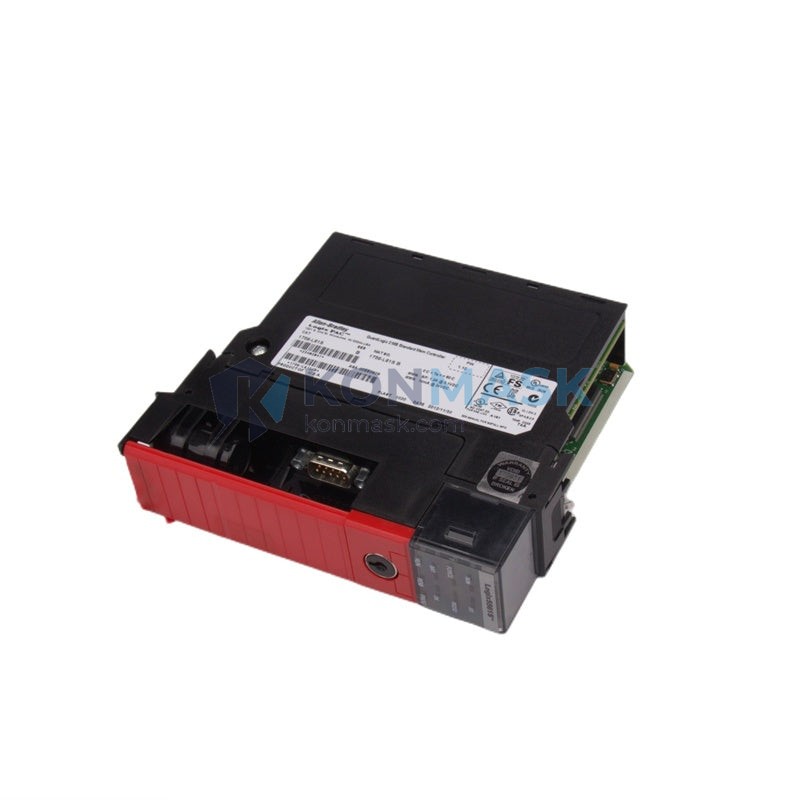
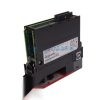
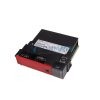
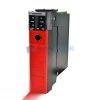
Allen-Bradley 1756-L61S – Safety PLC Controller with 2MB Standard Memory | ControlLogix Platform
Engineering Background: The Rockwell Automation ControlLogix platform is the backbone of safety-critical automation architectures across process, discrete, and hybrid industries. Within this ecosystem, the GuardLogix controller series integrates standard control and IEC 61508-compliant safety control into a single chassis, eliminating the need for a separate safety PLC and reducing system complexity. The 1756-L61S occupies the entry-to-mid tier of the GuardLogix L6x generation, delivering 2MB of standard user memory alongside a dedicated safety task partition — making it the preferred choice for applications where safety integrity and deterministic scan performance must coexist within a single backplane.
Product Positioning: The 1756-L61S is distinguished from the non-safety 1756-L61 by its integrated SIL 2-capable safety task and from the higher-memory 1756-L62S/L63S by its 2MB standard memory ceiling. It is the correct selection when the safety program footprint is moderate (≤1MB safety memory), the standard control task does not exceed 2MB, and the application requires certified safety I/O via the 1756-IB16S or equivalent GuardLogix-compatible modules. It is not recommended for applications requiring SIL 3 (which demands a 1oo2 GuardLogix pair) or for programs exceeding its memory boundary without a firmware-level upgrade path.
Complete Technical Specifications
Electrical
- Catalog Number: 1756-L61S
- Platform: ControlLogix / GuardLogix (L6x Generation)
- Standard User Memory: 2 MB
- Safety Memory: Up to 1 MB (dedicated safety task partition)
- I/O Capacity: Up to 128,000 I/O points (distributed via EtherNet/IP, ControlNet, DeviceNet)
- Communication Ports: 1 × RS-232 (DF1/DH-485), backplane via 1756-ENxT or 1756-CNB modules
- Power Supply: Supplied via ControlLogix chassis (1756-PA72 / 1756-PB72 or equivalent)
- Backplane Current Draw: 1.2 A @ 5 VDC; 3.0 mA @ 24 VDC
- Safety Integrity Level: SIL 2 (IEC 61508), capable of SIL 3 in 1oo2 redundant configuration
Mechanical
- Form Factor: Single-slot ControlLogix module
- Dimensions: 94.0 mm H × 54.9 mm W × 128.3 mm D (standard ControlLogix module profile)
- Weight: Approx. 350 g
- Mounting: ControlLogix 1756-Axx chassis (4, 7, 10, 13, or 17-slot)
- Keying: Electronic keying via RSLogix 5000 / Studio 5000
Environmental
- Operating Temperature: 0 °C to +60 °C
- Storage Temperature: −40 °C to +85 °C
- Relative Humidity: 5% to 95% non-condensing
- Vibration: 2 g @ 10–500 Hz (IEC 60068-2-6)
- Shock: 30 g operational, 50 g non-operational (IEC 60068-2-27)
- Pollution Degree: 2
- IP Rating: IP20 (chassis-mounted)
Certifications
- IEC 61508 SIL 2 (standalone) / SIL 3 (1oo2 pair)
- UL Listed (UL 508, UL 1998)
- CE Marking (Low Voltage Directive, EMC Directive)
- cULus, C-Tick
- ATEX / IECEx: Suitable for Zone 2 / Class I Div 2 when installed per Rockwell publication 1756-UM020
Data source: Rockwell Automation Publication 1756-UM020 (GuardLogix Controller Systems User Manual), 1756-TD008 (ControlLogix Selection Guide), and IEC 61508 certification documentation. Specifications subject to firmware revision; verify against current Rockwell TechConnect documentation for production BOM.
Proven Application Environments
- Petrochemical Refinery — Emergency Shutdown System (ESD): Deployed as the primary safety controller in SIL 2-rated ESD panels for crude distillation units, managing pressure relief valve actuation under high-temperature, high-vibration conditions with deterministic 10 ms safety task execution.
- Electric Power Generation — Turbine Control: Integrated into gas turbine governor systems at combined-cycle power plants, coordinating standard speed/load control tasks alongside safety-rated overspeed trip logic within a single ControlLogix chassis.
- Municipal Water Treatment — Chlorination Dosing: Installed in chlorine gas feed control panels at water treatment facilities, providing SIL 2 interlock logic for toxic gas detection and automatic isolation valve control under continuous 24/7 duty cycles.
- Automotive Assembly — Robotic Safety Zones: Used as the safety supervisor controller in multi-robot welding cells, managing light curtain, safety mat, and door interlock inputs via 1756-IB16S modules with sub-20 ms response time.
- Pharmaceutical Manufacturing — CIP/SIP Systems: Deployed in clean-in-place and steam-in-place skids requiring FDA 21 CFR Part 11 audit trail compliance, leveraging GuardLogix safety task isolation to protect validated safety interlocks from standard recipe logic.
- Mining — Conveyor Belt Safety Systems: Installed in underground conveyor drive panels, managing pull-cord, belt-slip, and fire suppression interlocks under high-dust, high-vibration environments with extended MTBF requirements.
Engineering Advantages
- For applications requiring both standard and safety control in a single chassis, this safety PLC controller eliminates the cost and complexity of a separate safety PLC, because the GuardLogix architecture partitions safety and standard tasks at the firmware level with hardware-enforced memory separation.
- For SIL 2 ESD applications with moderate I/O counts, this controller delivers certified safety integrity without over-specifying memory, because the 2MB standard + 1MB safety partition is correctly sized for the majority of single-unit process safety applications.
- For systems requiring future scalability, this controller supports online program changes and add-on instruction (AOI) libraries, because ControlLogix firmware allows live edits without safety task interruption when performed per Rockwell change-management procedures.
- For multi-network architectures, this controller integrates seamlessly with EtherNet/IP, ControlNet, and DeviceNet simultaneously, because the ControlLogix backplane supports concurrent communication module operation without controller CPU overhead.
- For regulated industries requiring audit trails, this controller supports FactoryTalk AssetCentre integration for change detection and version control, because the L61S firmware exposes a full change log accessible via RSLogix 5000 audit functions.
- For harsh industrial environments, this controller maintains operational integrity at 0–60 °C with IEC 60068-certified vibration and shock ratings, because the ControlLogix module design uses conformal-coated PCBs and gold-plated backplane connectors.
System Architecture & Signal Flow
Signal Flow: Field safety devices (E-stops, light curtains, safety relays) → 1756-IB16S / 1756-IG16 safety input modules → ControlLogix backplane → 1756-L61S safety task (SIL 2 logic execution, 10 ms typical scan) → 1756-OB16S safety output modules → final control elements (solenoid valves, contactors). Standard process signals follow the same backplane path to the standard task partition, with hardware-enforced isolation between the two task domains.
Compatible Modules & Reason:
- 1756-EN2T / 1756-EN2TR: EtherNet/IP communication — primary network interface for SCADA, HMI (PanelView Plus), and distributed I/O (1734 POINT I/O, 1738 ArmorPOINT I/O).
- 1756-IB16S / 1756-OB16S: GuardLogix-certified safety I/O — mandatory for SIL 2 field device interfacing; non-safety modules cannot be assigned to the safety task.
- 1756-PA72 / 1756-PB72: ControlLogix power supply — provides regulated 5 VDC and 24 VDC backplane power; redundant power supply (1756-PSCA2) supported for high-availability applications.
- 1756-A7 / 1756-A10 / 1756-A13: ControlLogix chassis — the L61S occupies one slot; chassis selection depends on total module count.
Substitution Conditions: The 1756-L62S (4MB standard memory) is the direct upgrade path when standard task memory exceeds 2MB. The 1756-L71S (ControlLogix 5570 generation) is the recommended replacement for new designs requiring higher performance, larger memory, or integrated EtherNet/IP port. Cross-generation substitution requires firmware migration and full safety validation re-execution per IEC 61508 change management requirements.
Sourcing & Quality Verification
All units offered through Konmask.com are sourced from authorized distribution channels, decommissioned OEM systems with documented service history, or certified refurbishment partners operating under ISO 9001 quality management systems. Each unit undergoes the following verification process before dispatch:
- Visual Inspection: Chassis connector pin integrity, label authenticity (Rockwell holographic serial label verification), and absence of physical damage or counterfeit indicators.
- Firmware & Serial Verification: Unit serial number cross-referenced against Rockwell Automation’s product authentication database; firmware revision recorded and disclosed.
- Functional Power-On Test: Controller powered in a test chassis, RSLogix 5000 connection established, safety task partition confirmed operational, and diagnostic LED status verified (RUN/FLT/OK indicators).
- Packaging & ESD Protection: Units shipped in anti-static bags with foam-lined packaging; temperature and humidity indicators included for international shipments.
Documentation available upon request: Original Rockwell Automation datasheet, firmware revision record, functional test report, certificate of conformity, and customs/export documentation (HS Code 8537.10).
Procurement Process
- Submit Inquiry: Contact Konmask.com via the product page quote form or directly at support@konmask.com with your required quantity, target delivery date, and any firmware revision requirements. A response is guaranteed within 24 business hours.
- Technical Confirmation & Quotation: A technical review of your application requirements will be conducted to confirm the 1756-L61S is the correct specification. A formal quotation including unit price, lead time, and shipping terms (EXW/CIF/DAP) will be issued.
- Order Fulfillment & Support: Upon order confirmation, units are prepared, tested, and dispatched with full documentation. Post-delivery technical support is available for installation verification, RSLogix 5000 connectivity confirmation, and safety task configuration guidance.
Technical support types available: pre-sales specification consultation, compatibility verification, firmware revision advisory, and post-delivery commissioning assistance.
Technical FAQ
Q: Is the 1756-L61S compatible with Studio 5000 Logix Designer, or only RSLogix 5000?
A: The 1756-L61S is fully compatible with both RSLogix 5000 (v16 and later) and Studio 5000 Logix Designer (v21 and later). Studio 5000 is the current Rockwell programming environment and is recommended for new projects. Existing RSLogix 5000 projects can be opened and converted in Studio 5000 without loss of safety task configuration, provided the firmware revision is compatible.
Q: Can the 1756-L61S be substituted with a 1756-L71S in an existing installation?
A: Direct hardware substitution is not plug-and-play. The 1756-L71S (ControlLogix 5570) uses a different firmware architecture and requires a project upgrade in Studio 5000. The safety task must be re-validated per IEC 61508 change management procedures, and all safety I/O module firmware must be confirmed compatible with the L71S safety partner. This substitution is recommended only for planned system upgrades, not emergency replacements.
Q: What SIL level is achievable with a single 1756-L61S, and under what conditions is SIL 3 possible?
A: A single 1756-L61S achieves SIL 2 (IEC 61508) in a 1oo1 architecture. SIL 3 requires a 1oo2 (one-out-of-two) redundant GuardLogix configuration using two 1756-L61S controllers (or equivalent L6xS units) with a 1756-SYNCH synchronization module. The SIL 3 claim must be supported by a full Functional Safety Assessment (FSA) per IEC 61511 for process industry applications, including PFD calculation and proof test interval definition.
© 2026 Konmask.com. All rights reserved.
Original Source: https://Konmask.com
Contact: support@konmask.com | +0086 19859288691