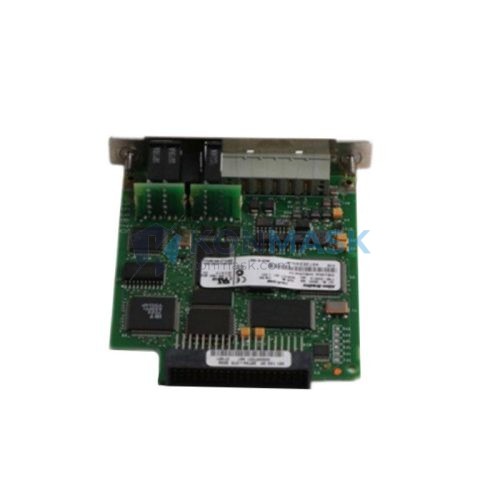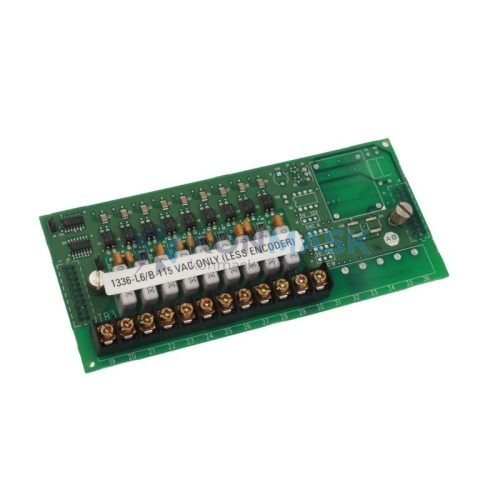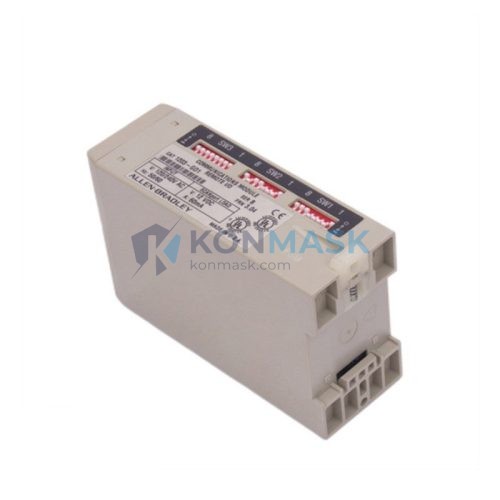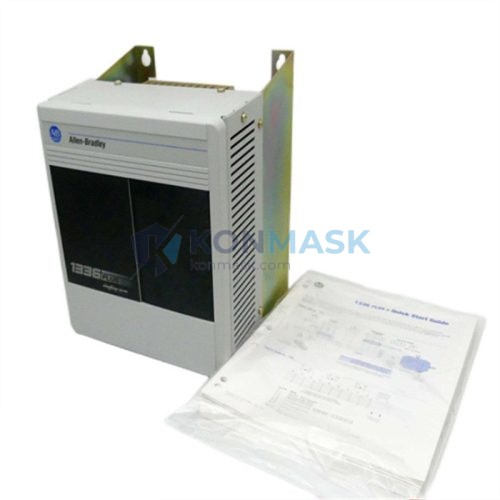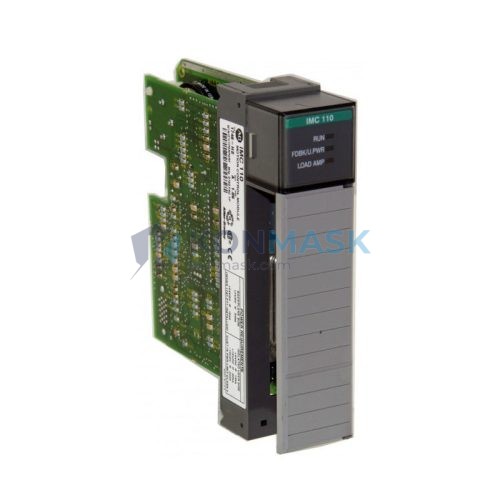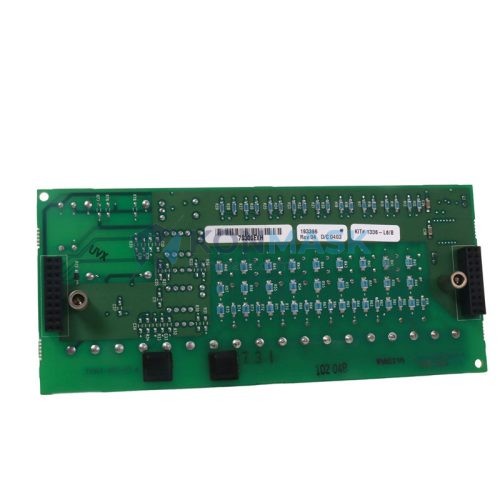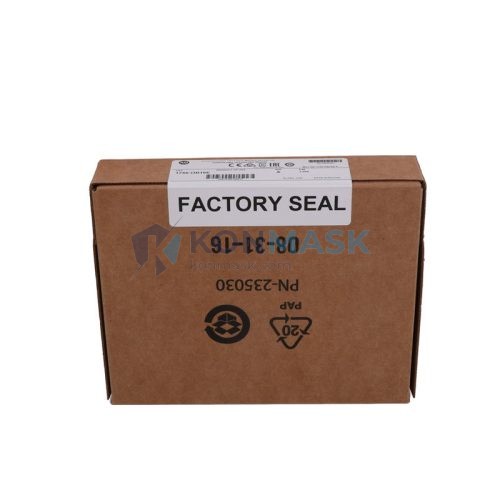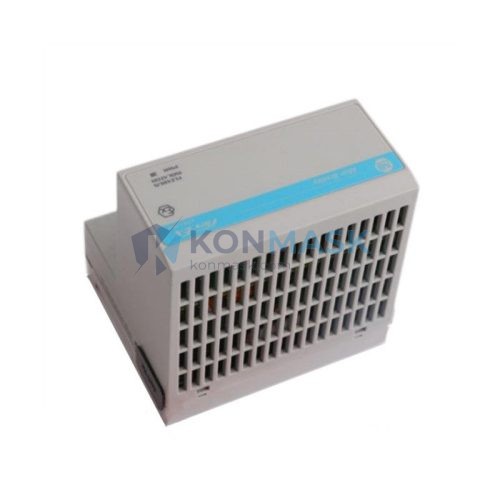

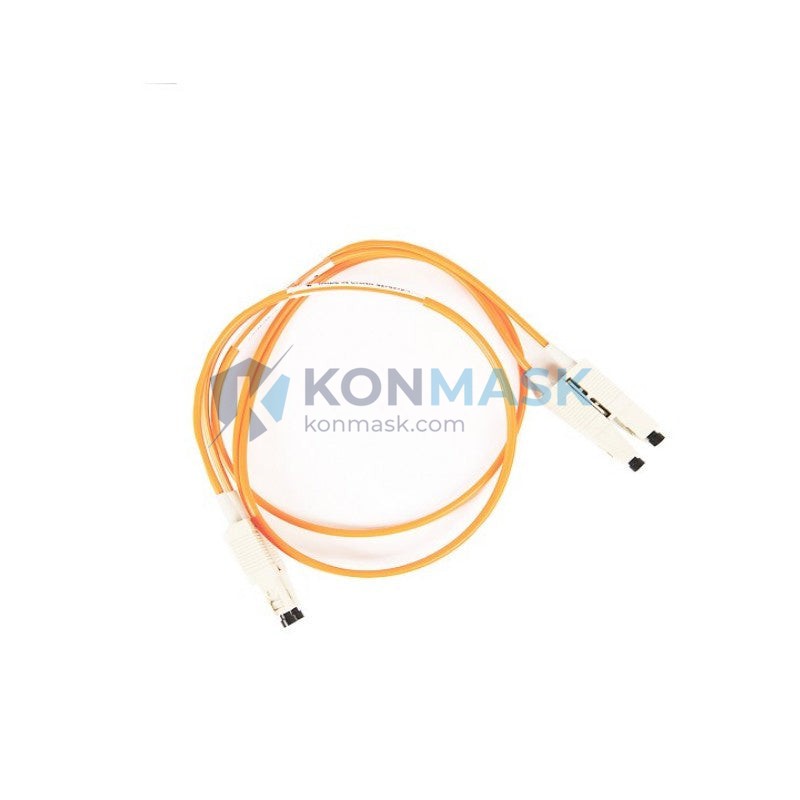
Allen-Bradley 1757-SRC3 System Redundancy Controller – ControlLogix Redundancy Series
When a primary controller fails mid-process in a continuous manufacturing environment — a petrochemical reactor, a power generation unit, or a water treatment facility — the consequences extend far beyond a simple restart. Unplanned downtime triggers safety shutdowns, product loss, regulatory reporting obligations, and in the worst cases, equipment damage or personnel risk. The Allen-Bradley 1757-SRC3 System Redundancy Module exists precisely to prevent that scenario: it provides the synchronization backbone that allows a ControlLogix redundancy pair to transfer control seamlessly, with no detectable interruption to the process.
Within the 1757 ControlLogix Redundancy Series, the 1757-SRC3 is the dedicated System Redundancy Controller that manages chassis-to-chassis communication and switchover arbitration. It is not a general-purpose communication module — it is purpose-engineered for high-availability control architectures where the cost of a single unplanned outage justifies the investment in a fully redundant system. Deployed globally across oil & gas, power utilities, and critical infrastructure, this module is a recognized component in SIL-rated and high-availability control system designs.
Technical Specifications
Electrical
- Backplane Power Consumption: Refer to Rockwell Automation publication 1757-UM536 for slot power budget
- Communication Interface: Dedicated redundancy synchronization link between primary and secondary chassis
- Compatible Chassis: ControlLogix 1756-Axx series chassis
Mechanical
- Form Factor: Single-slot ControlLogix module
- Part Number / Catalog Number: 1757-SRC3
- Weight: Approximately 200 g (module only, excluding packaging)
Environmental
- Operating Temperature: 0 °C to 60 °C (consult Rockwell documentation for derating with adjacent modules)
- Storage Temperature: -40 °C to 85 °C
- Relative Humidity: 5% to 95% non-condensing
Certifications & Standards
- Designed for use within Rockwell Automation ControlLogix Redundancy systems per publication 1756-UM523
- CE Marking applicable; consult current Rockwell Automation product certifications page for regional compliance
- Note: Always verify firmware compatibility with your Logix Designer version before installation. Refer to Rockwell Automation Knowledgebase Article ID 35331 for redundancy compatibility matrices.
Key Features & Benefits
- Automatic Switchover Arbitration — The 1757-SRC3 continuously monitors primary controller health and executes a bumpless transfer to the secondary chassis, typically completing switchover in under 10 ms, preserving loop integrity in fast-scan PID applications.
- Chassis Synchronization Link — Maintains a dedicated, high-speed synchronization path between the primary and secondary ControlLogix chassis, ensuring output table and I/O data are mirrored in real time without loading the standard backplane.
- Qualified for High-Availability Architectures — Designed as a component in redundancy systems that support IEC 61511 functional safety lifecycle requirements, making it suitable for SIL-rated process safety applications when used within a validated system design.
- Reduced MTTR — Hot-standby architecture means maintenance teams can replace a failed primary module and restore redundancy without a process shutdown, reducing mean time to repair and extending planned maintenance windows.
- Firmware-Managed Redundancy — Switchover logic is handled at the firmware level within the redundancy module, not the application program, eliminating the need for custom ladder logic to manage failover conditions.
- Long-Term Platform Availability — As part of the established ControlLogix ecosystem, the 1757-SRC3 benefits from Rockwell Automation’s extended product lifecycle commitments, supporting long-horizon capital projects in regulated industries.
Industry & Equipment Applications
- Oil & Gas — Upstream & Midstream: Pipeline SCADA systems, compressor station control, wellhead automation where continuous operation is mandated by pipeline integrity management programs.
- Power Generation & Utilities: Turbine control systems, substation automation, and load dispatch control where grid stability requirements prohibit unplanned controller outages.
- Petrochemical & Refining: Distillation column control, reactor management, and blending systems operating under continuous process conditions with strict uptime SLAs.
- Water & Wastewater Treatment: Pump station control, SCADA-integrated treatment plant automation, and lift station management where regulatory compliance requires documented system availability.
- Automotive Manufacturing: Body-in-white welding lines and paint shop conveyors where a controller fault would halt an entire production segment and trigger costly rebalancing.
- Pharmaceutical & Food Processing: Batch process control in GMP-regulated environments where a mid-batch controller failure can result in product loss and mandatory batch record deviation reporting.
System Integration & Compatible Parts
Upstream / Required Components:
- 1756-Axx ControlLogix Chassis (primary and secondary)
- 1756-L6x or 1756-L7x ControlLogix Controllers (redundancy-capable firmware required)
- 1756-PA72 / 1756-PB72 Power Supplies (one per chassis)
- 1757-SRM Redundancy Module (earlier generation; 1757-SRC3 is the current-generation replacement in applicable system configurations)
Downstream / Associated Components:
- 1756-EN2TR / 1756-EN3TR EtherNet/IP Communication Modules (for redundant network paths)
- 1756-IB16 / 1756-OB16 I/O Modules (standard ControlLogix I/O compatible with redundancy chassis)
Substitution Notes: The 1757-SRC3 is not a drop-in replacement for all 1757-SRM applications. Compatibility depends on controller firmware revision, Logix Designer version, and chassis configuration. Always validate against the Rockwell Automation Redundancy Compatibility Matrix (Publication LOGIX-AT002) before substituting modules in an existing system.
Our Quality Assurance Process
- Visual & Physical Inspection: Each unit is inspected for connector pin integrity, housing damage, label legibility, and evidence of prior field use or repair. Modules showing signs of unauthorized modification are rejected.
- Functional Verification: Where test equipment permits, modules are powered and communication link establishment is verified. Firmware revision is read and documented against the unit’s catalog number.
- Packaging & ESD Protection: Units are packed in anti-static bags with foam cushioning, labeled with catalog number, serial number (if present), and inspection date.
- Documentation: Available documentation may include inspection report, firmware revision record, original Rockwell Automation datasheet, and certificate of conformance upon request.
Documents available upon request: Inspection report · Firmware revision record · Rockwell Automation original datasheet · Certificate of conformance · Export compliance declaration
How to Order
- Submit Your Inquiry: Email support@konmask.com or call +0086 19859288691 with your required catalog number (1757-SRC3), quantity, and any firmware revision requirements.
- Receive Your Quote: Our technical team will confirm stock availability, firmware revision, lead time, and pricing within 24 hours on business days.
- Confirm & Ship: Upon order confirmation, we arrange packaging, export documentation, and dispatch via your preferred freight method with full tracking.
Why Choose Konmask.com?
- Specialist Focus: We source and supply industrial automation components exclusively — PLC modules, DCS parts, and control system hardware — not a generalist distributor with automation as a side category.
- Technical Pre-Sales Support: Our team can assist with compatibility verification, firmware revision matching, and system configuration questions before you commit to a purchase.
- Transparent Documentation: We provide inspection records and available technical documentation with every shipment, not just a packing slip.
- Global Export Experience: We handle export documentation, customs declarations, and international freight coordination for buyers across Asia, Europe, the Middle East, and the Americas.
- Responsive Communication: 24-hour inquiry response commitment on business days, with direct access to technical staff — not a call center script.
Frequently Asked Questions
Q: What is the difference between the Allen-Bradley 1757-SRC3 and the 1757-SRM, and can I use the SRC3 as a direct replacement?
A: The 1757-SRC3 is a later-generation System Redundancy Controller within the ControlLogix redundancy platform, while the 1757-SRM is an earlier module. They are not always interchangeable. Compatibility depends on your controller firmware revision and Logix Designer version. We recommend consulting Rockwell Automation Publication LOGIX-AT002 or contacting our technical team before substituting modules in an existing redundancy system.
Q: What ControlLogix controller firmware version is required to use the 1757-SRC3 in a redundancy configuration?
A: Firmware compatibility for ControlLogix redundancy systems is revision-specific and is documented in Rockwell Automation’s Redundancy Compatibility Matrix. The required firmware version depends on your specific controller model (1756-L6x or 1756-L7x series) and your Logix Designer version. Contact us with your existing system details and we can assist with compatibility verification.
Q: Can the Allen-Bradley 1757-SRC3 be used in a SIL-rated safety system or IEC 61511 application?
A: The 1757-SRC3 is a component used within ControlLogix redundancy architectures that can form part of a high-availability or SIL-rated system design. However, SIL suitability depends on the complete system design, validation, and the specific safety function being implemented — not the module in isolation. Consult your functional safety engineer and the applicable Rockwell Automation safety documentation for your specific application.
© 2026 Konmask.com. All rights reserved.
Original Source: https://Konmask.com
Contact: support@konmask.com | +0086 19859288691