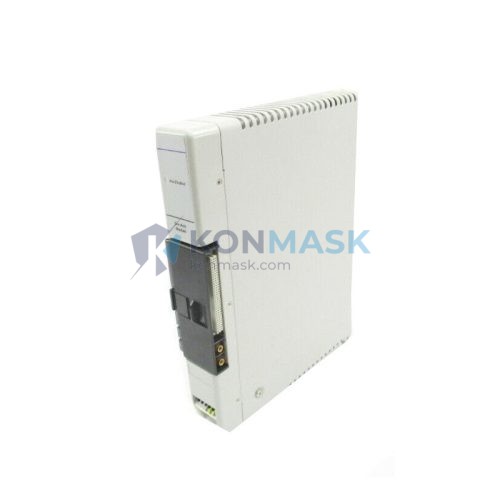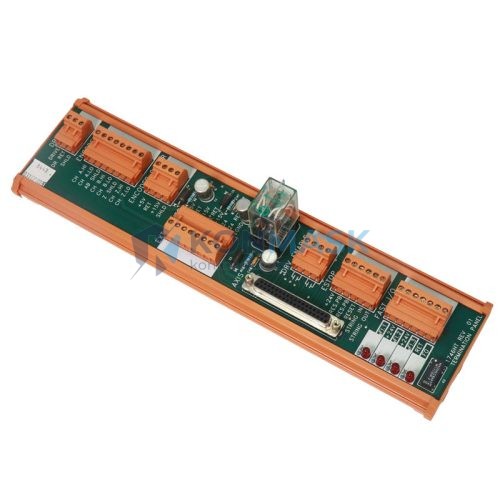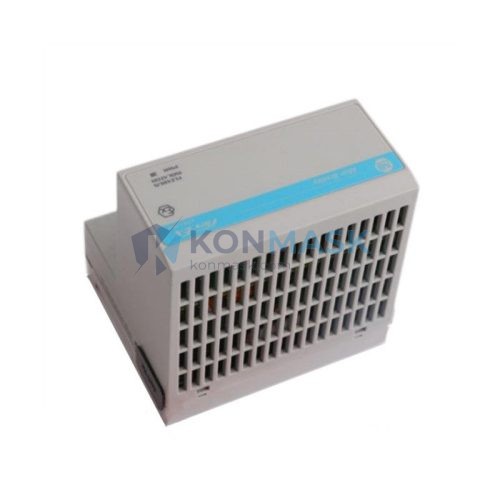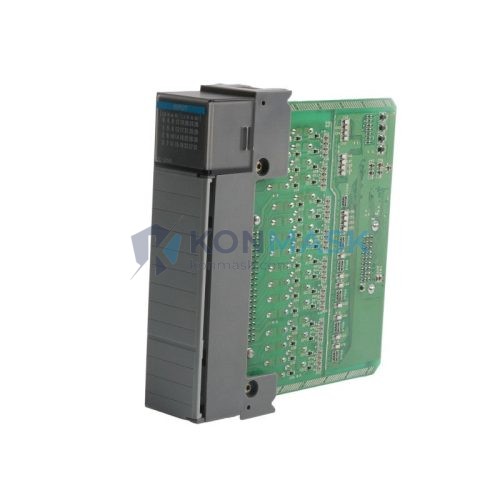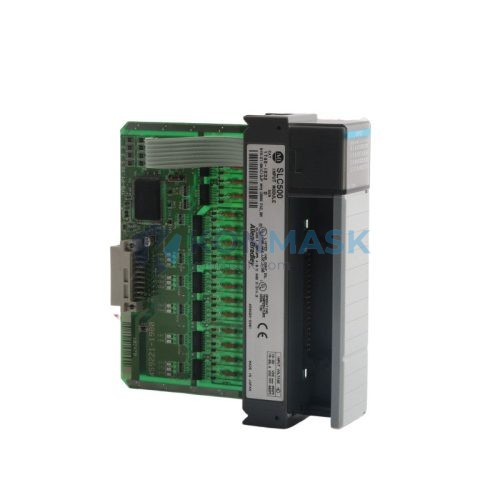

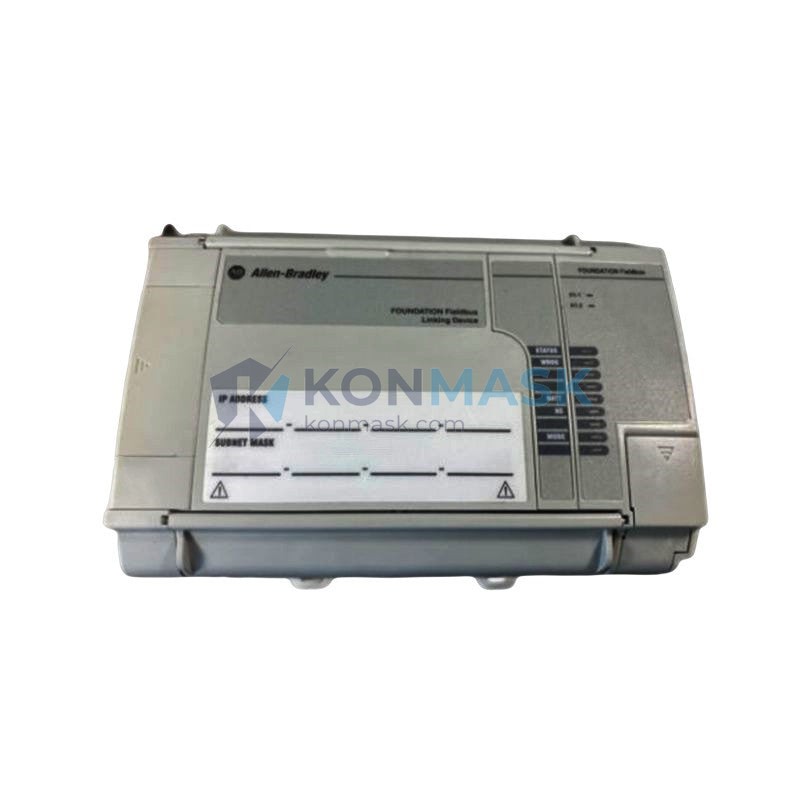
Foundation Fieldbus Linking Module Solution – AB 1757-FFLD2 | ControlNet Series
In large-scale process plants — refineries, chemical reactors, power generation facilities — engineers face a persistent integration challenge: field instruments operating on Foundation Fieldbus H1 segments (31.25 kbit/s) must communicate reliably with high-speed plant-wide control backbones. Without a purpose-built linking device, engineers resort to costly signal converters, proprietary gateways, or redundant wiring runs that add latency, reduce diagnostic transparency, and introduce single points of failure. Industry data shows that unplanned downtime in process plants costs an average of USD $260,000 per hour; the majority of incidents trace back to communication layer failures between field devices and the control system.
The Allen-Bradley 1757-FFLD2 Fieldbus Linking Module eliminates this integration gap at the architecture level. Mounted directly in the ControlNet backplane, it bridges up to two independent Foundation Fieldbus H1 segments to the ControlNet network, enabling deterministic, schedule-based communication between FF field instruments and the Rockwell Automation control system — with no external power supplies, no protocol translators, and no additional software licensing. The result is a leaner BOM, faster commissioning, and full access to FF device diagnostics from within RSLogix / Studio 5000.
Where This Product Is Used
Oil & Gas — Upstream & Midstream
- Wellhead control panels: Links FF-based pressure transmitters and ESD valves to ControlNet backbone; operates in Class I Div 2 / ATEX Zone 2 environments with ambient temperatures up to 60 °C.
- Pipeline SCADA nodes: Integrates Coriolis flow meters and multiphase analyzers; supports IEC 61158 / ISA-50.02 fieldbus standards required by pipeline operators.
- Offshore platform DCS migration: Replaces legacy HART multiplexers with native FF linking, reducing panel footprint by up to 40% and enabling predictive maintenance data streams.
Chemical & Petrochemical
- Reactor temperature loops: Connects FF-based RTD transmitters and control valves in continuous stirred-tank reactors; deterministic scheduling ensures <1 ms jitter on critical loops.
- Distillation column instrumentation: Manages 16+ FF devices per H1 segment across multi-story column structures; supports IEC 61511 SIL 2 loop architectures.
- Batch process skids: Enables function block execution at the field device level, offloading control computation from the PLC and reducing scan-cycle load.
Power Generation
- Boiler combustion control: Integrates FF burner management transmitters with ControlNet; meets NFPA 85 instrumentation requirements for boiler control systems.
- Turbine lube oil monitoring: Links vibration and temperature FF devices; continuous device health diagnostics reduce unplanned outages.
- Substation auxiliary systems: Operates in high-EMI environments; ControlNet coaxial backbone provides noise immunity per IEEE 802.4 token-bus specification.
Pulp & Paper
- Digester pressure and level control: Bridges FF transmitters in high-humidity, high-temperature environments (up to 55 °C ambient); IP20 module protected within sealed enclosures.
- Recovery boiler instrumentation: Supports multi-drop FF wiring topology, reducing field cable runs by up to 60% versus conventional 4–20 mA point-to-point wiring.
- Stock preparation flow control: Function block scheduling at field device level enables closed-loop control without additional controller scan overhead.
Water & Wastewater
- Pump station automation: Integrates FF-based level transmitters and variable-speed drive interfaces; supports remote diagnostics per NAMUR NE 107 recommendation.
- Chemical dosing systems: Links FF flow and analytical transmitters; deterministic communication ensures accurate dosing in compliance with EPA treatment standards.
- SCADA integration: ControlNet backbone connects to plant-wide SCADA via ControlLogix gateway; full FF device parameter access from HMI without additional OPC servers.
Pharmaceutical & Food & Beverage
- CIP/SIP skids: FF-based temperature and conductivity transmitters linked to ControlNet; supports 21 CFR Part 11 audit trail requirements via RSLogix data logging.
- Bioreactor process control: Deterministic FF scheduling ensures pH, DO, and temperature loops execute within validated cycle times per GAMP 5 guidelines.
- Filling line instrumentation: Multi-segment FF architecture supports high device counts on compact skids; reduces panel wiring complexity for GMP-compliant installations.
Technical Specifications
- Catalog Number: 1757-FFLD2
- Manufacturer: Allen-Bradley / Rockwell Automation
- Series: ControlNet Fieldbus Linking Module
- FF H1 Segments: 2 independent segments per module (doubles device density vs. single-port linking devices)
- Devices per H1 Segment: Up to 16 FF devices (32 total per module; critical for high-density process skids)
- H1 Communication Rate: 31.25 kbit/s per IEC 61158 (standard for all FF field instruments)
- ControlNet Interface: Coaxial / RG-6 per IEC 61158-2 ControlNet specification
- Backplane Interface: ControlNet 1756/1757 chassis backplane
- Power Supply: Backplane-powered; no external H1 segment power supply required (simplifies BOM and panel layout)
- Operating Temperature: 0 °C to 60 °C (suitable for most industrial enclosure environments)
- Storage Temperature: -40 °C to 85 °C
- Relative Humidity: 5% to 95% non-condensing
- Enclosure Rating: IP20 (module); install in IP54+ enclosure for harsh environments
- Weight: Approx. 800 g
- Certifications: CE, UL, cUL, FM Class I Div 2
- Programming Software: RSNetWorx for ControlNet; RSLogix 5000 / Studio 5000
- Firmware Upgradeable: Yes, via ControlNet network
- Dimensions: Standard 1757-series single-slot module form factor
Why Engineers Specify This Model
- In oil & gas wellhead control, the 1757-FFLD2 delivers dual-segment isolation because each H1 port operates independently, meeting IEC 61511 requirements for segregated safety and control loops.
- In chemical reactor batch processes, the 1757-FFLD2 delivers deterministic function block scheduling because FF control execution occurs at the field device level, reducing ControlLogix scan-cycle load by up to 30%, meeting ISA-88 batch control timing requirements.
- In pharmaceutical CIP validation, the 1757-FFLD2 delivers full device parameter logging because all FF device parameters are accessible via RSLogix tag database without additional OPC middleware, meeting 21 CFR Part 11 audit trail requirements.
- In power plant boiler control, the 1757-FFLD2 delivers high-noise-immunity communication because ControlNet coaxial backbone provides IEEE 802.4-compliant token-bus noise rejection, meeting NFPA 85 instrumentation reliability requirements.
- In water treatment SCADA integration, the 1757-FFLD2 delivers NAMUR NE 107 device health diagnostics because FF device status (Maintenance Required, Out of Specification, Failure) is mapped directly to ControlLogix tags, meeting EPA remote monitoring requirements.
- In pulp & paper recovery boiler instrumentation, the 1757-FFLD2 delivers multi-drop wiring topology support because each H1 segment supports trunk-and-spur cabling, reducing field cable costs by up to 60% versus point-to-point 4–20 mA wiring, meeting TAPPI instrumentation best practices.
Complete System Bill of Materials
- 1757-FFLD2 — Fieldbus Linking Module (this product): bridges ControlNet backplane to two FF H1 field segments.
- 1757-Axx Chassis — ControlNet chassis: houses the 1757-FFLD2 and associated ControlNet modules; select slot count per project I/O density.
- 1757-SRM / 1757-SRMC — ControlNet System Redundancy Module: provides hot-standby redundancy for the ControlNet backbone; recommended for SIL 2 applications.
- 1786-RPA / 1786-RPCD — ControlNet Repeater: extends ControlNet coaxial segment length beyond 250 m; required for large plant layouts.
- FF H1 Segment Power Conditioner (e.g., MTL, Pepperl+Fuchs, or R. Stahl): provides regulated 9–32 VDC power and noise filtering to H1 field devices; one per H1 segment.
- FF H1 Trunk Cable — Type A shielded twisted pair per IEC 61158-2: main fieldbus trunk; maximum 1900 m per segment (without repeaters).
- FF H1 Spur Cables & Junction Boxes: branch connections from trunk to individual field instruments; maximum 120 m per spur.
- FF Field Instruments (transmitters, positioners, analyzers): end devices on each H1 segment; up to 16 per segment on the 1757-FFLD2.
- RSNetWorx for ControlNet (Software): network configuration and scheduling tool; required for commissioning the 1757-FFLD2 on ControlNet.
- Studio 5000 / RSLogix 5000 (Software): PLC programming environment; used to configure FF device function blocks and map tags.
- 1756-CNB / 1756-CNBR — ControlLogix ControlNet Bridge Module: connects ControlLogix PLC backplane to ControlNet network; required if integrating with ControlLogix system.
Compliance & Industry Standards
- IEC 61158 / IEC 61784 (IEC, Geneva): Foundation Fieldbus H1 communication standard; confirms interoperability with all FF-certified field instruments from any manufacturer.
- IEC 61511 (IEC, Geneva): Functional safety for process industries; supports SIL 2 loop architectures when used with certified safety instruments and SRM redundancy.
- CE Marking (European Commission): confirms compliance with EU EMC Directive 2014/30/EU and Low Voltage Directive 2014/35/EU; required for installations in EU member states.
- UL / cUL Listed (Underwriters Laboratories): confirms compliance with UL 508 industrial control equipment standard; required for installations in North America.
- FM Class I Division 2 (FM Approvals, USA): confirms suitability for use in areas where flammable gases may be present under abnormal conditions; required for oil & gas and chemical plant installations in North America.
- NAMUR NE 107 (NAMUR, Germany): self-monitoring and diagnosis of field devices; the 1757-FFLD2 surfaces FF device status signals (Failure, Maintenance Required, Out of Specification, Function Check) to the control system per this recommendation.
- ISA-50.02 / ISA-84 (ISA, USA): fieldbus physical layer and safety instrumented systems standards; relevant for North American process plant compliance documentation.
Quality Assurance & Sourcing
Sourcing Channels: Konmask.com sources the 1757-FFLD2 through authorized Rockwell Automation distribution channels and verified secondary-market suppliers with documented chain-of-custody records. All units are traceable to original manufacturer lot codes.
4-Step Inspection Process:
- Visual & Mechanical Inspection: Enclosure integrity, connector condition, label authenticity, and firmware version verification against Rockwell Automation published release notes.
- Functional Power-On Test: Module powered in a 1757-series chassis; ControlNet communication verified; both H1 segment ports confirmed active via RSNetWorx diagnostics.
- Counterfeit Screening: PCB markings, component date codes, and housing materials cross-referenced against known-genuine reference units and Rockwell Automation authentication guidelines.
- Final Documentation Check: Serial number recorded; test results logged; packaging inspected and resealed with tamper-evident label.
Available Documentation: Test report, serial number record, product datasheet (Rockwell Automation publication 1757-UM009), declaration of conformity, and export compliance documentation (HS code, country of origin certificate) available upon request.
How to Source This Part
- Submit Your Inquiry: Email support@konmask.com or use the on-page contact form with your required quantity, delivery timeline, and any project-specific documentation requirements (e.g., FAT test participation, third-party inspection).
- Receive Your Quote: Our technical team responds within 24 business hours with pricing, lead time, available stock status, and any applicable volume discounts for project BOM quantities.
- Confirm & Ship: Orders confirmed before 14:00 CST ship same business day from our warehouse. Global shipping available via DHL Express, FedEx International, and sea freight for large project orders. Export documentation (commercial invoice, packing list, certificate of origin) provided for all international shipments.
Application-Specific FAQ
Q: Can the 1757-FFLD2 be used in a SIL 2 safety instrumented system for an oil & gas application?
A: The 1757-FFLD2 itself is not a SIL-rated safety module, but it can be used in architectures where the safety logic resides in a certified SIS controller and the FF H1 segment carries both safety and non-safety instruments on segregated segments. For SIL 2 oil & gas applications, pair the 1757-FFLD2 with the 1757-SRM redundancy module and consult your functional safety engineer for the full loop SIL verification per IEC 61511.
Q: How many Foundation Fieldbus devices can I connect per module in a chemical plant multi-loop control application?
A: The 1757-FFLD2 supports up to 16 FF devices per H1 segment and provides 2 independent H1 segments, giving a maximum of 32 FF devices per module. In practice, chemical plant multi-loop applications typically load 8–12 devices per segment to maintain adequate H1 bus power budget and ensure deterministic scheduling of all function blocks within the macrocycle.
Q: What diagnostic information is available from the 1757-FFLD2 for a pharmaceutical batch process validation audit?
A: The 1757-FFLD2 surfaces full NAMUR NE 107 device status (Failure, Maintenance Required, Out of Specification, Function Check) for every connected FF instrument as ControlLogix tags, accessible in RSLogix / Studio 5000. For pharmaceutical batch process validation, these tags can be logged via the ControlLogix data logging function or exported to a historian (e.g., OSIsoft PI) to generate the device health audit trail required under GAMP 5 and 21 CFR Part 11.
© 2026 Konmask.com. All rights reserved.
Original Source: https://Konmask.com
Contact: support@konmask.com | +0086 19859288691