
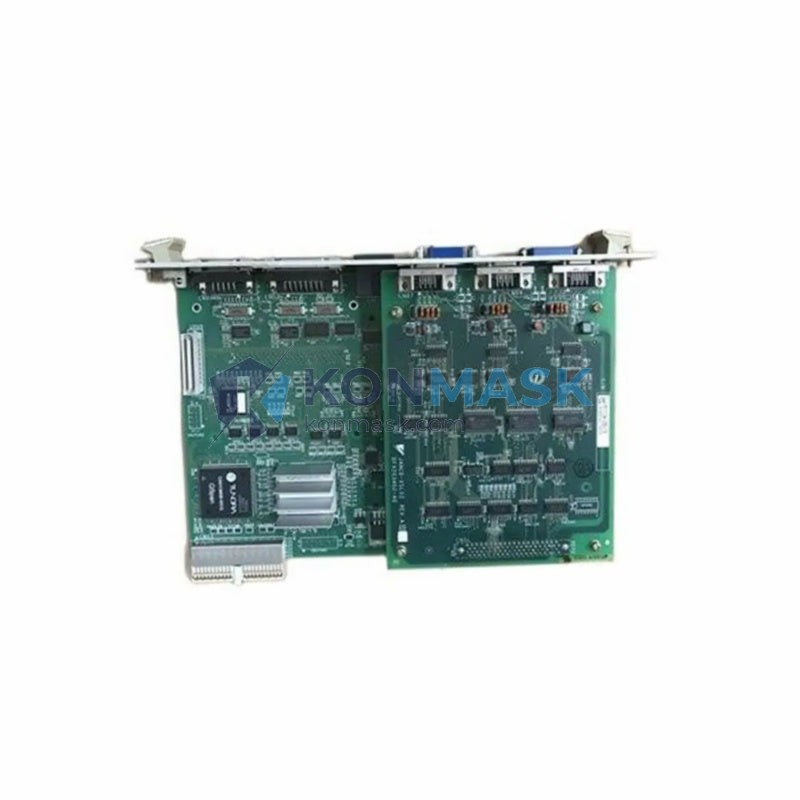
CC-Link Fieldbus Solution – Yaskawa JARCR-YPC21 / JZRCR-YPP01 | SST-CCS-PCU Series
Where This Product Is Used
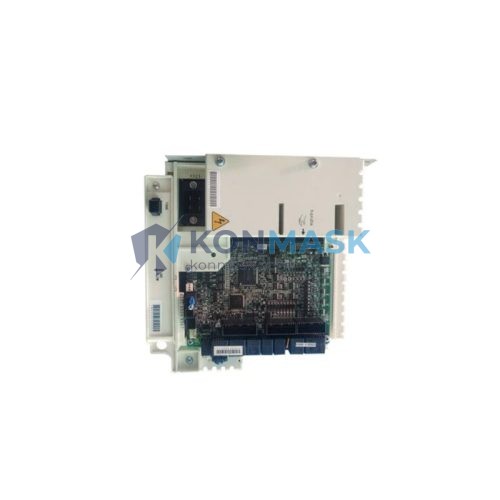
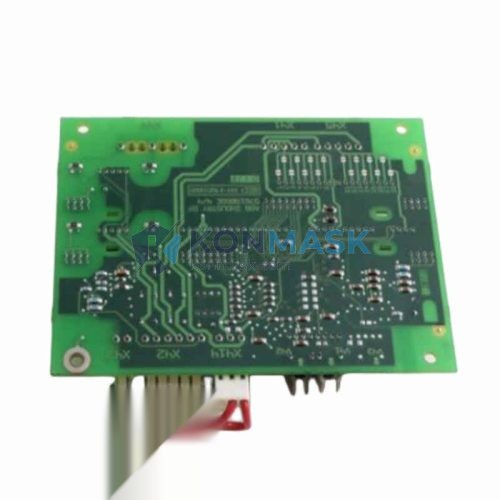
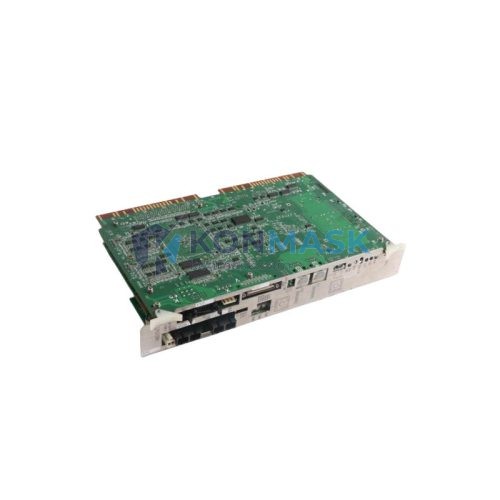
The Yaskawa CC-Link PCI Bus Communication Card (SST-CCS-PCU) is a dedicated fieldbus interface module engineered for Yaskawa industrial robot controllers. It enables high-speed, deterministic CC-Link network communication between the robot controller and upstream PLC/SCADA systems. Typical deployment environments include:
- Automotive body-in-white welding lines – synchronizing DX100/DX200 robot motion with Mitsubishi MELSEC PLCs via CC-Link master/slave topology
- Semiconductor wafer handling cells – where deterministic cycle times and low-latency I/O are mandatory
- Palletizing & material handling systems – integrating Yaskawa MOTOMAN arms into CC-Link-based conveyor and vision networks
- Paint shop automation – coordinating multi-robot spray cells with CC-Link remote I/O stations
- General factory automation – any facility running a CC-Link Ver. 1.10 or Ver. 2.0 network requiring a Yaskawa robot node
Technical Specifications
| Part Numbers | JARCR-YPC21-1, JARCR-YPC21-2, JZRCR-YPP01-1, JZRCR-YPP21-1, SST-CCS-PCU |
| Compatible Controllers | Yaskawa DX100, DX200 |
| Network Protocol | CC-Link (Control & Communication Link) Ver. 1.10 / Ver. 2.0 |
| Interface | Universal PCI Bus (3.3 V / 5 V) |
| Station Type | Remote Device Station / Local Station (configurable) |
| Max. Transmission Speed | 10 Mbps |
| Max. Link Points | RX/RY: 2048 points; RWr/RWw: 512 words (Ver. 2.0) |
| Occupied Stations | 1–4 stations (selectable) |
| Power Consumption | ≤ 1.0 W (from PCI bus) |
| Operating Temperature | 0 °C to +55 °C |
| Weight | Approx. 300 g |
| Manufacturer | Yaskawa Electric Corporation |
| Country of Origin | Japan |
Why Engineers Specify This Model
- OEM-native integration – Designed and validated by Yaskawa; no third-party driver conflicts or firmware compatibility risks
- Dual-version CC-Link support – Backward-compatible with Ver. 1.10 networks while supporting the higher bandwidth of Ver. 2.0
- Universal PCI form factor – Fits both 3.3 V and 5 V PCI slots in DX100/DX200 controller backplanes without adapter cards
- Deterministic latency – Hardware-level token-passing ensures cycle-time consistency critical for synchronized multi-robot cells
- Drop-in replacement – Identical connector pinout and parameter file structure across JARCR-YPC21-1, -2, JZRCR-YPP01-1, and JZRCR-YPP21-1 variants
Complete System Bill of Materials
For a fully operational CC-Link robot cell, engineers typically source the following alongside this card:
- Yaskawa DX100 or DX200 Robot Controller (main unit)
- CC-Link dedicated cable (Ver. 1.10: FANC-SB; Ver. 2.0: FANC-SBH) with terminating resistors (110 Ω)
- Mitsubishi MELSEC QJ61BT11N or AJ65SBTB1-16D CC-Link master module (PLC side)
- Yaskawa MOTOMAN robot arm (UP series, MA series, or GP series)
- 24 VDC power supply for I/O interface (if remote I/O expansion is required)
- GX Works2 / GX Developer software for CC-Link network parameter configuration
Compliance & Industry Standards
- CC-Link Partner Association (CLPA) certified – compliant with CC-Link Ver. 1.10 and Ver. 2.0 specifications
- CE Marking – meets EU Low Voltage Directive and EMC Directive requirements
- RoHS compliant – restriction of hazardous substances per EU Directive 2011/65/EU
- UL recognized component (where applicable per controller assembly)
- ISO 10218-1 compatible deployment – suitable for use within robot safety-rated control architectures
Quality Assurance & Sourcing
Every unit offered through Konmask.com undergoes a structured verification process before dispatch:
- Visual inspection – PCB, connector pins, and label integrity checked against OEM reference images
- Functional power-on test – board initializes correctly and CC-Link LED indicators respond as specified
- Serial number traceability – each unit’s S/N is logged against the order for post-sale warranty tracking
- Anti-static packaging – shipped in ESD-safe bags with foam cushioning inside double-wall cartons
- Sourcing transparency – units are sourced from verified industrial surplus channels, authorized distributors, or decommissioned OEM equipment; condition (new / refurbished / tested-used) is stated explicitly on each listing
How to Source This Part
- Confirm compatibility – verify your controller model (DX100 or DX200) and existing CC-Link network version (1.10 or 2.0) before ordering
- Check stock status – real-time inventory is shown on this page; contact us for bulk or scheduled delivery requirements
- Request a quote – email support@konmask.com with your PO number, required quantity, and delivery timeline
- Place order – secure checkout via this page; we accept T/T bank transfer, PayPal, and major credit cards
- Shipping – standard dispatch within 1–3 business days; DHL / FedEx express available for urgent requirements; export documentation (commercial invoice, packing list, CO) provided upon request
Application-Specific FAQ
Q: Is JARCR-YPC21-1 interchangeable with JARCR-YPC21-2?
A: Both cards share the same PCI form factor and CC-Link protocol stack. The -2 revision incorporates minor firmware updates for improved EMC performance. Either can be used as a direct replacement in DX100/DX200 controllers; confirm with your Yaskawa service manual for your specific software version.
Q: Can this card be used as a CC-Link master?
A: In standard Yaskawa robot controller applications, the SST-CCS-PCU operates as a remote device station (slave). The CC-Link master function resides in the PLC (e.g., Mitsubishi QJ61BT11N). Contact Yaskawa application engineering if a master configuration is required.
Q: What happens if the card fails during production?
A: The DX100/DX200 controller will generate a CC-Link communication alarm (alarm code varies by software version). The robot will enter a hold state. A replacement card can typically be hot-swapped after controller power-down and re-initialized via the teach pendant parameter restore procedure.
Q: Do you provide the parameter backup file?
A: Parameter files are controller-specific and must be restored from your own backup. We recommend maintaining a CMOS backup of your DX100/DX200 before any hardware replacement. We can advise on the backup procedure upon request.
Q: What is the lead time for out-of-stock units?
A: Typical sourcing lead time is 2–6 weeks depending on global availability. Contact us to be added to the back-order notification list.
© 2026 Konmask.com. All rights reserved.
Original Source: https://Konmask.com
Contact: support@konmask.com | +0086 19859288691