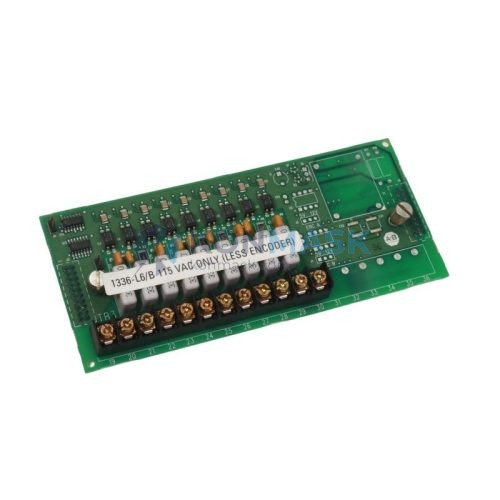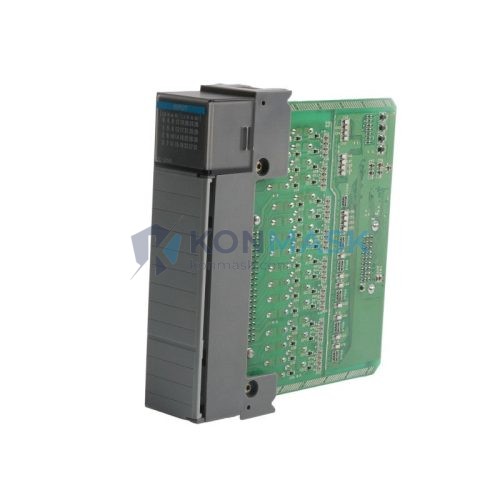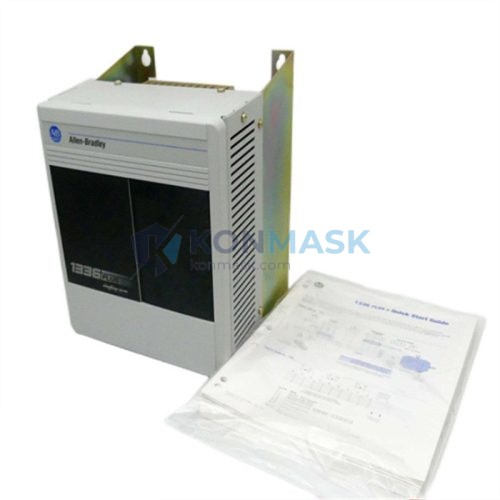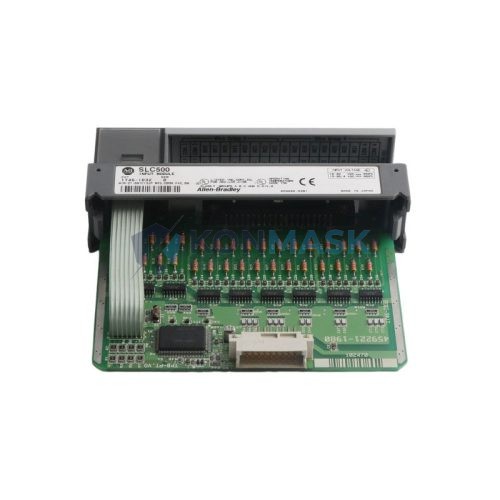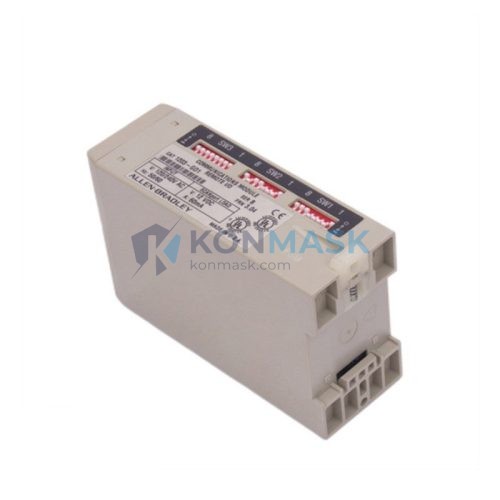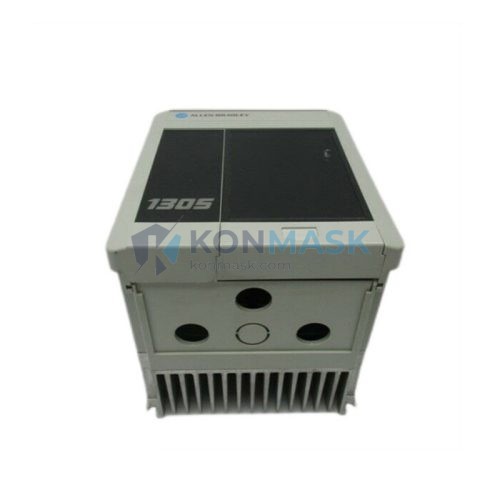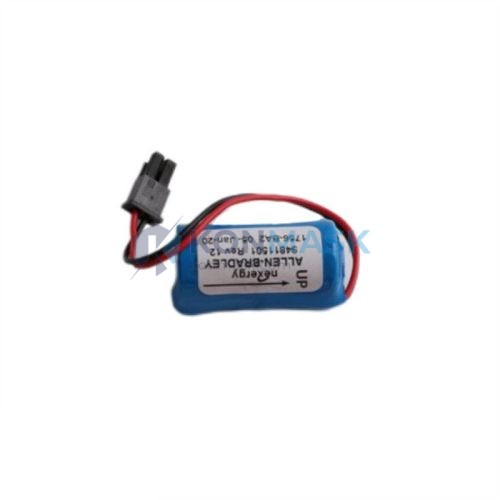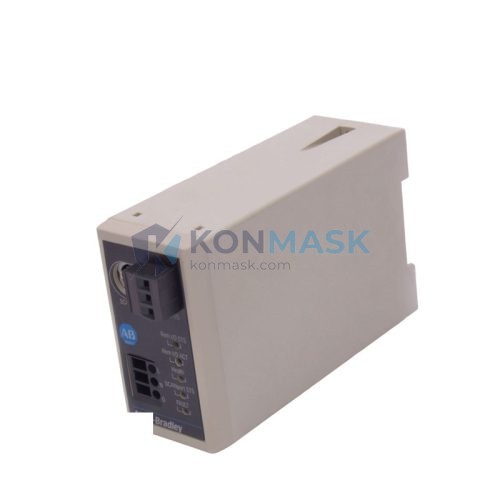

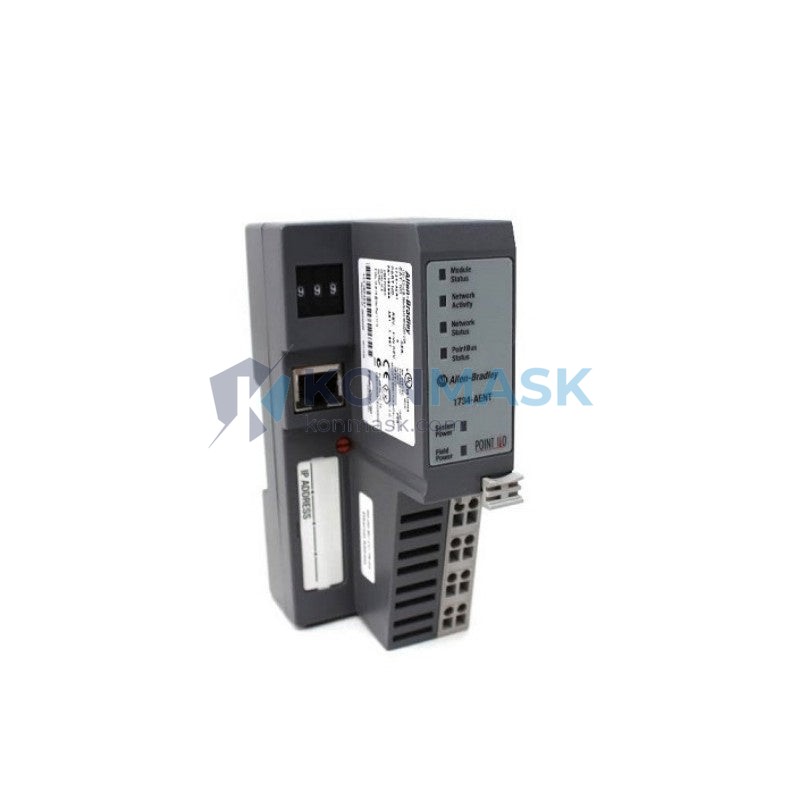
Allen-Bradley 1734-ACNR ControlNet Communication Adapter – Point I/O Series
When a ControlNet communication link goes down on an active production line, the consequences are immediate and costly: I/O modules lose their network identity, the PLC loses real-time data from field devices, and operators face unplanned downtime that can cascade across an entire cell or plant segment. The 1734-ACNR is the communication backbone that prevents this scenario — it is the dedicated ControlNet adapter for the Allen-Bradley Point I/O platform, providing the deterministic, scheduled data transfer that process-critical applications demand.
Within the 1734 Point I/O family, the ACNR occupies the ControlNet-specific communication tier, sitting alongside the AENT (EtherNet/IP) and ADN (DeviceNet) adapters. Unlike generic fieldbus gateways, the 1734-ACNR is engineered exclusively for ControlNet’s time-division multiplexing architecture, making it the preferred choice for high-speed, noise-immune I/O communication in automotive assembly, oil & gas processing, and large-scale discrete manufacturing where ControlNet infrastructure is already established.
Technical Specifications
Electrical
- Supply Voltage: 24V DC (18–32V DC operating range)
- Power Consumption: 2.4W (backplane), 1.0W (ControlNet port)
- Backplane Current Draw: 100 mA @ 5V DC
- I/O Module Capacity: Up to 63 Point I/O modules per adapter
- Network Protocol: ControlNet (IEC 61158 Type 2)
- Data Rate: 5 Mbps (fixed)
Mechanical
- Mounting: DIN rail (35 mm), Point I/O rail system
- Dimensions (H × W × D): 94 mm × 12 mm × 71 mm
- Weight: Approx. 300 g (with base unit)
- Connector Type: BNC coaxial (ControlNet), 10-pin removable terminal block (power)
- Housing Material: High-impact thermoplastic
Environmental
- Operating Temperature: 0°C to +55°C
- Storage Temperature: −40°C to +85°C
- Relative Humidity: 5–95% (non-condensing)
- Vibration: 2g @ 10–500 Hz (IEC 60068-2-6)
- Shock: 30g operational (IEC 60068-2-27)
- IP Rating: IP20 (open-type, panel-mount environment)
Certifications & Standards
- UL Listed (UL 508)
- CE Marked (EMC Directive 2014/30/EU)
- ControlNet International Conformance Tested
- RoHS Compliant
- Industry Standard Reference: IEC 61158 Type 2 / ControlNet Specification v2.0
Key Features & Benefits
- Deterministic ControlNet Scheduling — Supports both scheduled (implicit) and unscheduled (explicit) messaging, enabling scan times as low as 2 ms for time-critical I/O loops, compliant with ControlNet Specification v2.0.
- High-Density I/O Expansion — A single 1734-ACNR adapter manages up to 63 Point I/O modules, reducing cabinet footprint by up to 40% compared to rack-based I/O solutions in equivalent channel counts.
- Coaxial Trunk Noise Immunity — BNC-terminated coaxial cabling provides inherent shielding against electromagnetic interference, making the 1734-ACNR reliable in high-noise environments such as VFD-dense panels and welding cells.
- Hot-Swap Module Replacement — Individual Point I/O modules can be removed and replaced under power without disrupting the adapter or other modules on the same rail, reducing maintenance windows.
- Seamless RSLogix 5000 / Studio 5000 Integration — The adapter is natively recognized by Rockwell Automation’s programming environment, with automatic I/O tree population and built-in diagnostic tags for fault isolation.
- Compact 12 mm Slot Width — The narrowest ControlNet adapter in the Point I/O family, allowing maximum I/O density in space-constrained control panels without sacrificing network performance.
Industry & Equipment Applications
- Automotive Manufacturing — Body-in-white welding lines, transfer press controls, and paint shop conveyor systems where ControlNet’s deterministic timing synchronizes robot I/O with PLC scan cycles.
- Oil & Gas Processing — Wellhead control panels, compressor station automation, and pipeline SCADA nodes requiring noise-immune communication in electrically harsh field environments.
- Food & Beverage — Filling and capping machine I/O, pasteurization line controls, and packaging line coordination where washdown-rated field devices connect to a ControlNet backbone.
- Water & Wastewater Treatment — Pump station distributed I/O, chemical dosing control, and SCADA-integrated remote terminal units running on existing ControlNet infrastructure.
- Discrete Parts Manufacturing — CNC machine tool I/O integration, assembly cell interlocking, and material handling conveyor controls in facilities with established ControlNet networks.
- Power Generation & Utilities — Turbine auxiliary control panels, switchgear automation, and substation I/O marshalling where long cable runs benefit from ControlNet’s coaxial topology.
System Integration & Compatible Parts
Upstream (ControlNet Scanners / PLCs):
- ControlLogix with 1756-CNB / 1756-CNBR ControlNet Bridge Module
- CompactLogix with 1769-SDN (via ControlNet scanner card)
- SLC 500 with 1747-SCNR ControlNet Scanner
Downstream (Point I/O Modules — same rail):
- 1734-IB8 / 1734-OB8 (8-pt 24V DC digital I/O)
- 1734-IE4C / 1734-OE4C (4-ch analog current I/O)
- 1734-IR2 (2-ch RTD input)
- 1734-ARM (Address Reserve Module for slot reservation)
Equivalent / Replacement Considerations:
- 1734-ACNR Series A → Series B: Direct drop-in replacement; verify firmware revision compatibility with RSNetWorx for ControlNet before substitution.
- Migration to EtherNet/IP: The 1734-AENT or 1734-AENTR (redundant) can replace the 1734-ACNR if the plant ControlNet infrastructure is being decommissioned; requires network re-commissioning and Studio 5000 project update.
Our Quality Assurance Process
- Visual & Physical Inspection — Each unit is examined for connector integrity, housing condition, label legibility, and absence of corrosion or mechanical damage before acceptance into inventory.
- Power-On Functional Test — The adapter is energized at 24V DC and verified to boot correctly, with LED status indicators (MS, NS, I/O) confirming normal operating state per Rockwell Automation’s diagnostic specifications.
- ControlNet Communication Verification — The unit is connected to a live ControlNet segment and confirmed to establish scheduled connections, respond to RSNetWorx node commissioning, and pass data without CRC errors.
- Final Documentation & Packaging — Passed units are assigned a test record, packed in anti-static ESD bags with foam cushioning, and stored in a climate-controlled warehouse pending shipment.
Available Documentation: Test report, product datasheet (Pub. 1734-TD001), declaration of conformity, and packing list. Certificate of origin available on request.
How to Order
- Submit Your Inquiry — Send your part number (1734-ACNR), required quantity, and any revision or firmware requirements via the contact form or email at support@konmask.com.
- Receive Your Quote — Our technical team reviews availability and responds within 24 hours with pricing, lead time, and shipping options tailored to your destination.
- Confirm & Ship — Upon order confirmation, units are prepared, tested, and dispatched with full documentation. Tracking information is provided at the time of shipment.
Why Choose Konmask.com?
- Verified Inventory — Every unit in our catalog has passed a multi-step functional test before listing. We do not list parts we cannot physically verify.
- Technical Pre-Sales Support — Our team includes engineers with hands-on experience in Rockwell Automation systems, able to advise on compatibility, revision differences, and integration requirements before you commit to a purchase.
- Global Export Experience — We ship to over 50 countries with full export documentation, including commercial invoices, packing lists, and certificates of origin, simplifying customs clearance for international buyers.
- Responsive Communication — All inquiries receive a substantive response within 24 business hours. Urgent requirements can be flagged for same-day attention.
- Secure Packaging & Logistics — Parts are shipped in ESD-safe, double-boxed packaging with shock-absorbing foam, with carrier options including DHL Express, FedEx International Priority, and UPS Worldwide.
Frequently Asked Questions
Q: What is the difference between the Allen-Bradley 1734-ACNR and the 1734-AENT for Point I/O applications?
A: The 1734-ACNR uses ControlNet (coaxial, 5 Mbps, IEC 61158 Type 2) for deterministic scheduled I/O, while the 1734-AENT uses EtherNet/IP (twisted pair, 10/100 Mbps). The ACNR is the correct choice when your PLC scanner is a ControlNet bridge module (e.g., 1756-CNB) and your plant network is ControlNet. If you are migrating to EtherNet/IP, the 1734-AENT is the replacement path.
Q: Can the Allen-Bradley 1734-ACNR adapter be used with a CompactLogix controller for distributed I/O over ControlNet?
A: CompactLogix controllers do not have a native ControlNet port. To use the 1734-ACNR with a CompactLogix system, a ControlNet scanner module must be added to the system, or the architecture should be reconsidered in favor of the 1734-AENT with a CompactLogix EtherNet/IP port. Contact our team to discuss the best adapter selection for your specific controller model.
Q: How many Point I/O modules can one 1734-ACNR support, and what happens if I exceed the module limit?
A: A single 1734-ACNR supports up to 63 Point I/O modules on one rail segment. Exceeding this limit requires an additional adapter on a separate ControlNet node address. RSNetWorx for ControlNet will flag a configuration error if the module count exceeds the adapter’s capacity during network scheduling, preventing the scheduled connection from being established.
{
“@context”: “https://schema.org”,
“@graph”: [
{
“@type”: “Product”,
“name”: “Allen-Bradley 1734-ACNR Point I/O 24V DC ControlNet Adapter”,
“description”: “Allen-Bradley 1734-ACNR is a 24V DC ControlNet communication adapter for the Point I/O platform, supporting up to 63 I/O modules with deterministic 5 Mbps ControlNet communication.”,
“sku”: “1734-ACNR”,
“brand”: {
“@type”: “Brand”,
“name”: “Allen-Bradley”
},
“manufacturer”: {
“@type”: “Organization”,
“name”: “Rockwell Automation”
},
“category”: “ControlNet Adapter / Industrial I/O Communication Module”,
“url”: “https://konmask.com/products/allen-bradley-1734-acnr-controlnet-adapter-point-io”,
“image”: “https://cdn.shopify.com/s/files/1/0740/1111/5686/files/5vno5vwxokc222252.jpg”,
“offers”: {
“@type”: “Offer”,
“url”: “https://konmask.com/products/allen-bradley-1734-acnr-controlnet-adapter-point-io”,
“priceCurrency”: “USD”,
“availability”: “https://schema.org/InStock”,
“seller”: {
“@type”: “Organization”,
“name”: “Konmask.com”
}
}
},
{
“@type”: “FAQPage”,
“mainEntity”: [
{
“@type”: “Question”,
“name”: “What is the difference between the Allen-Bradley 1734-ACNR and the 1734-AENT for Point I/O applications?”,
“acceptedAnswer”: {
“@type”: “Answer”,
“text”: “The 1734-ACNR uses ControlNet (coaxial, 5 Mbps, IEC 61158 Type 2) for deterministic scheduled I/O, while the 1734-AENT uses EtherNet/IP. The ACNR is correct when your PLC scanner is a ControlNet bridge module such as the 1756-CNB.”
}
},
{
“@type”: “Question”,
“name”: “Can the Allen-Bradley 1734-ACNR adapter be used with a CompactLogix controller for distributed I/O over ControlNet?”,
“acceptedAnswer”: {
“@type”: “Answer”,
“text”: “CompactLogix controllers do not have a native ControlNet port. A ControlNet scanner module must be added, or the architecture reconsidered in favor of the 1734-AENT with a CompactLogix EtherNet/IP port.”
}
},
{
“@type”: “Question”,
“name”: “How many Point I/O modules can one 1734-ACNR support, and what happens if I exceed the module limit?”,
“acceptedAnswer”: {
“@type”: “Answer”,
“text”: “A single 1734-ACNR supports up to 63 Point I/O modules. Exceeding this requires an additional adapter on a separate ControlNet node address. RSNetWorx will flag a configuration error if the limit is exceeded.”
}
}
]
}
]
}
© 2026 Konmask.com. All rights reserved.
Original Source: https://Konmask.com
Contact: support@konmask.com | +0086 19859288691