
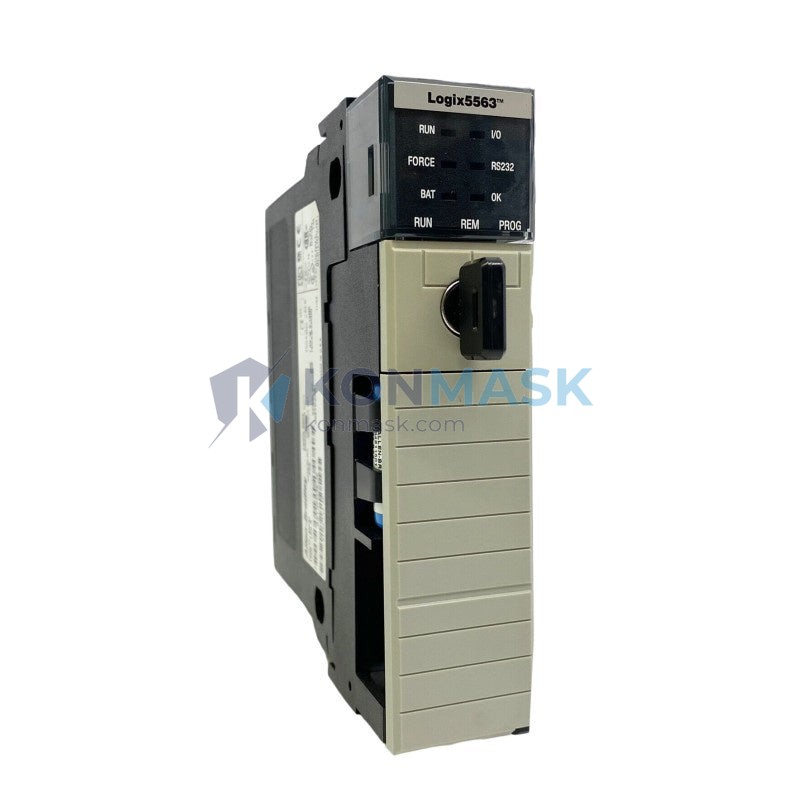
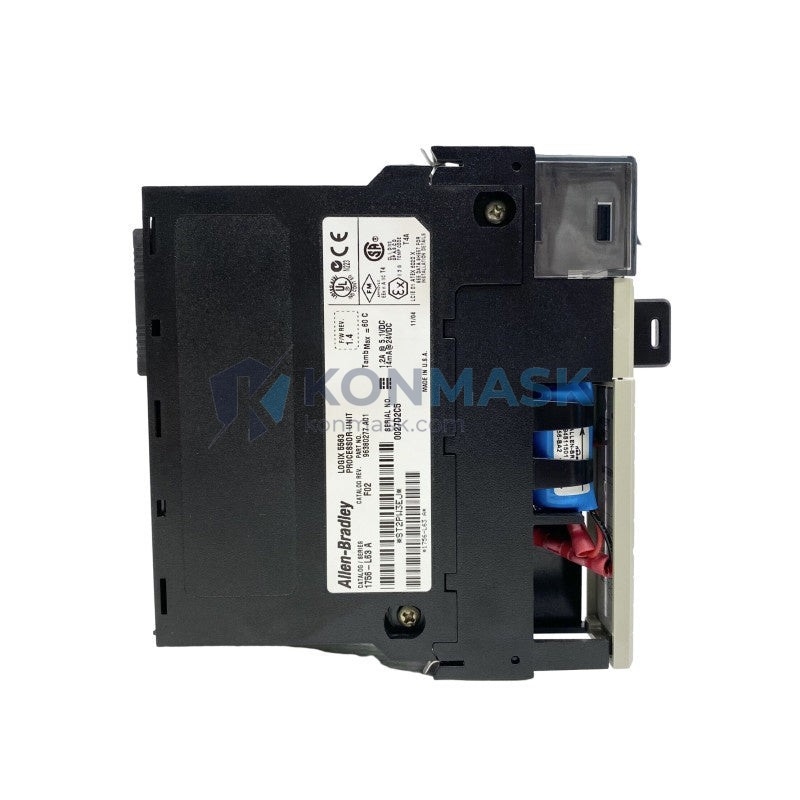
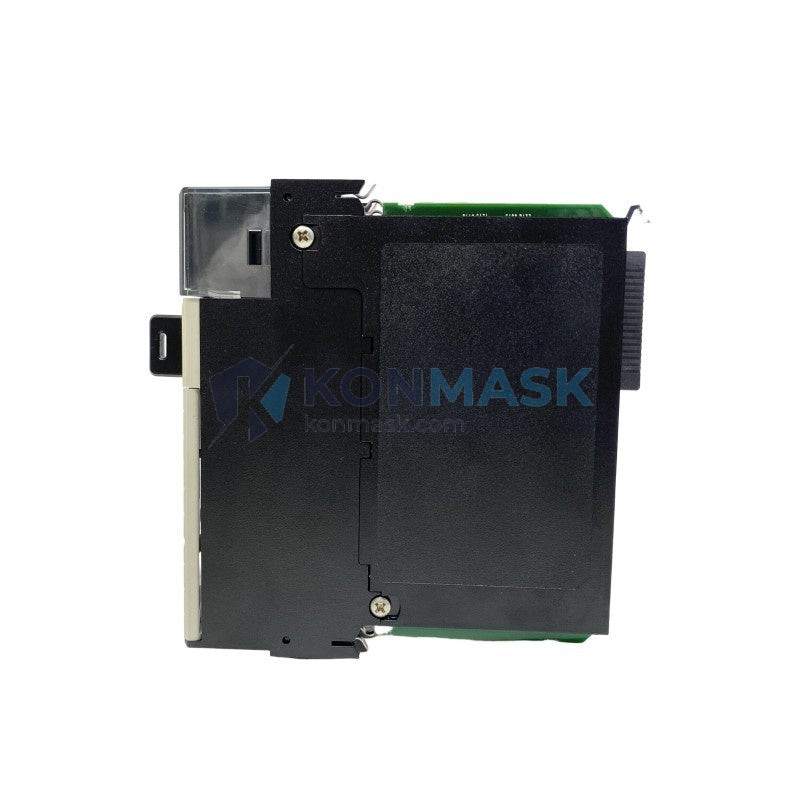
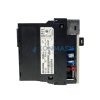
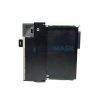
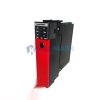
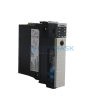
Allen-Bradley 1756-L63/A – ControlLogix Logix5563 Processor | ControlLogix 1756 Platform
Engineering Background: The Rockwell Automation ControlLogix platform (1756 series) is one of the most widely deployed programmable automation controller (PAC) architectures in global process and discrete manufacturing. Introduced as a modular, scalable chassis-based system, ControlLogix supports integrated motion, process, safety, and network control within a single controller framework. The 1756-L63/A occupies the mid-to-upper tier of the Logix5563 processor family, providing 8 MB of user memory — sufficient for complex ladder logic, function block, structured text, and sequential function chart programs running concurrently in a multitasking environment. In system architecture terms, this processor serves as the primary execution engine in a 1756 chassis, coordinating I/O scanning, motion axis updates, and peer-to-peer communication over EtherNet/IP or ControlNet backbones.
Product Positioning: Within the Logix5563 lineup, the 1756-L63/A is distinguished from the entry-level 1756-L61 (2 MB) and 1756-L62 (4 MB) by its 8 MB user memory capacity, making it the preferred choice for applications requiring large tag databases, extensive HMI integration, or multi-axis coordinated motion. It is superseded in memory by the 1756-L64 (16 MB) and 1756-L65 (32 MB), but the L63 remains the optimal balance point for the majority of mid-complexity process cells and machine lines. Series A hardware is the original production revision; engineers specifying a direct replacement should verify firmware compatibility with existing Studio 5000 / RSLogix 5000 project files before commissioning.
Complete Technical Specifications
Electrical
- User Memory: 8 MB (8,388,608 bytes)
- I/O Memory: 478 KB
- Backplane Current Draw: 800 mA @ 5 VDC; 3 mA @ 1.2 VDC
- Power Dissipation: 4.15 W (typical)
- Battery: 1756-BA2 (not included; required for memory retention on power loss)
- Communication Ports: 1 × RS-232 (DF1/DH-485 via 1756-CP3 cable); backplane EtherNet/IP and ControlNet via dedicated comm modules
- Tasks Supported: 32 tasks (1 continuous + 31 periodic/event)
- Programs per Task: 100
- Motion Axes: Up to 128 (coordinated via 1756-M0x/M1x modules)
Mechanical
- Form Factor: Single-slot ControlLogix 1756 chassis module
- Dimensions: 94.0 mm H × 34.5 mm W × 128.8 mm D (approximate)
- Weight: ~300 g
- Mounting: 1756-Axxx chassis (4, 7, 10, 13, or 17-slot)
- Keying: Electronic; slot-configurable via RSLogix 5000 / Studio 5000
Environmental
- Operating Temperature: 0 °C to +60 °C
- Storage Temperature: −40 °C to +85 °C
- Relative Humidity: 5% to 95% non-condensing
- Vibration: 2 g @ 10–500 Hz (IEC 68-2-6)
- Shock: 30 g operational; 50 g non-operational (IEC 68-2-27)
- Pollution Degree: 2
- Altitude: Up to 2000 m without derating
Certifications
- UL Listed (UL 508)
- CE Marked (EMC Directive 2014/30/EU; LVD 2014/35/EU)
- C-Tick (Australia/New Zealand)
- ATEX / IECEx: Not rated for Zone 0/1 — requires appropriate enclosure for hazardous area installation
- RoHS Compliant
Data source: Rockwell Automation Publication 1756-TD001 (ControlLogix Selection Guide) and 1756-L63 Installation Instructions. Specifications subject to revision; verify against current Rockwell documentation for safety-critical applications.
Proven Application Environments
- Petrochemical Refining: Crude distillation unit (CDU) control — continuous process, high tag-count PID loops, 24/7 uptime requirement with redundant chassis configuration.
- Electric Power Generation: Turbine governor and auxiliary systems control — event-driven tasks with sub-10 ms response, coordinated with 1756-EN2T EtherNet/IP for SCADA integration.
- Municipal Water Treatment: Pump station and filtration sequencing — sequential function chart (SFC) programs managing multi-stage treatment processes with remote I/O over ControlNet.
- Automotive Assembly: Robotic welding cell coordination — multi-axis motion control via 1756-M02AE, synchronized with vision system triggers on event tasks.
- Pharmaceutical Manufacturing: Batch reactor control per ISA-88 — structured text recipe execution, audit-trail logging, and 21 CFR Part 11 compliant HMI integration.
- Mining & Minerals Processing: Conveyor and crusher control — high-vibration environment, extended temperature range enclosure, Modbus TCP bridging via 1756-MVI module.
Engineering Advantages
- For high tag-count process applications, this processor delivers 8 MB of user memory, because large PID loop arrays, historian tag sets, and HMI data tables can be accommodated without memory fragmentation or program partitioning workarounds.
- For multi-tasking control architectures, this processor executes up to 32 independent tasks simultaneously, because the preemptive multitasking kernel prioritizes time-critical event tasks over continuous background scans without programmer intervention.
- For motion-intensive machine lines, this processor supports up to 128 coordinated axes, because the Logix motion planner integrates directly with 1756-M series drive modules over the high-speed backplane without external motion controllers.
- For network-intensive installations, this processor maintains deterministic backplane communication with EtherNet/IP and ControlNet bridge modules, because the chassis backplane operates at 200 Mbps — independent of external network load.
- For long-lifecycle industrial assets, this processor uses a well-documented, widely supported firmware ecosystem (RSLogix 5000 / Studio 5000), because Rockwell Automation maintains backward compatibility across major firmware revisions, reducing re-engineering costs during plant upgrades.
- For replacement and spare-parts procurement, this processor is a direct form-fit-function substitute within the Logix5563 family, because the 1756-L63/A shares the same chassis slot footprint, backplane connector, and software object model as all 1756-Lxx Series A processors.
System Architecture & Signal Flow
The 1756-L63/A resides in any slot of a 1756-Axxx chassis. On power-up, the processor loads the user program from battery-backed SRAM and begins executing the configured task schedule. I/O data is exchanged with local and remote 1756 I/O modules via the chassis backplane at each RPI (Requested Packet Interval). For distributed I/O, the processor communicates through 1756-EN2T (EtherNet/IP) or 1756-CNB (ControlNet) bridge modules to remote 1794-AENT (FLEX I/O) or 1734-AENT (POINT I/O) adapters. HMI and SCADA systems connect via EtherNet/IP using CIP (Common Industrial Protocol) implicit or explicit messaging.
Compatible Modules (same chassis):
- 1756-EN2T / 1756-EN3TR — EtherNet/IP communication (required for Studio 5000 online programming)
- 1756-CNB / 1756-CNBR — ControlNet bridge for remote I/O
- 1756-M02AE / 1756-M08SE — Servo/drive motion modules
- 1756-PA72 / 1756-PB72 — Chassis power supplies (AC/DC)
- 1756-IA16 / 1756-OA16 / 1756-IF8 / 1756-OF8 — Digital and analog I/O modules
Substitution Conditions: The 1756-L63/A can be replaced by the 1756-L63/B (Series B, enhanced diagnostics) or upgraded to 1756-L64/A (16 MB) without chassis or wiring changes. Downgrade to 1756-L62/A (4 MB) is feasible only if the user program and tag database fit within 4 MB — verify via RSLogix 5000 memory usage report before substitution. Cross-family migration to ControlLogix 5570 (1756-L7x) requires chassis and power supply replacement but preserves program logic with minor firmware conversion.
Sourcing & Quality Verification
Units offered through Konmask.com are sourced from authorized industrial distributors, decommissioned OEM plant assets, and certified refurbishment channels. Each unit undergoes the following 4-step verification process before dispatch:
- Visual Inspection: Housing integrity, label legibility, connector pin condition, and absence of corrosion or heat damage assessed against Rockwell Automation cosmetic standards.
- Firmware & Revision Check: Series letter, catalog suffix, and installed firmware version recorded and disclosed in the product listing or upon request.
- Functional Power-On Test: Module seated in a 1756 test chassis, powered via 1756-PA72, and verified to reach RUN mode with a known-good test program in RSLogix 5000.
- Packaging & ESD Protection: Shipped in anti-static bag with foam insert inside a double-wall carton; desiccant included for international shipments.
Documentation available upon request: Test report, firmware version record, photos of physical unit, certificate of conformance (CoC), and commercial invoice for customs clearance.
Procurement Process
- Inquiry & Specification Confirmation: Submit the required catalog number, series letter, firmware version (if critical), and quantity via the contact form or email. A technical response is provided within 24 hours on business days, including stock confirmation, lead time, and unit price.
- Order & Payment: Proforma invoice issued upon agreement. Payment via T/T (bank transfer), PayPal, or trade-term arrangements for qualified accounts. Export documentation prepared for international orders.
- Dispatch & Tracking: Units shipped via DHL Express, FedEx, or freight forwarder per buyer preference. Tracking number provided within 24 hours of dispatch. Technical support available post-delivery for installation verification queries.
Technical Support Types Available: Firmware compatibility advisory, Studio 5000 project migration guidance, chassis configuration review, and replacement module identification.
Technical FAQ
-
Q: Is the 1756-L63/A compatible with Studio 5000 Logix Designer v32 and later?
A: The 1756-L63/A (Logix5563) is supported in Studio 5000 up to v20.x natively. For v21 and later, the processor must be running firmware v20.x or the project must be converted. Rockwell Automation’s firmware upgrade kit (1756-L63 Series A supports up to firmware v20.054) is required for compatibility with newer Studio 5000 versions. Engineers should verify the target firmware version against the installed Series A hardware revision before upgrading. -
Q: Can the 1756-L63/A directly replace a 1756-L63/B (Series B) in an existing installation?
A: Yes, with conditions. The Series A and Series B share the same catalog number base and chassis slot. However, Series B introduced enhanced diagnostic capabilities and may support higher firmware revisions. If the existing program was developed on firmware v21+, it cannot be downgraded to run on Series A hardware. Confirm the installed firmware version of the unit being replaced before ordering Series A as a substitute. -
Q: Is the 1756-L63/A suitable for SIL-rated safety applications?
A: No. The standard 1756-L63/A is not a safety-rated controller. Safety applications requiring SIL 2 or SIL 3 certification must use the 1756-L7xS GuardLogix Safety Controller series, which integrates a dedicated safety task and TÜV-certified safety firmware. The 1756-L63/A can coexist in the same chassis as a GuardLogix controller for standard (non-safety) I/O control, but it cannot execute safety-rated logic independently.
© 2026 Konmask.com. All rights reserved.
Original Source: https://Konmask.com
Contact: support@konmask.com | +0086 19859288691