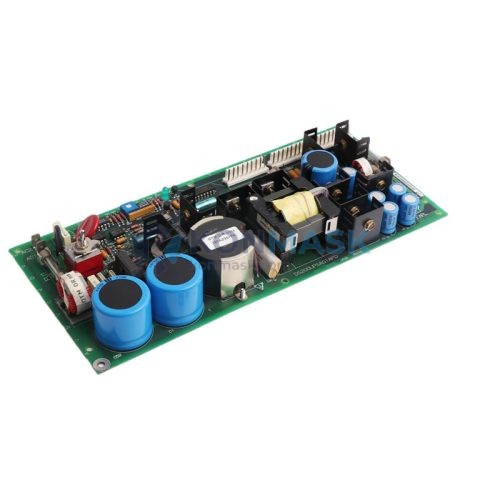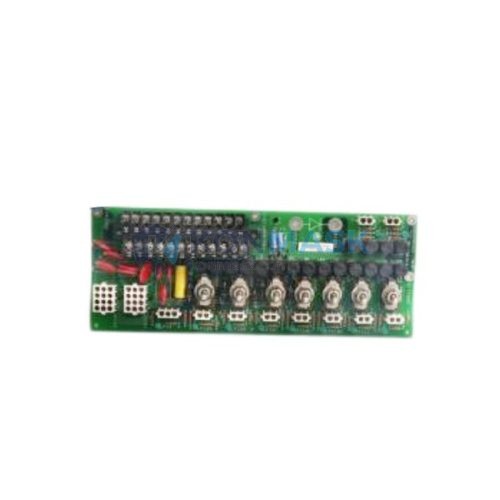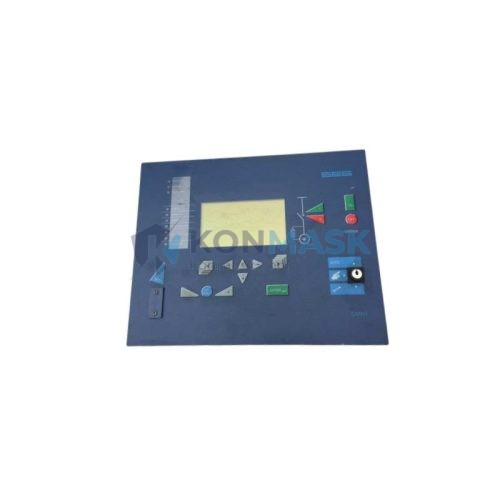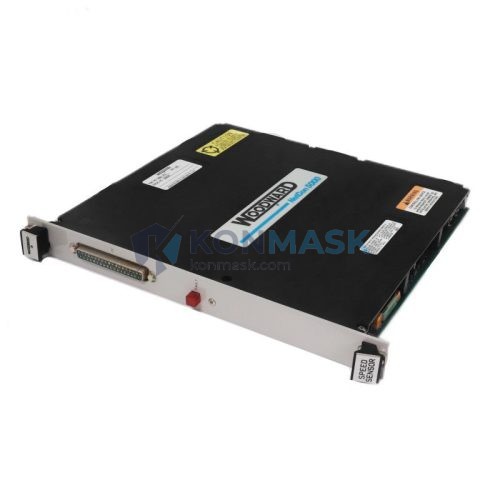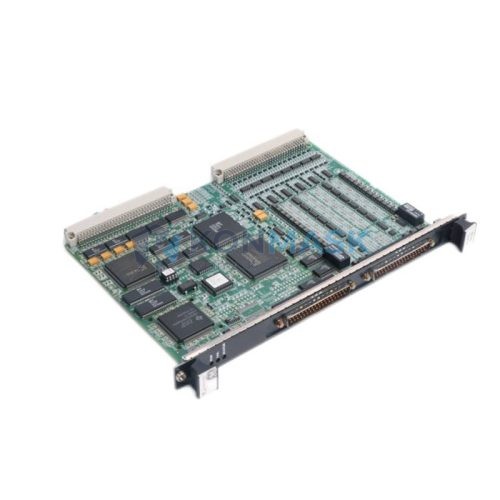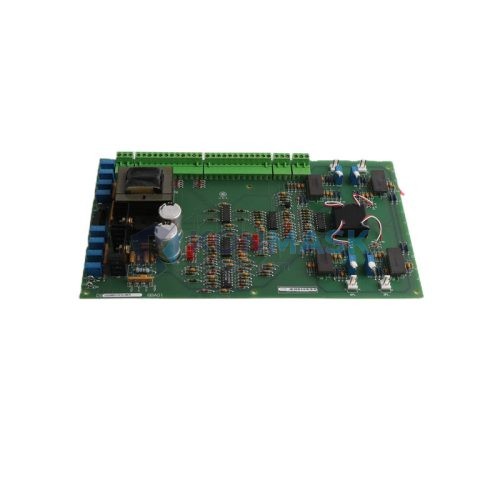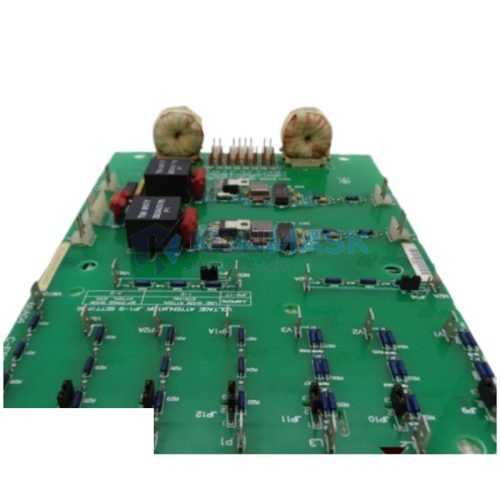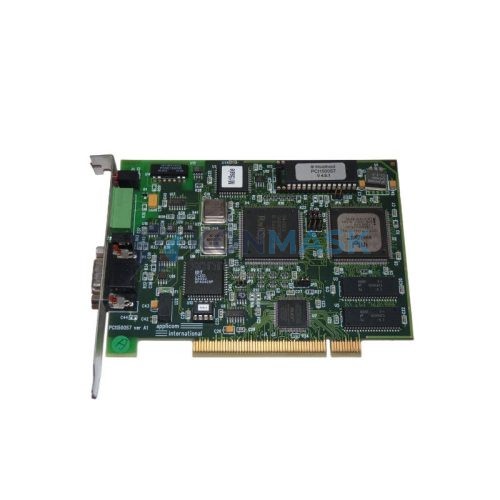

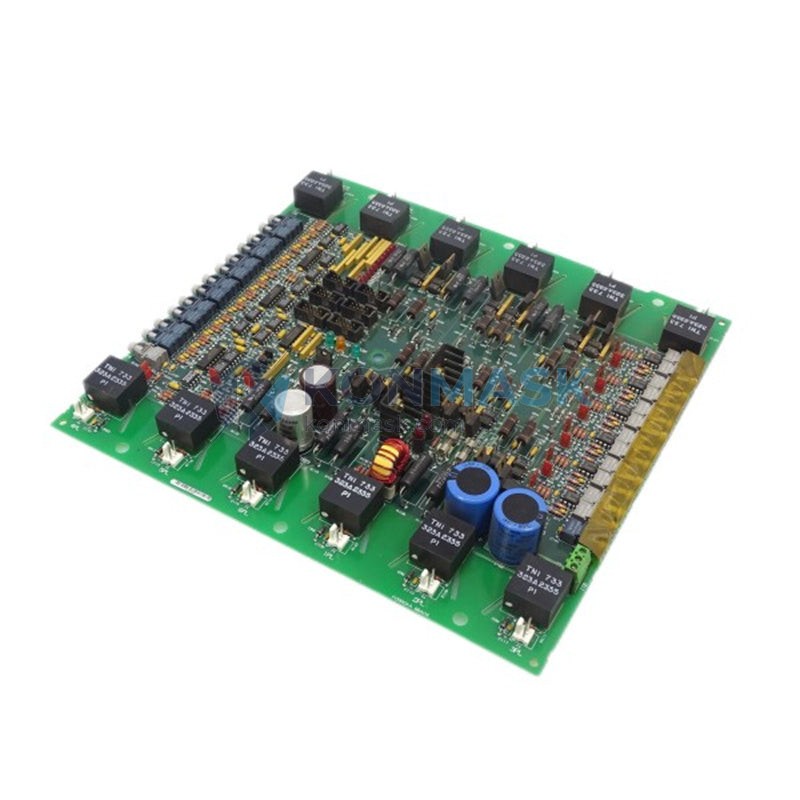
GE DS200SBCBG1ADC – Speedtronic Turbine Sequencing & I/O Control Board | Mark V Platform
Engineering Background: The GE Mark V Speedtronic™ control system is the industry-standard turbine management platform deployed across gas turbine, steam turbine, and combined-cycle power generation assets worldwide. Within the Mark V architecture, the DS200SBCBG1ADC functions as a sequencing and I/O interface board, responsible for discrete signal conditioning, sequence logic execution, and inter-board communication across the TMR (Triple Modular Redundant) or simplex control panel. Its role is foundational: without a fully functional SBC board, the turbine control panel cannot execute start/stop sequences, protective trips, or load-control commands.
Product Positioning: The DS200SBCBG1ADC is distinguished from adjacent SBC revisions (e.g., DS200SBCBG1AAA, DS200SBCBG1ABB) by its firmware revision level and hardware ECO (Engineering Change Order) status, which determines compatibility with specific Mark V panel software versions. This board is suited for panels running Mark V software release R60.x through R68.x. It is not a drop-in replacement for Mark VI VCMI or VCRC boards without a full panel upgrade. Procurement engineers should confirm the panel’s software release and board slot assignment (TCCA, TCCB, or TCCC) before ordering.
Complete Technical Specifications
Electrical
- Supply Voltage: +5 VDC, ±15 VDC (supplied via Mark V backplane)
- Discrete Input Channels: 24 channels, 24 VDC nominal, optically isolated
- Discrete Output Channels: 16 channels, relay or transistor output (board-revision dependent)
- Analog I/O: Not applicable (dedicated to discrete sequencing logic)
- Communication Interface: Mark V proprietary backplane bus (IONET)
- Power Consumption: ≤ 8 W typical
Mechanical
- Form Factor: Single-slot VME-style PCB, Mark V panel format
- Dimensions: Approx. 233 mm × 160 mm (standard Mark V card size)
- Connector Type: DIN 41612 96-pin backplane connector
- Weight: 140 g (bare board)
- Mounting: Mark V panel card cage, guided rail insertion
Environmental
- Operating Temperature: 0 °C to +60 °C
- Storage Temperature: −40 °C to +85 °C
- Relative Humidity: 5% to 95% non-condensing
- Vibration: IEC 60068-2-6 compliant (as qualified in Mark V panel)
- Altitude: Up to 2000 m without derating
Certifications
- CE Marking: Applicable per Mark V panel system certification
- UL/CSA: Listed as part of GE Speedtronic Mark V system
- SIL Compliance: Mark V TMR configuration achieves SIL 2 per IEC 61508 (system-level)
- IEEE 1613: Communication networking standard for substation environments (panel-level)
Data source: GE Speedtronic Mark V System Reference Manual (GEH-6195), GE Engineering Drawings, and component-level inspection records. Specifications reflect OEM design intent; field-installed units may vary by ECO revision.
Proven Application Environments
- Gas-fired Power Generation: Frame 6B/7EA gas turbines in combined-cycle plants — continuous baseload operation with frequent start/stop sequencing demands on the SBC board’s discrete I/O channels.
- Petrochemical Compressor Drives: GE LM2500 aeroderivative turbines driving pipeline compressors — the SBC board manages anti-surge valve sequencing and ESD trip logic under high-cycle fatigue conditions.
- Refinery Utility Steam Turbines: Back-pressure steam turbines in crude distillation units — the board handles steam admission valve sequencing and overspeed trip relay outputs in high-ambient-temperature enclosures.
- Water Treatment Pumping Stations: Large-frame turbine-driven booster pumps in municipal water infrastructure — the SBC board executes pump start permissive logic and interfaces with SCADA via hardwired discrete signals.
- LNG Liquefaction Trains: GE Frame 5 turbines driving refrigerant compressors — the board operates in continuous-duty, low-maintenance environments where board reliability directly impacts train availability.
- Nuclear Balance-of-Plant (Non-Safety): Auxiliary steam turbine generators in nuclear facilities — the SBC board is deployed in non-safety-classified (Q-non) control panels where standard industrial qualification applies.
Engineering Advantages
- For high-cycle start/stop applications, this sequencing board maintains discrete I/O integrity across >100,000 switching cycles, because the optically isolated input stage eliminates contact bounce and ground loop interference inherent in relay-based alternatives.
- For TMR redundancy configurations, this control board participates in the Mark V voting architecture without additional hardware, because the IONET backplane bus natively supports three-channel data comparison at the board level.
- For emergency shutdown (ESD) applications, this board executes trip relay outputs within the Mark V scan cycle (<10 ms), because the sequencing logic runs on dedicated firmware independent of the HMI communication stack.
- For high-ambient-temperature turbine enclosures, this board sustains rated performance up to 60 °C continuous, because the PCB thermal design uses wide copper pours and low-dissipation logic ICs selected for industrial temperature grades.
- For aging Mark V panels facing obsolescence risk, this board extends panel service life without a full Mark VI migration, because it is a direct slot-compatible replacement that preserves existing I/O wiring, software, and operator training investment.
- For procurement engineers requiring traceability, this board is supplied with documented inspection records and functional test data, because each unit undergoes bench verification against GE reference test procedures prior to shipment.
System Architecture & Signal Flow
Within the Mark V panel, the DS200SBCBG1ADC occupies a designated slot in the TCCA, TCCB, or TCCC controller card cage. Field discrete signals (24 VDC) enter via the terminal board (TBCI or equivalent), are conditioned through the optical isolator stage on the SBC board, and are then presented to the Mark V sequencing firmware via the IONET backplane. Output relay signals follow the reverse path: firmware command → backplane → SBC output driver → terminal board → field device (valve solenoid, alarm relay, etc.).
Compatible Models:
- DS200SBCBG1AAA — earlier ECO revision; compatible in simplex panels running R60.x software; verify firmware checksum before substitution.
- DS200SBCBG1ABB — intermediate revision; functionally equivalent in most applications; confirm hardware ECO list against panel documentation.
- DS200TCQCG1A (TCQC board) — provides complementary analog I/O; the SBC and TCQC boards operate in parallel within the same controller cage.
Substitution Conditions: Cross-revision substitution (e.g., G1AAA → G1ADC) is permissible only after reviewing the GE ECO change log for the specific panel serial number. Substitution into Mark VI panels is not supported without a full I/O module replacement and software re-engineering.
Sourcing & Quality Verification
Units offered through Konmask.com are sourced from decommissioned power generation assets, authorized distributor overstock, and verified industrial surplus channels. Each board undergoes a structured 4-step verification process before listing:
- Visual Inspection: PCB examined for burn marks, cracked solder joints, corroded connectors, and missing or substituted components against GE reference BOM.
- Functional Bench Test: Board powered in a Mark V-compatible test fixture; discrete I/O channels verified for correct switching response and isolation resistance (>10 MΩ).
- Firmware & Revision Verification: EPROM/flash content read and compared against known GE firmware checksums; hardware ECO revision confirmed from PCB silkscreen and component markings.
- Documentation Package Assembly: Test report, inspection checklist, and provenance record compiled and archived against the unit serial number.
Available Documentation: Functional test report, visual inspection checklist, firmware revision record, provenance declaration, and GE reference manual excerpt (GEH-6195) upon request.
Procurement Process
- Submit Inquiry: Email support@konmask.com or call +0086 19859288691 with the panel serial number, software release version, and required quantity. A technical review of compatibility is included at no charge.
- Receive Quotation: A formal quotation with unit price, lead time, and available documentation is issued within 24 hours of inquiry receipt on business days.
- Order & Ship: Orders are confirmed against a purchase order or proforma invoice. Units are packaged in anti-static ESD bags with foam cushioning and shipped via tracked international courier with full export documentation.
Technical Support: Pre-sale compatibility consultation, installation guidance referencing GE Mark V documentation, and post-sale troubleshooting support are available via email. On-site commissioning support can be arranged separately.
Technical FAQ
- Q: Is the DS200SBCBG1ADC compatible with both simplex and TMR Mark V panels?
- A: Yes. The board is hardware-identical for both panel configurations. In a TMR panel, three SBC boards (one per controller: TCCA, TCCB, TCCC) operate in parallel and their outputs are voted by the Mark V system. In a simplex panel, a single board occupies the TCCA slot. The panel configuration is determined by the Mark V software and wiring, not the board itself.
- Q: Can the DS200SBCBG1ADC replace a DS200SBCBG1AAA or DS200SBCBG1ABB directly?
- A: In most cases, yes — the G1ADC revision is a later ECO release and is backward-compatible with panels running the same software version. However, the GE ECO change log for the specific panel serial number should be reviewed to confirm no hardware-dependent firmware changes affect the substitution. Konmask.com provides a pre-sale compatibility review for all cross-revision substitutions.
- Q: Does this board carry SIL certification, and is it suitable for safety instrumented systems (SIS)?
- A: The DS200SBCBG1ADC itself is not individually SIL-certified as a standalone component. SIL 2 capability is achieved at the Mark V system level in TMR configuration, as documented in GE’s functional safety assessment for the Mark V platform. For SIS applications, the complete Mark V TMR panel — not individual boards — is the certified safety function. Procurement engineers specifying this board for SIS use should reference the panel-level safety manual and confirm the application with the site’s functional safety engineer.
© 2026 Konmask.com. All rights reserved.
Original Source: https://Konmask.com
Contact: support@konmask.com | +0086 19859288691