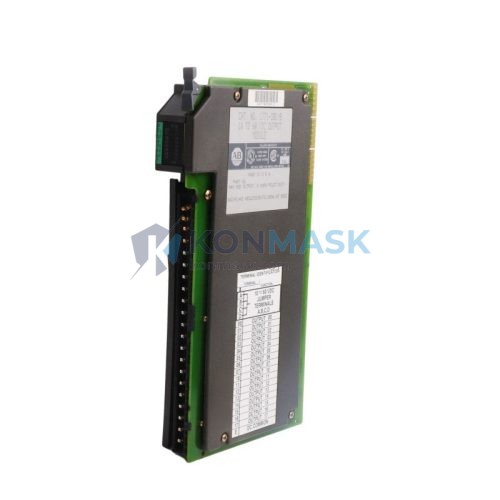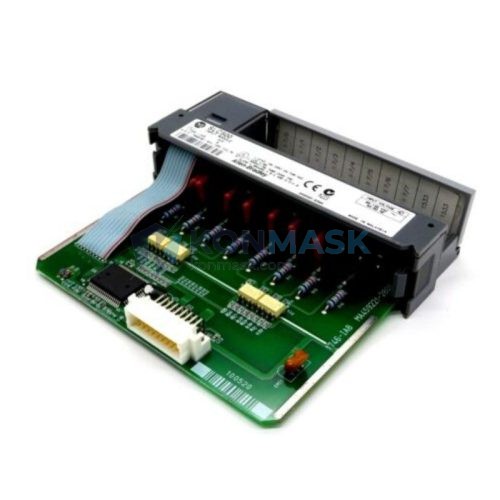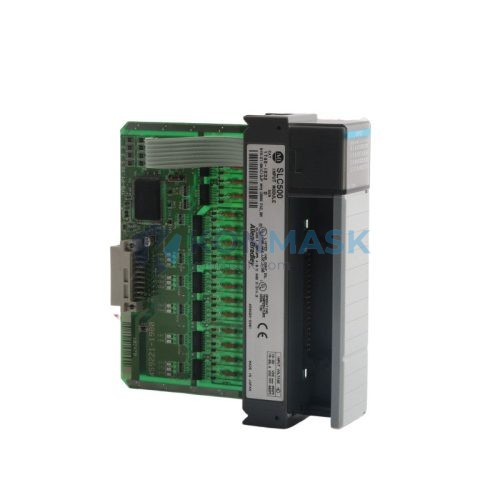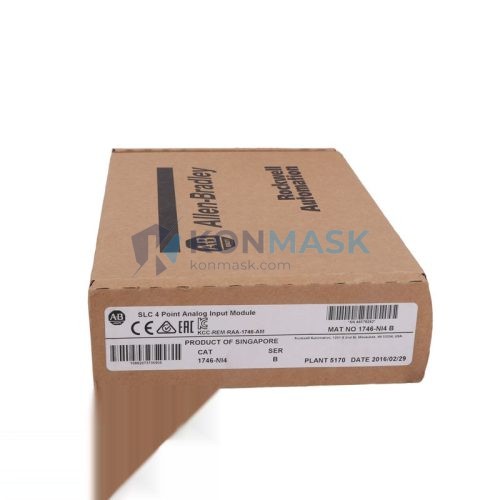

PLC Memory Fault Prevention Solution — Allen-Bradley 1775-MEA | PLC-5 Series
Across continuous-process plants, discrete manufacturing lines, and utility SCADA networks, unplanned PLC memory faults are responsible for an estimated 15–30% of unscheduled downtime events. When a PLC-5 controller loses program integrity mid-cycle — triggered by a power transient, single-event upset, or accumulated DRAM degradation after 10–20 years of service — the consequences cascade immediately: emergency shutdowns, spoiled batches, conveyor pile-ups, and in safety-critical loops, potential personnel hazards. For the hundreds of thousands of PLC-5 installations still in active service globally, aging onboard memory is statistically the single highest-risk component in the control cabinet.
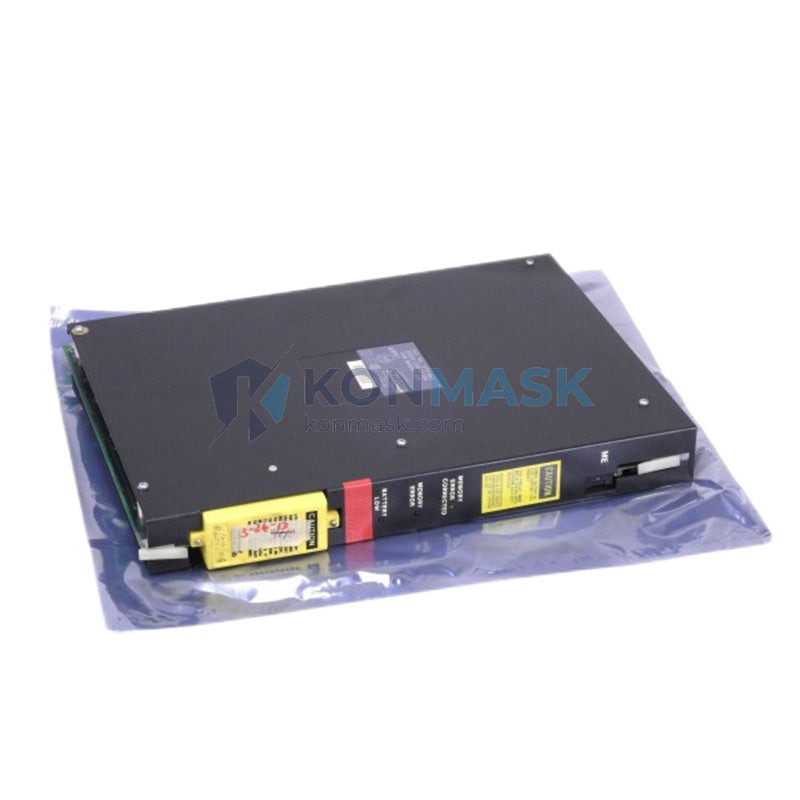
The Allen-Bradley 1775-MEA was engineered specifically to eliminate this failure mode. As a dedicated 64K Error Correcting RAM (ECC RAM) expansion module for the PLC-5 family, it implements SECDED (Single-Error Correction, Double-Error Detection) hardware logic that intercepts and corrects single-bit memory upsets in real time — before they can corrupt ladder logic execution, distort I/O scan data, or trigger a fault shutdown. Engineers specifying long-lifecycle control systems, brownfield retrofits, and high-availability production lines rely on the 1775-MEA to extend PLC-5 platform life by years without a full controller migration.
Where This Product Is Used
Oil & Gas Processing
Deployed in wellhead RTU panels, compressor station PLCs, and pipeline SCADA nodes operating at ambient temperatures of −20°C to +60°C with continuous vibration (IEC 60068-2-6 Class 3). PLC-5/40 and PLC-5/60 racks controlling separator trains, gas lift systems, and emergency shutdown (ESD) logic specify ECC memory to satisfy IEC 61511 SIL-2 memory integrity requirements. In these environments, a single uncorrected bit flip in interlock logic can trigger a full-facility ESD — costing $50,000–$500,000 per event in lost production.
Chemical & Petrochemical Plants
Installed in DCS-adjacent PLC islands managing reactor feed control, batch sequencing, and HAZOP-reviewed interlock loops. Corrosive atmospheres (ISA-71.04 G3 severity, NEMA 4X enclosures) accelerate DRAM degradation; ECC correction prevents bit-flip faults from triggering spurious shutdowns in processes where a single unplanned stop can require 4–12 hours of restart procedures and product loss exceeding $100,000 per incident.
Automotive Assembly
Used in body-in-white welding lines and paint shop conveyors where PLC-5/30 and PLC-5/40 controllers manage 500–2,000 I/O points. High-frequency inductive noise from 480V servo drives and resistance spot welders creates EMI environments at EN 61000-4-4 Level 4 — conditions that stress standard DRAM and generate nuisance faults during high-cadence production shifts running at 60–120 units per hour. ECC correction absorbs these transient events without halting the scan cycle.
Water & Wastewater Treatment
Installed in lift station controllers, WWTP aeration basin sequencers, and pump station SCADA nodes running 24/7 with minimal maintenance windows. Facilities operating under EPA 40 CFR Part 503 and municipal SCADA redundancy mandates specify ECC memory to achieve 99.5%+ uptime SLAs. Each nuisance memory fault requiring an on-site technician response costs $500–$2,000 in callout fees; the 1775-MEA eliminates this recurring expense.
Food & Beverage Manufacturing
Deployed in CIP (Clean-In-Place) sequence controllers, pasteurization line PLCs, and filling machine automation where FDA 21 CFR Part 11 audit trails require consistent, exception-free program execution. Memory fault events that interrupt batch execution invalidate electronic batch records and can trigger regulatory holds on entire production lots. ECC RAM eliminates the memory-layer exception events that compromise validation documentation.
Power Generation & Utilities
Installed in turbine governor auxiliary panels, substation automation racks, and generation dispatch control systems. IEEE C37.1 SCADA standards and NERC CIP-007 hardware integrity requirements mandate documented memory assurance measures for critical cyber assets. The 1775-MEA’s SECDED ECC architecture provides an auditable, hardware-layer integrity control that satisfies these compliance requirements without software-only workarounds.
Technical Specifications
| Part Number | 1775-MEA |
| Manufacturer | Allen-Bradley (Rockwell Automation) |
| Series | PLC-5 |
| Memory Type | Error Correcting RAM (ECC DRAM) — Prevents memory-fault shutdowns in process control and safety applications |
| Memory Capacity | 64K words (64 × 1,024 × 16-bit words) |
| Error Correction | SECDED — Single-bit error correction, double-bit error detection — Core mechanism that eliminates E32/E33 fault codes in PLC-5 installations |
| Compatible Controllers | PLC-5/10, /12, /15, /25, /30, /40, /60, /80 — Covers the majority of the global installed PLC-5 base across all six application industries above |
| Backplane Interface | 1771 I/O chassis backplane |
| Operating Temperature | 0°C to +60°C — Meets IEC 60068-2-1/2 standard industrial panel ratings; suitable for all listed application environments |
| Storage Temperature | −40°C to +85°C |
| Relative Humidity | 5% to 95% non-condensing |
| Power Supply | Via 1771 backplane — no external power required |
| Form Factor | Single-slot 1771 I/O chassis module |
| Weight | 2,300 g (module + packaging) |
| Certifications | UL Listed, CE Marked, CSA Certified |
| Product Status | Discontinued / Legacy — available as verified surplus / refurbished |
Why Engineers Specify This Model
- In chemical reactor feed control, the 1775-MEA delivers real-time single-bit error correction because its SECDED ECC architecture intercepts memory upsets before they corrupt ladder rung outputs or I/O scan data, meeting IEC 61511 memory integrity requirements for SIL-2 interlock loops.
- In automotive welding line PLC-5/40 installations, the 1775-MEA delivers immunity to EMI-induced bit flips because the ECC layer absorbs transient noise events from 480V servo drives without halting the scan cycle, meeting EN 61000-4-4 Level 4 immunity requirements.
- In 24/7 water treatment SCADA nodes, the 1775-MEA delivers unattended operational reliability because hardware-corrected memory eliminates the nuisance fault resets that require costly on-site technician callouts, meeting 99.5%+ uptime SLAs mandated by municipal utility contracts.
- In oil & gas compressor station ESD panels, the 1775-MEA delivers extended PLC-5 platform life because it resolves the memory reliability bottleneck that drives premature controller migration, meeting asset lifecycle targets under API RP 554 process control system guidelines.
- In food & beverage CIP sequence controllers, the 1775-MEA delivers audit-clean batch execution because ECC-protected program memory prevents the exception events that invalidate 21 CFR Part 11 electronic batch records, meeting FDA validation documentation requirements.
- In power substation automation racks, the 1775-MEA delivers a documented hardware-layer memory integrity control because its SECDED ECC architecture provides an auditable assurance measure, meeting NERC CIP-007 hardware integrity requirements for critical cyber assets.
Complete System Bill of Materials
The following components are typically specified alongside the 1775-MEA in a complete PLC-5 memory expansion or fault-prevention project:
- 1771 I/O Chassis (1771-A1B / A2B / A3B / A4B) — Backplane housing for the 1775-MEA and all I/O modules; chassis slot count determines maximum memory and I/O expansion capacity. Required for all application environments.
- PLC-5 Processor (1785-L40B / L60B) — Host controller that maps the 1775-MEA address space; firmware revision must be compatible with the memory module. Verify revision compatibility before ordering.
- 1771-P4S / P7 Power Supply — Provides regulated backplane power; adequate amperage rating is required when adding the 1775-MEA to a fully populated chassis in high-I/O applications such as automotive assembly.
- 1784-KTX / KTXD DH+ Communication Card — Required for RSLogix 5 programming, online monitoring, and memory module diagnostics. Essential for commissioning in all application environments.
- RSLogix 5 Programming Software — Rockwell Automation software for PLC-5 ladder logic development, memory address configuration, and online fault diagnostics. Required for 1775-MEA commissioning and ECC fault log review.
- 1771-WB Backplane Terminator — Required for unused chassis slots to maintain backplane signal integrity; critical in high-EMI environments such as automotive welding lines and chemical plants.
- UPS / Battery Backup Unit — Protects RAM contents during power interruptions; essential for oil & gas and water treatment applications where program retention without battery backup is a site safety requirement.
Compliance & Industry Standards
- UL 508 (Underwriters Laboratories) — Industrial Control Equipment listing. Confirms the module meets North American electrical safety requirements, enabling installation in UL-labeled control panels without additional field evaluation. Required by most North American industrial facility standards.
- CE Marking / EMC Directive 2014/30/EU — European conformity for electromagnetic compatibility. Required for installations in EU member states; accepted internationally as a baseline EMC qualification for chemical, food, and power generation applications.
- CSA C22.2 No. 142 (Canadian Standards Association) — Process Control Equipment standard. Required for Canadian industrial installations and recognized by NRCan for federally regulated facilities including water treatment and power utilities.
- IEC 61131-2 — Programmable Controllers hardware requirements. The PLC-5 platform and its memory modules are designed to the environmental and electrical immunity levels defined in this standard, covering all six application industries listed above.
- RoHS Directive 2011/65/EU — Restriction of Hazardous Substances. Original Allen-Bradley production runs comply with EU RoHS requirements, relevant for export to EU and UK markets in chemical, food, and power generation sectors.
Quality Assurance & Sourcing
Sourcing Channels: The 1775-MEA is sourced exclusively from verified industrial surplus dealers, decommissioned OEM equipment lots, and authorized Rockwell Automation legacy parts distributors. We do not source from unverified secondary markets or consumer auction platforms.
4-Step Inspection Process:
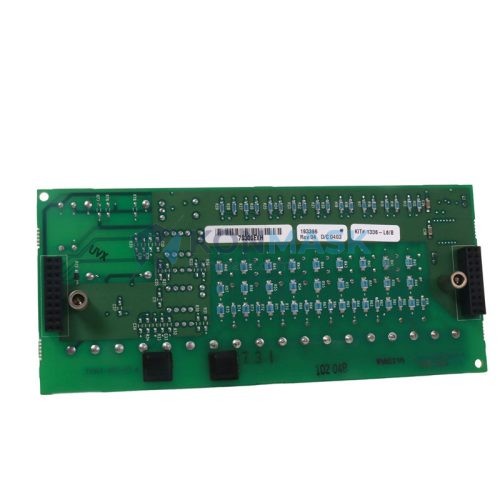
- Visual & Physical Inspection — Board-level examination for corrosion, component damage, bent connector pins, and counterfeit indicators including label authenticity, PCB markings, and date code consistency.
- Functional Bench Test — Module installed in a live 1771 chassis with a compatible PLC-5 processor; full memory read/write cycles executed and SECDED ECC error-correction function verified under load.
- Thermal Cycling Check — Module operated through a controlled temperature ramp to identify cold-solder joints or intermittent contact faults that only manifest under thermal stress — a critical step for oil & gas and outdoor utility applications.
- Final Documentation Review — Serial number, firmware revision, and test results logged; full traceability record created and attached to shipment prior to dispatch.
Available Documentation: Functional test report, inspection checklist, certificate of conformance (CoC), photographs of the actual unit shipped, and — where available — original Rockwell Automation datasheet and installation instructions (1775-MEA Series A/B).
How to Source This Part
- Submit Your Inquiry — Contact us via this product page, email support@konmask.com, or call +0086 19859288691. Provide your part number (1775-MEA), required quantity, application environment, and any firmware or revision requirements.
- Receive Quote & Availability Confirmation — Our team responds within 24 hours with stock status, unit pricing, lead time, and available documentation. Expedited quotes are available for urgent shutdown and emergency maintenance situations.
- Order & Global Shipment — Orders are processed with ESD-safe anti-static packaging and shipped via DHL, FedEx, or UPS Express to destinations worldwide. Full export documentation provided: commercial invoice, packing list, ECCN classification, and country-of-origin certificate. Typical transit: 3–7 business days globally.
Application-Specific FAQ
Q: Our PLC-5/40 on a chemical reactor line is generating intermittent E32/E33 memory fault codes. Will the 1775-MEA resolve this in a continuous process control application?
A: Yes. E32/E33 fault codes on PLC-5 systems are the diagnostic signature of uncorrected DRAM bit errors — exactly the failure mode the 1775-MEA’s SECDED ECC architecture is designed to prevent. In chemical process control applications where spurious shutdowns trigger HAZOP-reviewed consequences and multi-hour restart procedures, replacing aging onboard memory with the 1775-MEA ECC module is the standard corrective action before considering a full processor swap. We can provide the test report confirming ECC function on the specific unit shipped.
Q: Can the 1775-MEA be used in a SIL-2 rated safety interlock application in an oil & gas facility?
A: The 1775-MEA provides hardware-level SECDED ECC memory integrity that directly supports the memory reliability requirements of IEC 61511 SIL-2 safety instrumented functions. However, full SIL-2 system validation requires a complete functional safety assessment by a qualified engineer covering the entire safety instrumented function (SIF) — not the memory module in isolation. We supply the module’s functional test documentation, datasheet, and certificate of conformance to support your SIL validation package.
Q: We operate a 24/7 water treatment SCADA system and cannot schedule a planned outage for installation. What is the installation impact in a continuous-operation environment?
A: Installing the 1775-MEA requires the PLC-5 chassis to be powered down for module insertion — a cold-swap procedure. For continuous-operation water treatment facilities, the recommended approach is to pre-configure a spare processor with the 1775-MEA installed and bench-tested offline, then execute a processor-level hot-swap during the shortest available maintenance window (typically under 15 minutes). Contact our technical team at support@konmask.com for a site-specific installation planning consultation.
© 2026 Konmask.com. All rights reserved.
Original Source: https://Konmask.com
Contact: support@konmask.com | +0086 19859288691