

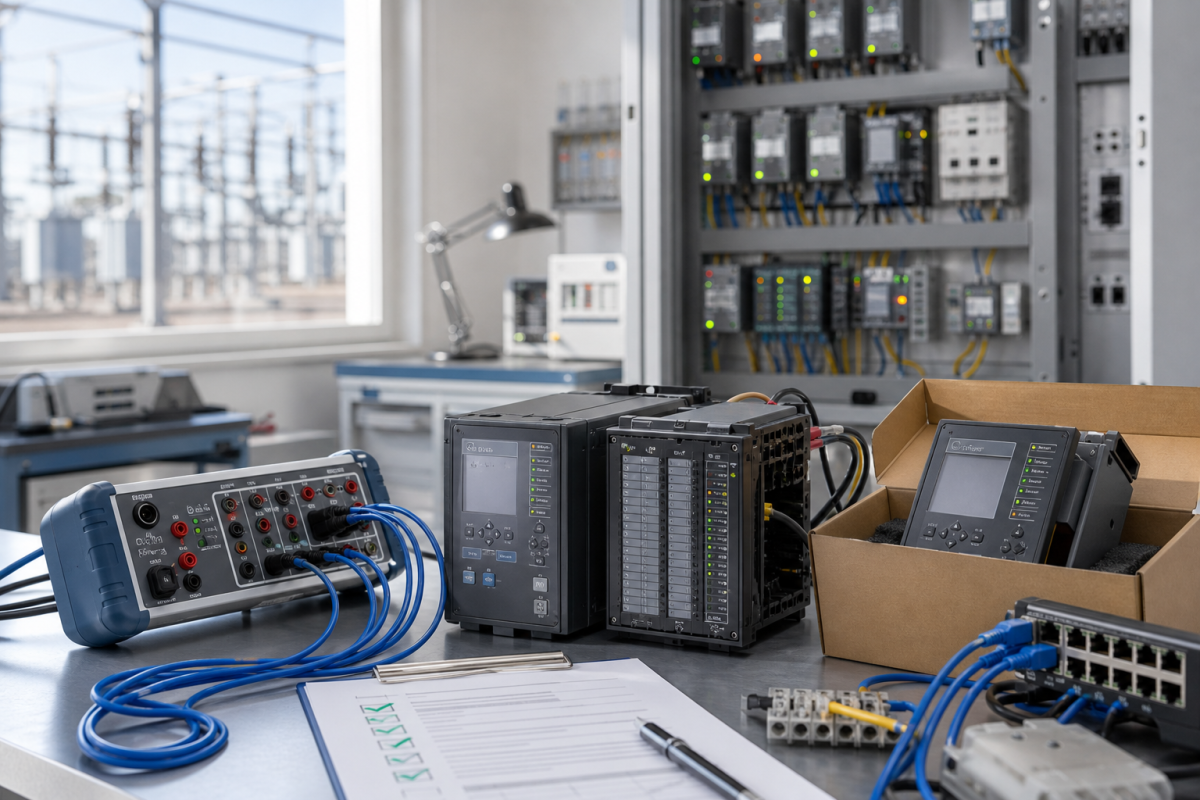
On June 25, 2026, CISA published an advisory for Horner Automation Cscape versions prior to 10.2 SP3. The advisory describes an out-of-bounds read issue through parsing CSP files, and Horner has released Cscape 10.2 SP3. For a buyer, the important point is straightforward: when an engineering tool and project file format are involved, an RFQ for Horner OCS controller spares should include software and backup context, not only a model name.
Horner OCS controllers are common in compact machines, skid systems, OEM packages, small process panels, and distributed automation. They often combine controller, I/O, HMI, and communication functions in one device. That makes them convenient, but it also makes replacement more sensitive. A physically similar unit may still require the right project file, firmware, memory options, screen size, communications, and cable access before it can run the machine.
Start with the installed controller evidence
A clean Horner RFQ begins with photos. Send the front view, side label, connector area, installed panel, and any module or accessory attached to the controller. If maintenance can safely capture the software version or firmware screen, include it. Do not guess from the cabinet drawing if the installed device is accessible. The real label is usually more reliable than an old purchasing description.
Konmask sees this problem across many compact PLC/HMI families. A buyer may write “Horner OCS spare needed,” while the supplier still needs display size, model suffix, I/O arrangement, communication ports, power input, and project-file status. The faster those details arrive, the faster the quote becomes useful.
If your team is still collecting evidence, use the same discipline described in Konmask’s industrial automation RFQ guide: model photos first, then quantity, condition, destination, and deadline.
Why the Cscape version belongs in the conversation
The CISA advisory focuses on Cscape software and CSP file parsing. A spare controller quote does not need confidential project files, but it does need to know whether the plant has a current, trusted project backup and the correct engineering software path. If the backup is old, missing, or stored only on a contractor laptop, the plant may need engineering support before the hardware spare can be useful.
Buyers should write the backup status honestly: current backup confirmed, backup under review, or backup unknown. That single line tells the supplier and engineering team whether the purchase is hardware-only or part of a larger recovery plan. It also prevents false confidence. A controller in stock is not a recovery plan if nobody can load the machine project.
Condition and accessories matter
State whether factory sealed, new surplus, refurbished, or tested used is acceptable. For an emergency replacement, exact model and tested availability may matter most. For planned stock, the plant may have more time to compare condition and warranty. If substitutes can be reviewed, say which details cannot change, such as screen size, I/O count, communication protocol, mounting, firmware range, or certification.
Accessories should be listed explicitly. Programming cables, memory cards, terminal plugs, mounting clips, communication adapters, and power connectors can decide whether the controller can be commissioned. A correct controller without the right connector kit can still delay a maintenance window.
Receiving inspection should compare the shipment against the same photos used in the RFQ. Check model, visible condition, ports, terminals, screen, packaging, and accessories. If the part is for a security or software-update response, tag the spare with the engineering software and project-backup note before it goes to the shelf.
When the model remains uncertain, send Konmask the photos through our contact channel before finalizing the order. A short identification check is cheaper than a wrong compact controller during downtime.
For repeat equipment, keep the successful quote evidence. If one skid or machine line already has a verified Horner OCS package, store the model photos, software note, cable requirement, and accepted condition in a shared file. The next buyer can then compare the new request against a known-good record instead of starting from zero.
It also helps to mark rejected matches. If engineering rejected a similar controller because of display size, I/O count, communications, firmware, or mounting, keep that note. Rejected-match history is valuable because it prevents a future urgent buyer from accepting the same unsuitable option when delivery pressure is high.
Before the spare is placed into stores, ask maintenance to confirm the controller can be identified again without opening old emails. A printed model photo, software note, and cabinet reference inside the spare record can save precious time when the machine is already down.
FAQ
Does the Horner Cscape advisory mean I need a new OCS controller?
Not necessarily. First update or mitigate the software path according to vendor guidance, then check whether the installed controller and project backup are recoverable.
What photos should I send for a Horner OCS RFQ?
Send the front, side label, connector area, installed panel, accessory modules, and any safe version screen that maintenance can capture.
Can I quote a controller without the project file?
You can quote hardware, but installation risk remains high if the project file, firmware, and software environment are not confirmed.
What should I write if the Cscape version is unknown?
Say it is unknown and include clear photos. Engineering should verify software compatibility before the spare is treated as ready.
Send Konmask your Horner controller photos, software notes, quantity, condition requirement, destination, and deadline. We can help check the RFQ evidence before you buy an OCS spare that misses a critical detail.
© 2026 Konmask. All rights reserved. Official Website: https://www.konmask.com Inquiry: support@konmask.com | WhatsApp/Tel: +86 19859288691
