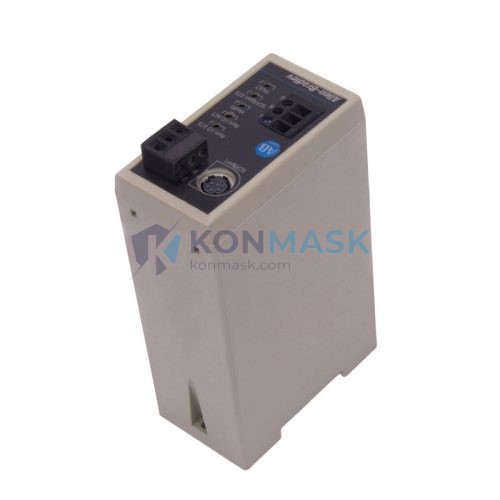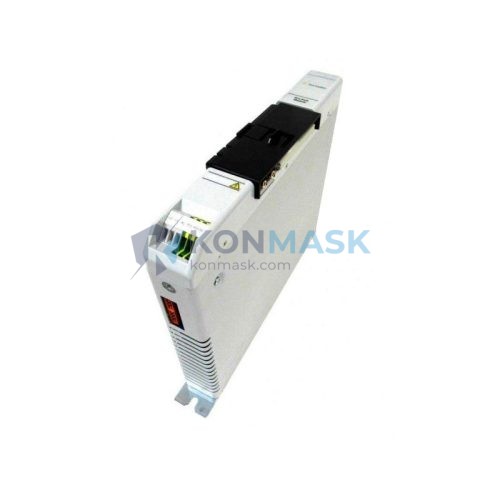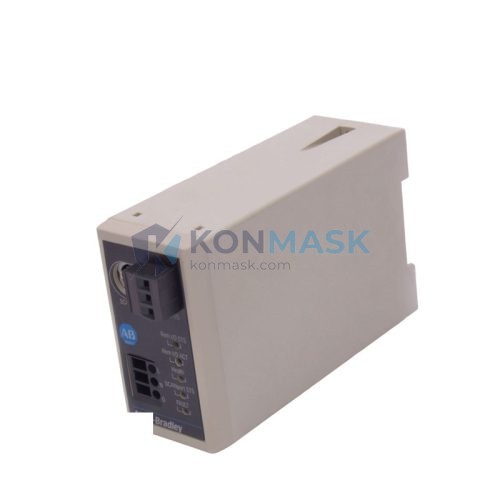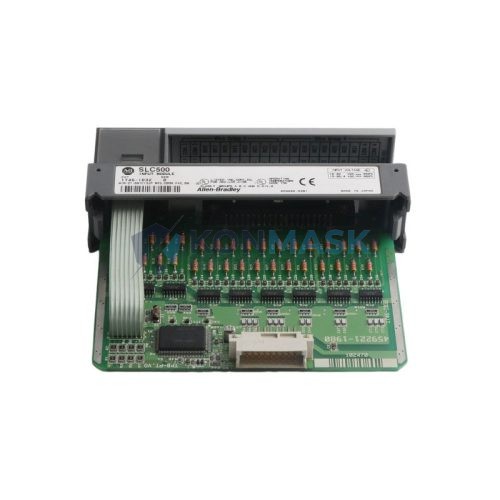

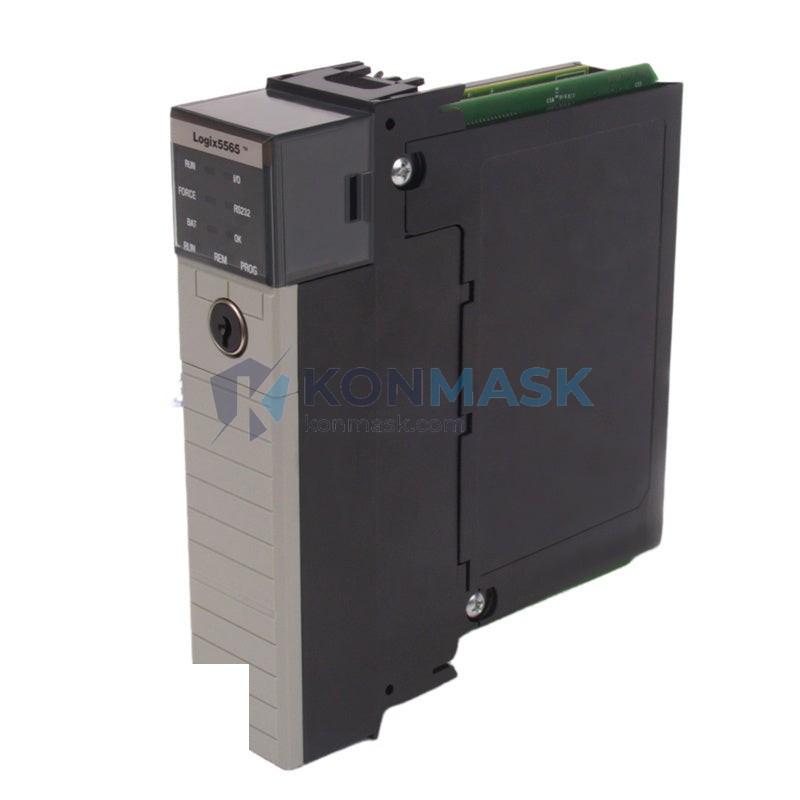
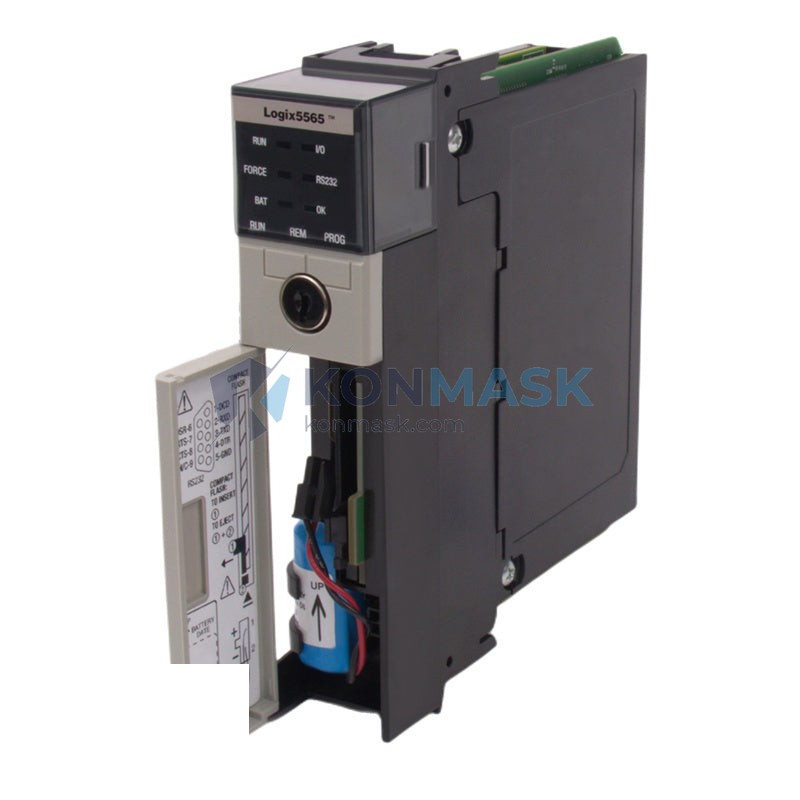
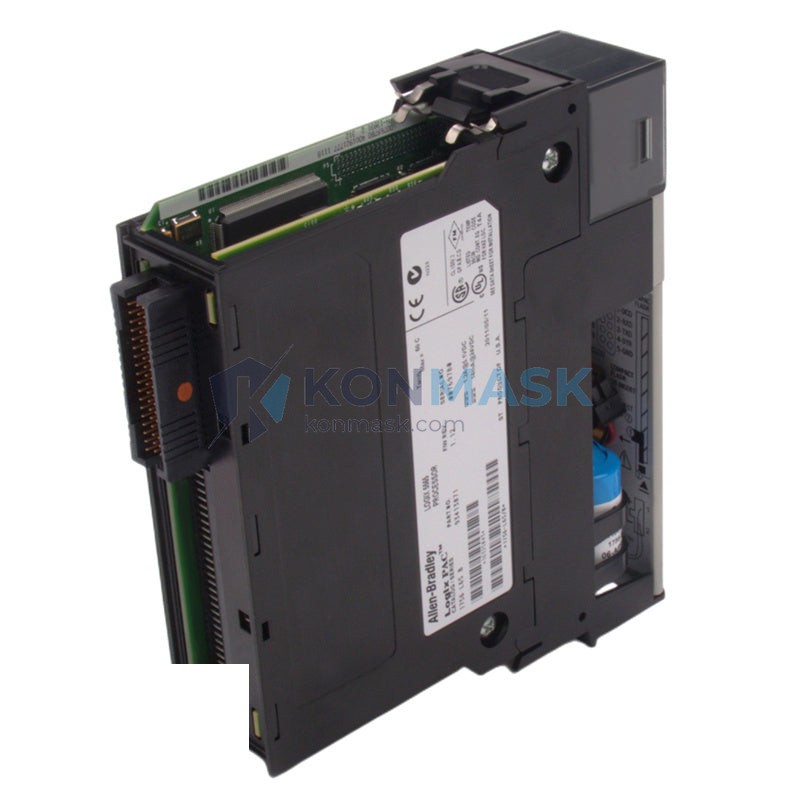
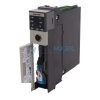
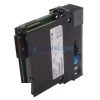
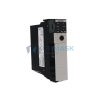
Allen-Bradley 1756-L65 – Logix5565 ControlLogix Processor | ControlLogix 1756 Platform
Engineering Background: The Allen-Bradley ControlLogix 1756 platform is Rockwell Automation’s flagship programmable automation controller (PAC) architecture, deployed across safety-critical and high-availability process industries worldwide. Within this platform, the 1756-L65 (Logix5565) occupies the mid-to-upper tier of the processor hierarchy, delivering the memory capacity and task-execution throughput required for complex, multi-discipline control programs that integrate discrete, process, motion, and safety logic within a single chassis. In distributed control architectures, the 1756-L65 typically serves as the primary controller node, coordinating I/O over EtherNet/IP and ControlNet backbones while maintaining deterministic scan times under full I/O load.
Product Positioning: The 1756-L65 is distinguished from the entry-level 1756-L61/L62 by its 2 MB user memory and expanded task capacity, and from the 1756-L71/L72 (Logix5571/5572) series by its V16–V20 firmware compatibility and legacy project portability. It is the preferred replacement for aging 1756-L55 installations where memory headroom is the primary constraint. The 1756-L65 is not suited for SIL 2/3 safety functions (which require the 1756-L7xS GuardLogix variant) and is not recommended for new greenfield designs where the Logix5580 (5069-L3x) platform is available.
Complete Technical Specifications
Electrical
- Backplane Current Draw: 800 mA @ 5 VDC; 3 mA @ 1.2 VDC
- Power Dissipation: 4.0 W (typical)
- Battery: 1756-BA2 (included); supports capacitor-backed SRAM retention
- Communication Ports: 1× RS-232 (DF1/DH-485), 1× USB Type-B (programming)
- Backplane Interface: 1756 ControlLogix chassis backplane (1–17 slot)
Performance / Memory
- User Memory: 2 MB (2,097,152 bytes)
- I/O Modules Supported: Up to 250 (local + remote)
- Tasks: Up to 32 (1 continuous, 31 periodic/event)
- Programs per Task: Up to 100
- Execution Speed: ~0.3 µs per boolean instruction (typical)
- Firmware Compatibility: Series A, Firmware Rev 16.xx – 20.xx
Mechanical
- Form Factor: Single-slot ControlLogix module
- Dimensions (H × W × D): 147 mm × 45 mm × 130 mm (approx.)
- Weight: ~350 g
- Mounting: 1756 chassis slot (any position)
- Keying: Electronic (software-enforced)
Environmental
- Operating Temperature: 0 °C to +60 °C
- Storage Temperature: −40 °C to +85 °C
- Relative Humidity: 5–95% non-condensing
- Vibration: IEC 68-2-6 (5–2000 Hz, 2 g)
- Shock: IEC 68-2-27 (30 g, 11 ms)
- Pollution Degree: 2
- IP Rating: IP20 (chassis-mounted)
Certifications
- UL Listed (UL 508)
- CE Marked (EMC Directive 2014/30/EU; LVD 2014/35/EU)
- C-Tick (Australia/NZ)
- ATEX / IECEx: Not rated (use 1756-L7xS for hazardous area)
- RoHS Compliant
Data source: Rockwell Automation Publication 1756-TD001 (ControlLogix Controllers Technical Data), Rev. K; cross-referenced with 1756-UM001 User Manual.
Proven Application Environments
- Petrochemical / Refinery: Crude distillation unit (CDU) — continuous process control under sustained high-temperature ambient, managing 150+ analog I/O points with sub-100 ms scan requirements.
- Power Generation: Coal/gas turbine auxiliary systems — coordinating boiler feed pump sequencing and burner management logic with deterministic periodic tasks at 10 ms intervals.
- Water & Wastewater Treatment: Municipal SCADA-integrated lift station networks — polling 80+ remote I/O racks over EtherNet/IP with redundant ring topology.
- Pharmaceutical / Biotech: CIP/SIP skid automation — executing batch recipes under 21 CFR Part 11 audit-trail requirements with structured text programming.
- Automotive Assembly: Body-in-white welding lines — coordinating servo motion and discrete I/O within a single chassis, replacing legacy SLC 5/05 controllers.
- Mining & Minerals Processing: Conveyor and crusher control — operating in high-vibration, dusty environments inside NEMA 12 enclosures with extended temperature ranges.
Engineering Advantages
- For high-density process loops, this processor module handles up to 250 I/O modules without additional co-processors, because the Logix5565 architecture integrates producer/consumer messaging natively over the backplane.
- For legacy migration projects, this processor module preserves RSLogix 5000 V16–V20 project files without re-engineering, because the firmware revision range maintains backward-compatible instruction sets and tag databases.
- For multi-discipline control (discrete + motion + process), this processor module executes all task types within a single scan engine, because the ControlLogix multitasking kernel allocates CPU time deterministically across task priorities.
- For high-availability installations, this processor module supports hot-standby redundancy via the 1756-RM2 redundancy module, because the chassis backplane provides synchronised state transfer between primary and secondary controllers.
- For distributed architectures, this processor module maintains peer-to-peer messaging over EtherNet/IP without a dedicated communication co-processor, because the embedded Ethernet port supports produced/consumed tags natively.
- For environments with power interruptions, this processor module retains program and data memory through the 1756-BA2 lithium battery, because the SRAM is battery-backed independently of chassis power.
System Architecture & Signal Flow
Signal Flow: Field sensors/actuators → 1756 I/O modules (local or remote 1756/1794/1734 racks) → ControlLogix backplane → 1756-L65 scan engine (input image table update → ladder/ST/FBD execution → output image table write) → backplane → I/O output modules → field devices. Remote I/O racks communicate via EtherNet/IP (1756-EN2T/EN3TR) or ControlNet (1756-CNB) scheduled connections.
Compatible Modules (same chassis):
- 1756-EN2T / 1756-EN3TR — EtherNet/IP communication (DLR ring support on EN3TR)
- 1756-CNB / 1756-CNBR — ControlNet bridge (scheduled + unscheduled messaging)
- 1756-DNB — DeviceNet scanner
- 1756-RM2 — Redundancy module (requires matching firmware on both chassis)
- 1756-IB16 / 1756-OB16E — Standard discrete I/O modules
- 1756-IF16 / 1756-OF8 — Analog I/O modules
Substitution Conditions: The 1756-L65 can be directly replaced by the 1756-L71 (Logix5571, 2 MB) with a firmware upgrade to V21+, provided the RSLogix 5000 project is converted and all Add-On Instructions (AOIs) are revalidated. Downward substitution to 1756-L63 (1.5 MB) is only viable if user memory utilisation is confirmed below 75% of the smaller capacity.
Sourcing & Quality Verification
Units offered through Konmask.com are sourced from authorised distribution channels and verified surplus inventories with documented chain of custody. All modules undergo a 4-step incoming inspection before dispatch:
- Visual Inspection: Enclosure integrity, label authenticity (Rockwell holographic label check), connector pin condition, and absence of rework indicators.
- Firmware Verification: Module is powered in a test chassis; firmware revision and series are confirmed against the order specification via RSLinx Classic.
- Functional Bench Test: Basic I/O communication test executed; battery voltage checked (>3.0 V); memory read/write cycle validated.
- Packaging & Documentation: ESD-safe packaging, anti-static bag sealed, and inspection record attached to shipment.
Available Documentation on Request: Inspection report, firmware revision screenshot, original Rockwell Automation datasheet (1756-TD001), certificate of conformance, and commercial invoice with HS code declaration.
Procurement Process
- Inquiry Submission: Submit part number, required firmware revision, quantity, and delivery timeline via support@konmask.com or the on-site enquiry form. Attach your BOM or project specification if available.
- Quotation & Stock Confirmation: A technical response is issued within 24 hours, including confirmed stock status, unit price (HKD/USD), lead time, and available inspection documentation.
- Order & Dispatch: Upon purchase order confirmation, units are inspected, packaged, and dispatched within 2–3 business days. DHL/FedEx express tracking is provided. Technical support is available post-delivery for installation verification and firmware compatibility queries.
Technical Support Types Available: Pre-sales compatibility consultation, firmware revision matching, RSLogix 5000 project migration guidance, and post-sales installation troubleshooting via email and video call.
Technical FAQ
- Q: Is the 1756-L65 compatible with Studio 5000 Logix Designer?
- A: The 1756-L65 is fully compatible with Studio 5000 Logix Designer V21 and later in offline mode. For online programming, the controller firmware must match the Studio 5000 version. Units supplied at firmware V20 can be upgraded to V21+ using ControlFLASH, subject to Rockwell Automation licence entitlement.
- Q: Can the 1756-L65 replace a 1756-L63 or 1756-L64 in an existing chassis?
- A: Yes, the 1756-L65 is a direct physical replacement for the 1756-L63 (1.5 MB) and 1756-L64 (1.5 MB) in any 1756 chassis slot. The RSLogix 5000 project must be re-downloaded after the swap. Memory utilisation will increase proportionally; no hardware reconfiguration of the chassis or I/O is required.
- Q: Is the 1756-L65 certified for use in hazardous (classified) areas or SIL-rated safety applications?
- A: No. The 1756-L65 carries UL 508 and CE certification for standard industrial environments (Pollution Degree 2, IP20). It is not ATEX/IECEx rated and does not carry IEC 61508 SIL certification. For SIL 2 safety instrumented functions, the 1756-L7xS GuardLogix series is required. For hazardous area installation, the controller must be housed in a suitably rated purged/pressurised enclosure (NEMA 7/9 or Zone 1/2 certified panel).
© 2026 Konmask.com. All rights reserved.
Original Source: https://Konmask.com
Contact: support@konmask.com | +0086 19859288691