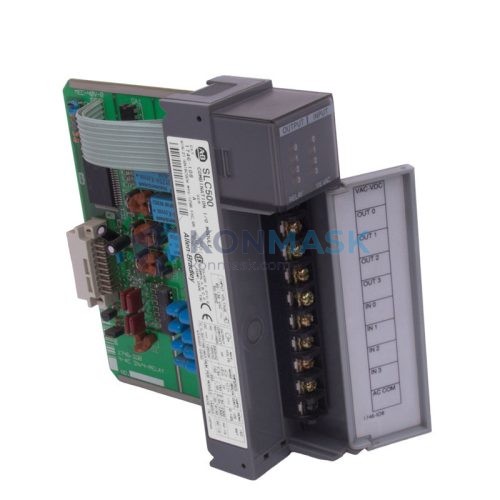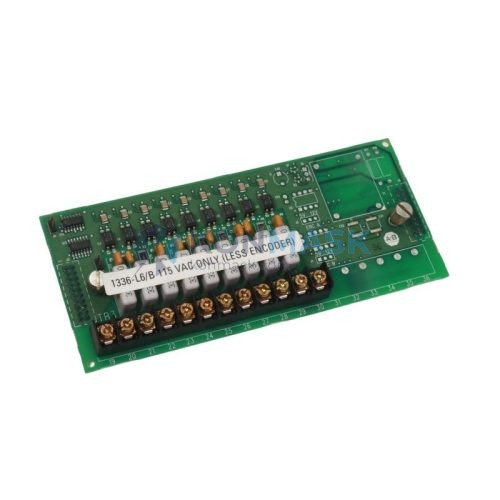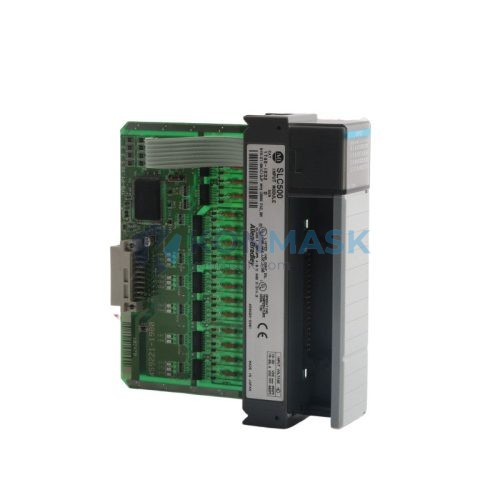

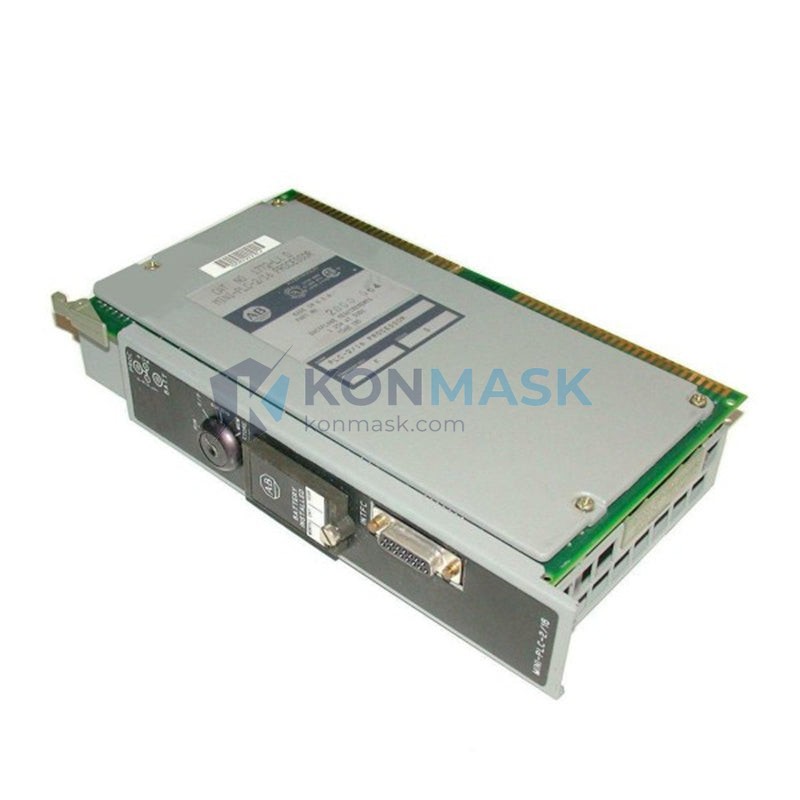
Allen-Bradley 1772-LX Mini PLC-2/16 Processor | Mini PLC-2 Platform
Engineering Background: The Allen-Bradley Mini PLC-2 platform (Series 1772) established the foundational architecture for distributed control in North American industrial automation throughout the 1980s and 1990s. Deployed extensively across petrochemical refineries, municipal water treatment facilities, and fossil-fuel power generation plants, this platform remains embedded in legacy DCS/SCADA hybrid architectures where replacement of the entire control system is not economically or operationally justified. The 1772-LX processor serves as the central execution unit of the Mini PLC-2/16 system — responsible for ladder logic scan, I/O table management, and communication with the 1772-series I/O chassis.
Product Positioning: The 1772-LX is the standard-capacity processor variant within the Mini PLC-2/16 family, supporting up to 16 I/O slots and a fixed memory architecture suited for deterministic, scan-based control loops. It is distinguished from the 1772-LXP (extended memory) and 1772-LX1 (enhanced communication) variants by its focus on core ladder logic execution without optional co-processor overhead. Applicable where the control program is stable, the I/O count does not exceed 16 slots, and the priority is long-term parts availability over feature expansion.
Complete Technical Specifications
Electrical
- Processor Type: Mini PLC-2/16 Central Processing Unit
- Memory Capacity: 1K words (ladder logic program storage)
- I/O Capacity: Up to 16 I/O modules (1772-series chassis)
- Data Table: 256 words (fixed)
- Scan Time: Approximately 1 ms per 1K of logic (typical)
- Power Consumption: 1.5 W (from 1772-series backplane)
- Communication Port: RS-232C / DH-485 compatible (via 1772-series adapter)
- Programming Interface: Compatible with A-B 1770-T3 Industrial Terminal and 6200 Series Software
Mechanical
- Form Factor: Single-slot module, 1772-series chassis mount
- Dimensions: Approximately 130 mm × 100 mm × 50 mm (H × W × D)
- Weight: 900 g (shipping weight)
- Connector: 44-pin DIN backplane edge connector
- Mounting: Slot 0 (processor slot) of 1772-series I/O chassis
Environmental
- Operating Temperature: 0 °C to +60 °C
- Storage Temperature: −40 °C to +85 °C
- Relative Humidity: 5% to 95% non-condensing
- Vibration: IEC 68-2-6 compliant (tested)
- Enclosure Rating: Open-frame module; requires installation in rated enclosure (NEMA 12 or equivalent)
Certifications
- UL Listed (Industrial Control Equipment)
- CSA Certified
- CE Marking (EMC Directive compliance for legacy series)
Data source: Allen-Bradley Publication 1772-6.5.1 (Mini PLC-2/16 Processor User Manual); Rockwell Automation legacy product documentation archive. Specifications reflect original factory design parameters.
Proven Application Environments
- Petrochemical Refinery: Crude distillation unit feed pump control — continuous duty, high-ambient-temperature MCC room, 24/7 unattended operation requiring deterministic scan cycle.
- Municipal Water Treatment: Chlorination dosing skid sequencing — corrosive atmosphere, frequent start/stop cycles, integration with SCADA via DH-485 network segment.
- Fossil Fuel Power Generation: Auxiliary boiler feedwater control — high-vibration environment adjacent to rotating equipment, critical interlock logic with hardwired safety relay backup.
- Pulp & Paper Mill: Digester pressure relief valve sequencing — steam-saturated atmosphere, legacy DCS integration via analog I/O, long-interval maintenance windows.
- Automotive Assembly: Conveyor indexing and part-present verification — high-cycle-count application, tight scan-time budget, integration with 1771-series I/O on shared DH+ network.
- Mining & Mineral Processing: Crusher feed rate regulation — dusty, high-vibration environment, remote installation with infrequent on-site access, requiring high MTBF processor platform.
Engineering Advantages
- For high-ambient-temperature MCC rooms, this processor module maintains full operational integrity up to 60 °C, because the 1772-LX employs a passive thermal design with no internal cooling fan — eliminating the primary mechanical failure mode in hot environments.
- For legacy DCS migration projects with constrained capital budgets, this processor module enables continued operation of existing 1772-series I/O infrastructure, because the 1772-LX retains full backward compatibility with all 1772-series I/O modules manufactured from 1982 onward.
- For corrosive-atmosphere installations (chlorine, H₂S, ammonia), this processor module provides reliable long-term operation, because the conformal-coated PCB assembly meets IPC-CC-830 Class AR standards, resisting ionic contamination and humidity-induced leakage currents.
- For applications requiring deterministic scan-cycle performance, this processor module delivers consistent 1 ms/1K scan times, because the fixed-architecture memory map eliminates dynamic memory allocation overhead present in later-generation processors.
- For procurement teams managing multi-site legacy fleets, this processor module simplifies spare-parts inventory, because the 1772-LX is form-factor and firmware compatible across all Mini PLC-2/16 chassis revisions without hardware modification.
- For critical interlock applications requiring audit-ready documentation, this processor module supports full traceability, because each unit supplied by Konmask.com is accompanied by serialized test records and, where available, original factory calibration documentation.
System Architecture & Signal Flow
The 1772-LX occupies Slot 0 of the 1772-series I/O chassis. On power-up, the processor executes a self-diagnostic routine, initializes the I/O data table, and begins the continuous ladder logic scan cycle: Input Image Table Update → Logic Solve → Output Image Table Update → Communication Service. Discrete and analog I/O modules in Slots 1–16 exchange data with the processor via the 1772-series backplane at each scan boundary.
Compatible Modules & Reason for Compatibility:
- 1772-IQ / 1772-OQ — Standard discrete I/O; native backplane protocol match.
- 1772-ID / 1772-OD — DC discrete I/O; same backplane addressing scheme.
- 1772-OW — Relay output module; compatible with 1772-LX output image table addressing.
- 1772-ASB — Remote I/O adapter; extends I/O capacity via 1772-series remote chassis.
- 1772-SD / 1772-SD2 — Specialty I/O; supported via block-transfer instructions in 1772-LX firmware.
Substitution Conditions: The 1772-LX may be substituted by the 1772-LXP where program memory exceeding 1K words is required, provided the chassis and power supply are verified for LXP current draw. Direct substitution with SLC 500 or ControlLogix processors is not possible without chassis replacement and full program re-engineering.
Sourcing & Quality Verification
Units offered through Konmask.com are sourced from decommissioned industrial installations, authorized surplus distributors, and verified secondary-market channels. Each unit undergoes the following 4-step verification process before listing:
- Visual Inspection: PCB examined for corrosion, burn marks, cracked solder joints, and missing or substituted components under 10× magnification.
- Functional Power-On Test: Module installed in a 1772-series test chassis; processor self-diagnostic LEDs verified; RUN/FAULT status confirmed.
- Communication Verification: DH-485 port tested for correct framing and response using A-B 1770-KF2 interface; program upload/download cycle completed.
- Serialization & Documentation: Unit serial number recorded; test results logged; original labels and firmware revision markings photographed and archived.
Available Documentation (upon request): Test report with pass/fail criteria; firmware revision label photograph; original factory nameplate scan; decommissioning certificate (where available from source facility).
Procurement Process
- Inquiry Submission: Submit the target model number, required quantity, and application context (process type, operating environment, integration requirements) via the contact form or email at support@konmask.com.
- Technical Confirmation & Quotation: A response with stock confirmation, unit condition report, and pricing will be provided within 24 hours on business days. For urgent plant-down situations, priority processing is available — please indicate in the inquiry subject line.
- Order & Dispatch: Upon order confirmation, units are packaged in anti-static ESD bags with foam-lined cartons and dispatched via tracked courier. Export documentation (commercial invoice, packing list, HS code declaration) is included for international shipments.
Technical Support Available: Pre-purchase compatibility verification; installation guidance referencing original A-B documentation; cross-reference assistance for obsolete part numbers; post-delivery functional query support.
Technical FAQ
Q: Is the 1772-LX compatible with the 1772-LXP chassis, and can they be interchanged in the field?
A: The 1772-LX and 1772-LXP share the same 1772-series chassis and backplane connector. Physical installation is interchangeable. However, the LXP requires slightly higher backplane current; the existing power supply must be verified against the LXP current specification (refer to Publication 1772-6.5.2) before substitution. Program memory is not transferable without re-entry, as the LXP uses a different memory map.
Q: Can the 1772-LX be replaced by an SLC 5/01 or SLC 5/02 processor as a direct drop-in?
A: No. The SLC 500 series uses a physically different chassis (1746-series) and an incompatible backplane protocol. Migration from Mini PLC-2 to SLC 500 requires chassis replacement, I/O module replacement, and complete program re-engineering from PLC-2 instruction set to SLC 500 instruction set. This is a planned migration project, not a field substitution.
Q: Does the 1772-LX carry current UL/CSA certification, and is it acceptable for use in Class I, Division 2 hazardous locations?
A: The 1772-LX carries original UL Listed and CSA Certified marks for industrial control equipment in ordinary (non-hazardous) locations. It is not independently rated for Class I, Division 2 installation. For hazardous-location applications, the processor must be installed in a suitably rated purged-and-pressurized enclosure (NFPA 496 Type X or Z) or an explosion-proof enclosure with appropriate conduit sealing, and the installation must be reviewed by a qualified electrical engineer against the applicable NEC/CEC articles.
© 2026 Konmask.com. All rights reserved.
Original Source: https://Konmask.com
Contact: support@konmask.com | +0086 19859288691