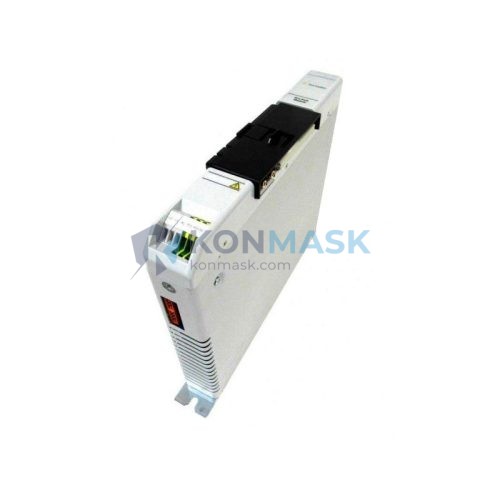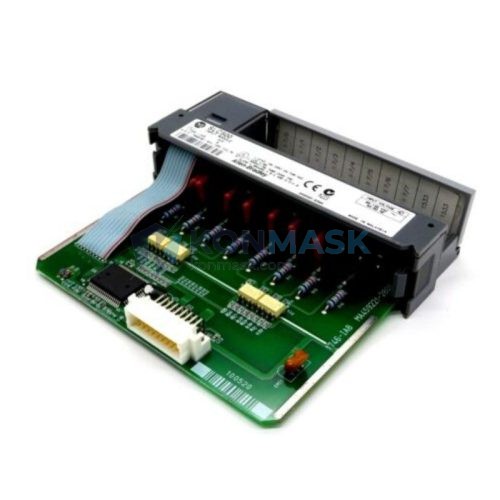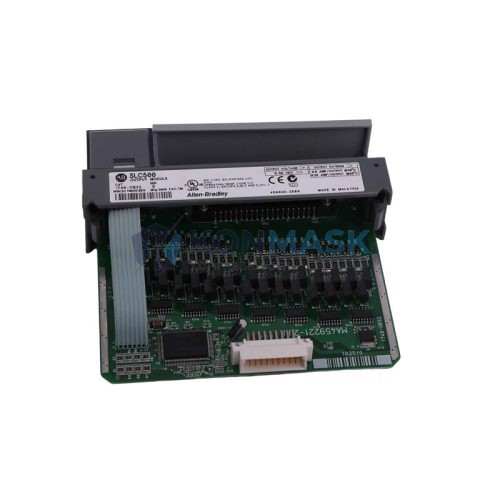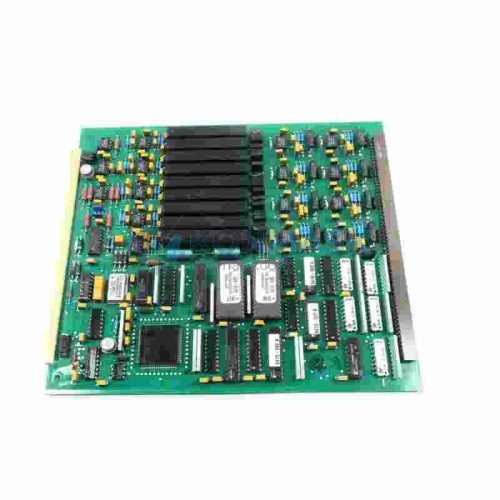

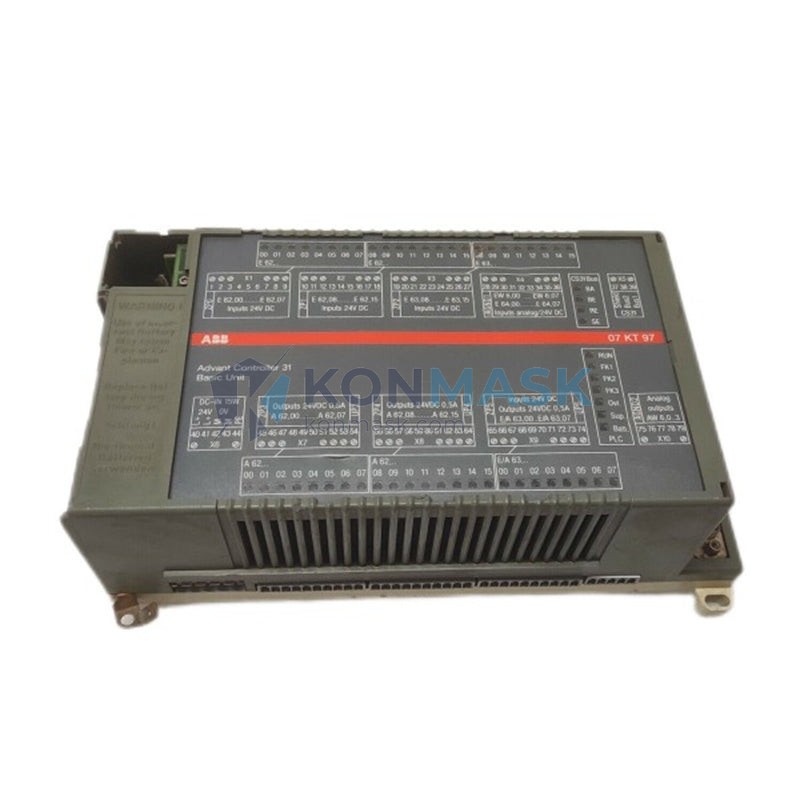
ABB 07KT97 – CPU Basic Unit | Advant Controller 31 (AC31) Series
Engineering Background: The ABB Advant Controller 31 (AC31) platform is a proven distributed control architecture widely deployed across process industries since the early 1990s. Designed for deterministic real-time control, the AC31 series occupies the mid-tier of ABB’s automation hierarchy — bridging field-level I/O with supervisory SCADA/DCS layers via PROFIBUS-DP and serial communication backbones. The 07KT97 is the CPU Basic Unit of this platform: it hosts the application program, manages I/O bus arbitration, and serves as the primary communication gateway for the entire controller rack. In a system architecture context, this module is the single point of program execution — its health directly determines plant uptime.
Product Positioning: Within the AC31 family, the 07KT97 represents the standard-capacity CPU variant, distinguished from the 07KT98 (extended memory) and 07KT95 (compact I/O-integrated) by its balance of program memory, communication ports, and rack expandability. It is the correct selection when the application requires standalone rack mounting, multi-drop serial networking, and a program size that does not exceed 256 KB. It is not suited for safety-rated SIL applications or installations requiring IEC 61511 compliance without supplementary safety relays.
Complete Technical Specifications
Electrical
- Supply Voltage: 24 V DC (18–30 V DC operating range)
- Power Consumption: ≤ 8 W typical
- Program Memory: 256 KB Flash (user application)
- Data Memory: 128 KB SRAM with battery backup
- CPU Clock: 32-bit RISC processor
- Digital I/O Capacity: Up to 512 DI / 512 DO (via expansion modules)
- Analog I/O Capacity: Up to 128 AI / 64 AO (via expansion modules)
- Communication Ports: 1× RS-232, 1× RS-485, 1× PROFIBUS-DP (slave)
- Scan Time: ≤ 1 ms per 1,000 instructions (typical)
Mechanical
- Mounting: DIN rail (35 mm) or panel mount via rack backplane
- Dimensions (W×H×D): 80 × 130 × 75 mm (approximate)
- Weight: 800 g
- Connector Type: Front-face plug-in terminal blocks
- Battery: Lithium 3.6 V (for SRAM retention, field-replaceable)
Environmental
- Operating Temperature: 0°C to +55°C
- Storage Temperature: −25°C to +70°C
- Relative Humidity: 5–95% RH, non-condensing
- Vibration Resistance: IEC 60068-2-6 (5–150 Hz, 1 g)
- Shock Resistance: IEC 60068-2-27 (15 g, 11 ms)
- Protection Class: IP20 (open rack installation)
- Pollution Degree: 2
Certifications
- CE Marking: EMC Directive 2014/30/EU, LVD 2014/35/EU
- UL Listed: UL 508 (Industrial Control Equipment)
- ATEX: Not rated for Zone 0/1 — requires external enclosure for hazardous areas
Specification data sourced from ABB AC31 System Manual (3ADR010066R0101) and ABB 07KT97 hardware datasheet. Verify against current ABB documentation for safety-critical applications.
Proven Application Environments
- Petrochemical — Compressor Station Control: Deployed as the primary CPU in reciprocating compressor sequencing panels; manages start/stop interlocks, vibration trip logic, and PROFIBUS-DP communication to remote I/O under continuous 24/7 duty cycles with ambient temperatures up to 50°C.
- Power Generation — Auxiliary Plant Control: Used in coal-fired and gas turbine auxiliary systems (cooling water pumps, fuel oil forwarding) where deterministic scan times and battery-backed SRAM ensure program retention through power interruptions without manual reload.
- Water Treatment — Dosing & Filtration Control: Controls chemical dosing pump sequences and backwash filter cycles in municipal water plants; RS-485 Modbus connectivity integrates with SCADA historian systems for regulatory compliance logging.
- Pulp & Paper — Conveyor & Drive Coordination: Manages multi-drive coordination on paper machine wet-end sections; the AC31 rack architecture allows incremental I/O expansion without CPU replacement as machine sections are added.
- Mining — Crusher & Conveyor Interlock: Installed in crusher control panels subject to high vibration and dust; IP20 rating requires sealed enclosure, but the module’s vibration tolerance (IEC 60068-2-6) supports operation on vibrating structures with proper panel isolation.
- Building Automation — HVAC Central Plant: Deployed in chiller plant control panels managing cooling tower fans, chilled water pumps, and condenser water circuits; long product lifecycle and spare parts availability reduce total cost of ownership for 15–20 year plant horizons.
Engineering Advantages
- For continuous-process applications with zero-downtime requirements, this CPU module supports hot-swap of I/O expansion modules on compatible AC31 racks, because the backplane bus architecture isolates I/O module power from the CPU supply rail.
- For installations with legacy serial field devices, this controller provides native RS-232 and RS-485 ports with configurable Modbus RTU/ASCII protocol stacks, because the firmware includes ABB’s built-in serial driver library without requiring additional communication modules.
- For plants operating under strict change-management procedures, this CPU module retains the application program in Flash memory without battery dependency, because Flash storage is non-volatile — battery failure affects only SRAM data retention, not program integrity.
- For multi-vendor environments requiring PROFIBUS-DP integration, this controller operates as a DP slave device compatible with any Class 1 DP master (Siemens S7, Schneider Premium, ABB AC500), because it implements the EN 50170 PROFIBUS standard without proprietary extensions.
- For procurement teams managing long-term spare parts strategies, this module benefits from an established secondary market with traceable refurbished stock, because the AC31 platform’s 20+ year production history created a large installed base with documented revision histories.
- For system integrators performing panel builds under IEC 61131-3 programming standards, this CPU is programmed via ABB’s Automation Builder / Control Builder F toolchain supporting all five IEC 61131-3 languages, because ABB maintained backward compatibility across AC31 firmware revisions.
System Architecture & Signal Flow
Signal Flow: Field sensors/actuators → I/O expansion modules (07AI90, 07DI92, 07DO92, etc.) → AC31 backplane bus → 07KT97 CPU (program scan, logic execution, data table update) → Communication ports (RS-232/RS-485 to SCADA; PROFIBUS-DP to master PLC or HMI) → Operator interface / historian.
Compatible Modules:
- 07AI90 / 07AI91 — Analog input modules (4–20 mA, ±10 V); compatible because they share the AC31 backplane bus protocol and 24 V DC rack power.
- 07DI92 / 07DO92 — Digital I/O modules; direct plug-in to the same rack without additional interface hardware.
- 07CS91 — Communication module for additional serial ports; compatible via the CPU’s module slot addressing scheme.
- 07PS60 — Rack power supply unit; required when total rack current exceeds the CPU’s internal supply capacity.
Substitution Conditions: The 07KT98 is a direct functional substitute with extended program memory (512 KB) and is pin/rack compatible. The 07KT95 is NOT a drop-in replacement — it integrates I/O onboard and uses a different rack form factor. Cross-substitution requires full I/O mapping review and rack hardware changes.
Sourcing & Quality Verification
Units offered through Konmask.com are sourced from decommissioned industrial plant upgrades, authorized distributor overstock, and verified secondary-market channels. Each unit undergoes the following 4-step verification process before listing:
- Visual Inspection: Board-level examination for corrosion, burn marks, cracked traces, and connector pin integrity. Units with any physical damage are rejected.
- Firmware Version Check: CPU firmware revision is read and documented. Units with corrupted or unreadable firmware are not listed.
- Power-On Functional Test: Module is powered at 24 V DC; LED status indicators, communication port response, and self-diagnostic outputs are verified against ABB factory test criteria.
- Memory Retention Test: Battery-backed SRAM is written and read after a 30-minute power-off cycle to confirm data retention integrity.
Documentation available upon request: Test report, firmware revision record, photos of physical condition (all four sides + board), and certificate of conformity where applicable.
Procurement Process
- Inquiry Submission: Submit your part number, required quantity, firmware version preference (if applicable), and delivery timeline via the contact form or email at support@konmask.com. Bulk and project-quantity inquiries are welcome.
- Quotation & Availability Confirmation: A response with confirmed stock status, unit condition grade, test report summary, and pricing will be provided within 24 hours on business days. Expedited response available for urgent plant-down situations.
- Order Fulfillment & Shipping: Units are packaged in anti-static foam with original-style protective covers where available. Export documentation (commercial invoice, packing list, country of origin declaration) is prepared for international shipments. Tracking information is provided upon dispatch.
Technical Support: Pre-sale support includes wiring diagram review, compatibility confirmation, and firmware version guidance. Post-sale support includes installation troubleshooting via email and remote diagnostic assistance for integration issues.
Technical FAQ
Q: Is the 07KT97 compatible with the ABB Advant Controller 110 (AC110) or AC160 platforms?
A: No. The 07KT97 is exclusively designed for the AC31 rack architecture. The AC110 and AC160 use different backplane bus protocols, power supply voltages, and CPU form factors. Cross-platform installation will result in hardware damage. Confirm the target rack is an AC31 series before ordering.
Q: Can the 07KT97 replace a 07KT98 in an existing installation?
A: Physically and electrically, yes — both modules are rack-compatible and use the same connector pinout. However, the 07KT97 has half the program memory (256 KB vs. 512 KB). If the existing application program exceeds 256 KB compiled size, the 07KT97 will not load the program. Verify program size in the ABB Control Builder F project properties before substituting.
Q: Is the 07KT97 certified for use in hazardous area (ATEX Zone 1) installations?
A: The 07KT97 itself carries CE and UL 508 certification but is not ATEX-rated for Zone 0 or Zone 1 installation. For hazardous area deployments, the module must be installed inside a certified Ex e (increased safety) or Ex p (pressurized) enclosure rated for the applicable zone and gas group. Consult the enclosure manufacturer’s documentation for derating and installation requirements.
© 2026 Konmask.com. All rights reserved.
Original Source: https://Konmask.com
Contact: support@konmask.com | +0086 19859288691