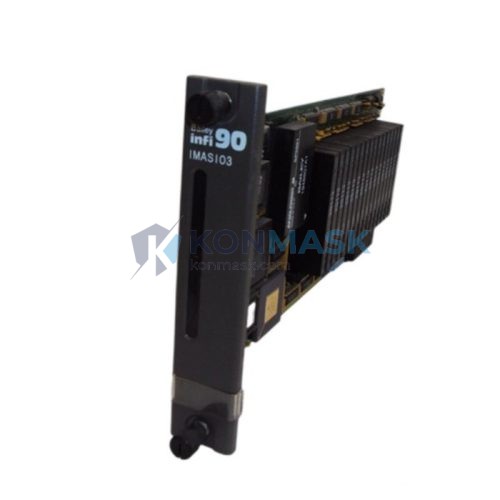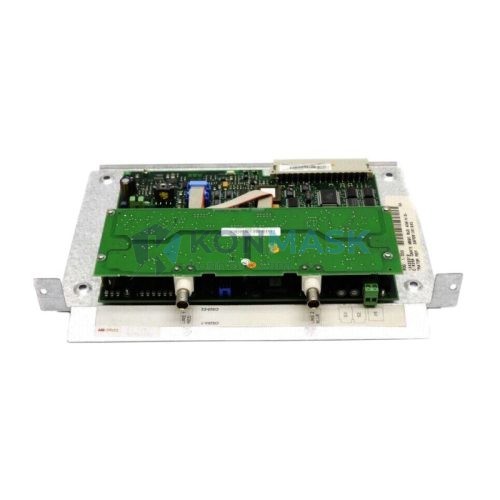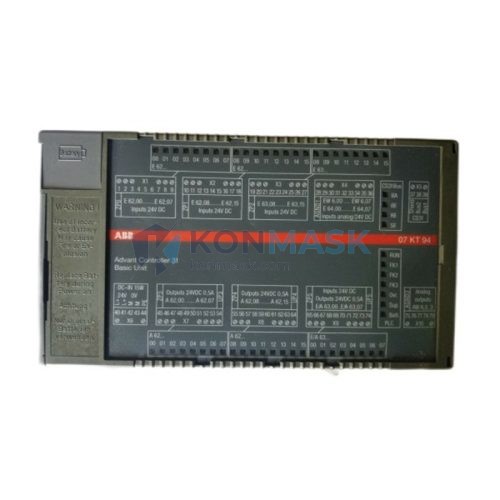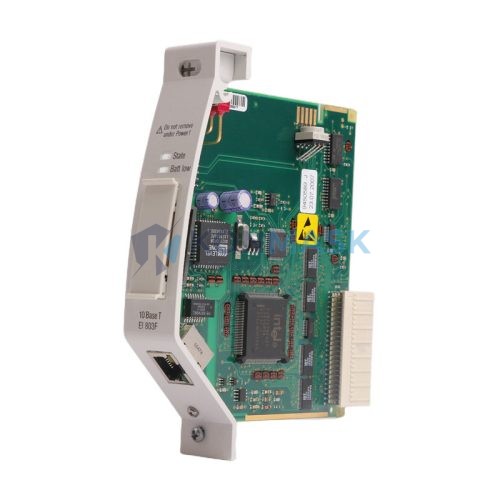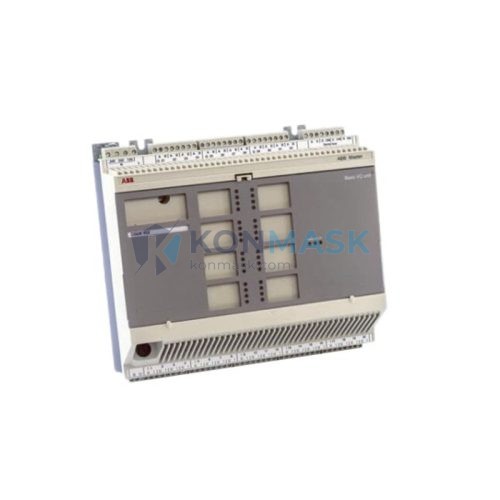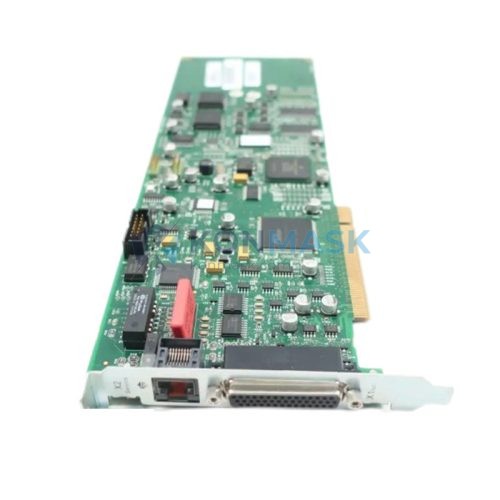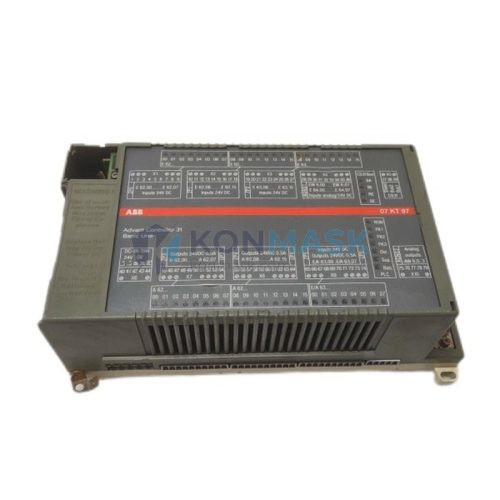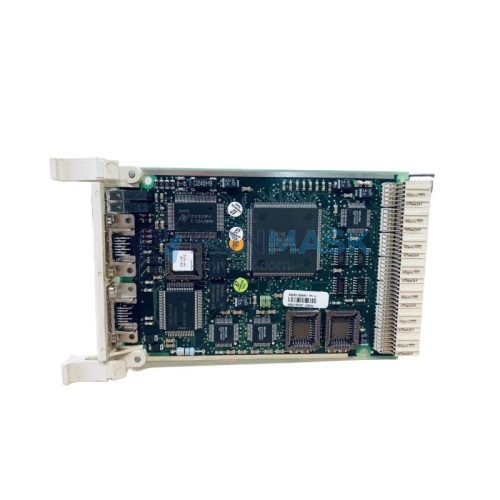

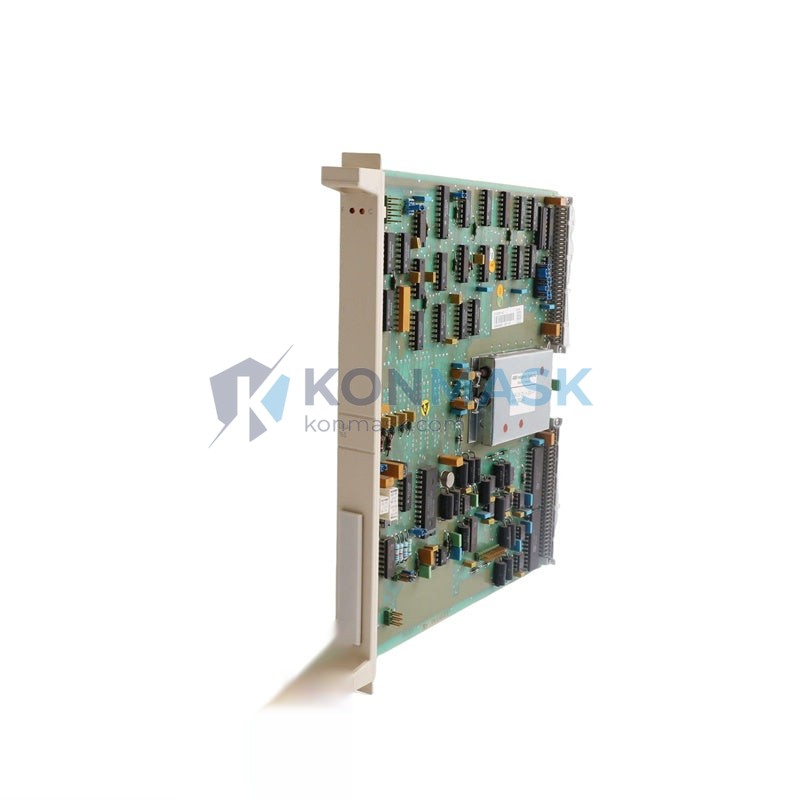
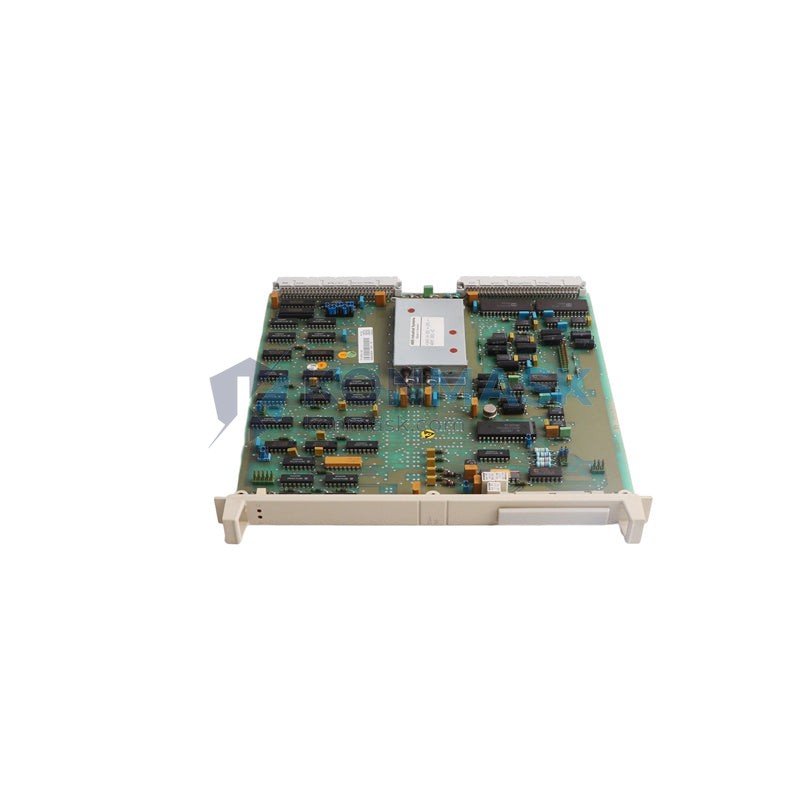
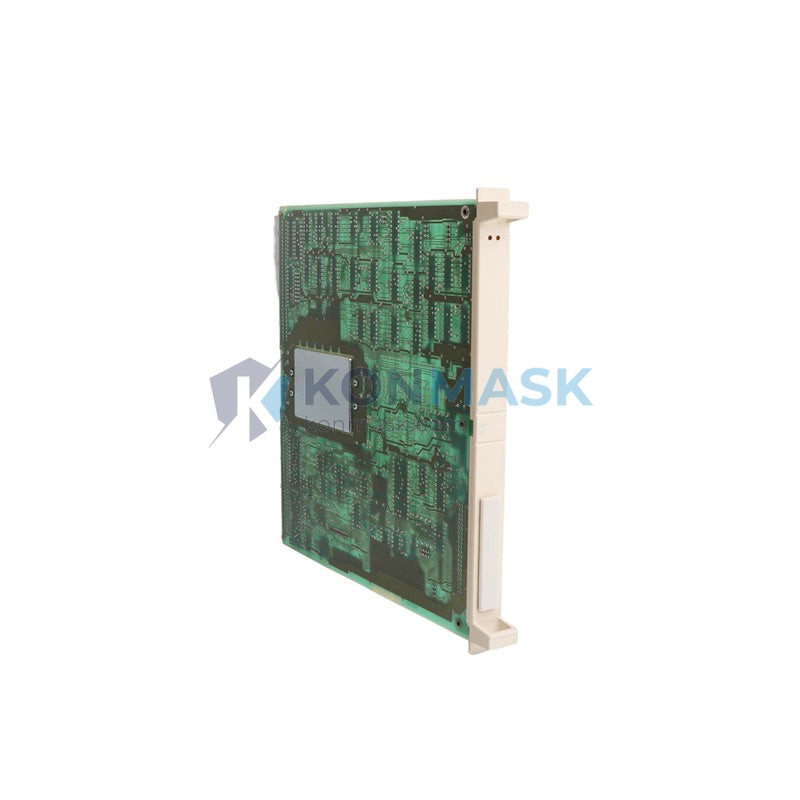
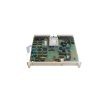
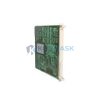
ABB DSAI155 (57120001-HZ) — 16-Channel Analog Input Board | ADVANT Master DCS
Engineering Background: The ABB ADVANT Master (formerly known as the MOD 300 / Master series) is a distributed control system platform widely deployed across continuous-process industries including refining, power generation, pulp & paper, and water treatment. Within the ADVANT Master I/O architecture, the DSAI155 serves as the primary analog signal acquisition board, converting field-level process signals—current loops, voltage references, and thermocouple inputs—into digital values for the controller bus. It occupies a critical position in the signal chain: every PID loop, alarm threshold, and historian data point that originates from a field transmitter passes through this board before reaching the controller.
Product Positioning: The DSAI155 (part number 57120001-HZ) is the standard-density analog input board in the ADVANT Master I/O family, offering 16 differential input channels per slot. It is distinguished from the DSAI130 (8-channel) by its higher channel density, and from the DSAI156 by its support for both current and voltage input modes without hardware jumper reconfiguration per channel group. The boundary condition for this module is a 24 VDC backplane supply and compatibility with the DSBC172/DSBC176 bus coupler. It is not interchangeable with SYMPHONY Plus or 800xA I/O modules without a migration adapter.
Complete Technical Specifications
Electrical
- Input Channels: 16 differential analog inputs
- Input Signal Types: 4–20 mA (active/passive), 0–10 V DC, ±10 V DC, thermocouple (with cold-junction compensation)
- Input Impedance: >10 MΩ (voltage mode); 250 Ω (current mode, internal shunt)
- Resolution: 12-bit ADC (1 in 4096)
- Accuracy: ±0.1% of full scale at 25°C
- Common Mode Rejection: >80 dB at 50/60 Hz
- Isolation: 500 V AC channel-to-bus isolation
- Supply Voltage: 24 V DC ±15% via backplane (DSBC172/DSBC176)
- Power Consumption: ≤4 W typical
- Part Number: 57120001-HZ
Mechanical
- Form Factor: Single-width Eurocard module (233 mm × 160 mm)
- Connector: 64-pin DIN 41612 Type C backplane connector
- Field Wiring: Screw-terminal I/O termination board (DSTB series)
- Weight: 480 g (module only)
- Mounting: ADVANT Master subrack (DSRF series)
Environmental
- Operating Temperature: 0°C to +55°C
- Storage Temperature: −40°C to +70°C
- Relative Humidity: 5%–95% non-condensing
- Vibration: IEC 60068-2-6, 10–150 Hz, 1 g
- EMC: EN 61000-4 series (ESD, EFT, surge, conducted/radiated immunity)
Certifications
- CE Marking: Low Voltage Directive & EMC Directive
- UL/cUL Listed (industrial control equipment)
- RoHS Compliant
- ATEX: Not rated for Zone 0/1 direct installation; use with certified barriers for hazardous area field devices
Data source: ABB ADVANT Master System Technical Reference Manual, Document 3BSE000435R0001; ABB Product Data Sheet DSAI155 Rev. C.
Proven Application Environments
- Petroleum Refining — Crude Distillation Unit: Acquires 4–20 mA signals from pressure transmitters and temperature elements on atmospheric distillation columns operating at sustained high-temperature, high-vibration conditions with continuous 24/7 uptime requirements.
- Thermal Power Generation — Boiler Control: Monitors drum level, steam pressure, and flue gas oxygen concentration via current-loop transmitters in environments with significant electrical noise from large motor drives and transformer banks.
- Municipal Water Treatment — Filtration Control: Reads turbidity, pH, chlorine residual, and flow signals from field analyzers across geographically distributed pump stations connected via ADVANT Master remote I/O networks.
- Pulp & Paper — Recovery Boiler: Handles thermocouple inputs from high-temperature smelt bed zones where common-mode noise rejection is critical due to long cable runs through electrically noisy environments.
- Chemical Processing — Reactor Temperature Profiling: Acquires multi-point temperature profiles from reactor vessels requiring high channel density per rack slot to minimize cabinet footprint in space-constrained control rooms.
- Offshore Oil & Gas — Topside Process Control: Operates in marine-grade control cabinets with DSAI155 boards interfaced to HART-capable transmitters via external multiplexers, supporting asset management without process interruption.
Engineering Advantages
- For high-density I/O applications, this analog input board delivers 16 channels per single rack slot, because the Eurocard form factor maximizes channel count without requiring additional subrack space or bus coupler capacity.
- For noisy industrial environments with long cable runs, this board maintains signal integrity, because the >80 dB common-mode rejection ratio at 50/60 Hz suppresses power-line interference induced on unshielded twisted-pair field wiring.
- For mixed signal-type installations, this board accepts both current and voltage inputs on the same board, because the input mode is software-configurable per channel group, eliminating the need for separate AI boards for different transmitter types.
- For aging ADVANT Master systems requiring board replacement, this module provides drop-in hardware compatibility, because the 64-pin DIN 41612 backplane connector and firmware register map are identical to earlier DSAI155 revisions, requiring no software reconfiguration.
- For safety-instrumented system integration, this board supports interfacing with SIL-rated transmitters via external Zener barriers or galvanic isolators, because the 500 V AC channel-to-bus isolation prevents ground loop currents from corrupting safety-critical measurements.
- For HART asset management programs, this board preserves the HART digital signal superimposed on the 4–20 mA loop, because the input impedance and bandwidth characteristics do not attenuate the FSK signal, enabling external HART multiplexers to communicate with field devices without loop interruption.
System Architecture & Signal Flow
Field transmitters connect via shielded twisted-pair cables to the DSTB termination board, which routes signals through the backplane to the DSAI155. The module’s multiplexer sequentially samples each of the 16 channels, passes the signal through a programmable-gain amplifier, and converts it via the 12-bit ADC. Digitized values are transferred over the ADVANT Master internal bus to the PM511/PM510 processor module, where they are scaled to engineering units and made available to the control application and historian.
Compatible Modules:
- DSBC172 / DSBC176 — Bus Coupler (required for backplane communication)
- PM511V16 / PM510V16 — Processor Modules (primary controller pairing)
- DSTB132 / DSTB133 — Termination Boards (field wiring interface)
- DSAI130 — 8-channel predecessor; compatible subrack slot, lower channel density
Substitution Conditions: The DSAI155 can substitute for DSAI130 in the same slot with a configuration change in the ADVANT Master engineering tool (AMPL/Control Builder) to declare the additional 8 channels. Substitution with DSAI156 requires verification of input signal type compatibility. Migration to ABB 800xA S800 I/O requires a dedicated migration kit and is not a direct hardware swap.
Sourcing & Quality Verification
All DSAI155 boards are sourced from decommissioned ABB ADVANT Master systems, authorized surplus channels, and long-term MRO inventory holdings. Each unit undergoes a structured 4-step inspection process before shipment:
- Visual Inspection: PCB examined for corrosion, burnt components, cracked solder joints, and damaged connectors under magnification.
- Functional Power-On Test: Module installed in a live ADVANT Master test rack; all 16 channels verified against calibrated signal sources at 4 mA, 12 mA, and 20 mA reference points.
- Firmware & Revision Verification: Hardware revision code and firmware version confirmed against ABB compatibility matrix for the target system configuration.
- Packaging & ESD Protection: Module sealed in anti-static bag with desiccant, placed in foam-lined carton with shock indicators.
Documentation available upon request: Test report with channel-by-channel accuracy data; high-resolution photographs of PCB and label; ABB original datasheet; certificate of conformity; export compliance documentation (HS code, country of origin).
Procurement Process
- Inquiry Submission: Submit the target system configuration (processor type, firmware version, existing I/O complement) via email to support@konmask.com or via the product page inquiry form. This allows cross-referencing compatibility before order confirmation.
- Quotation & Stock Confirmation: A response with confirmed stock status, unit price, lead time, and available documentation is provided within 24 hours on business days. Expedited response available for urgent plant maintenance situations.
- Order & Shipment: Orders are processed with DHL Express, FedEx International Priority, or sea freight depending on destination and urgency. Export documentation, commercial invoice, and packing list are included with every shipment. Technical support via email is available post-delivery for installation verification questions.
Technical support types available: Pre-sales compatibility verification; post-sales installation guidance; firmware revision identification; cross-reference to alternative part numbers.
Technical FAQ
Q: Is the DSAI155 compatible with both PM511 and PM510 processor modules?
A: Yes. The DSAI155 communicates over the ADVANT Master internal bus and is compatible with all PM510 and PM511 variants (V08, V12, V16). The processor module does not need to be the same hardware revision as the DSAI155, provided the AMPL/Control Builder configuration correctly declares the module type and channel count.
Q: Can the DSAI155 directly replace a DSAI130 without any software changes?
A: A direct slot-for-slot hardware swap is mechanically compatible, but a configuration update in the ADVANT Master engineering tool is required to declare the additional 8 channels (channels 9–16). Without this update, the controller will only poll the first 8 channels. The configuration change does not require a controller restart if performed online in supported firmware versions.
Q: Does the DSAI155 carry SIL certification for use in safety instrumented systems?
A: The DSAI155 itself is not SIL-certified as a standalone component. For SIL 1 or SIL 2 applications, it must be used as part of a validated safety architecture with SIL-rated transmitters, external galvanic isolators, and a SIL-certified logic solver. Consult the ABB Functional Safety Manual for ADVANT Master (document 3BSE008544R0001) for the applicable PFD values and proof-test intervals required for your SIL target.
© 2026 Konmask.com. All rights reserved.
Original Source: https://Konmask.com
Contact: support@konmask.com | +0086 19859288691