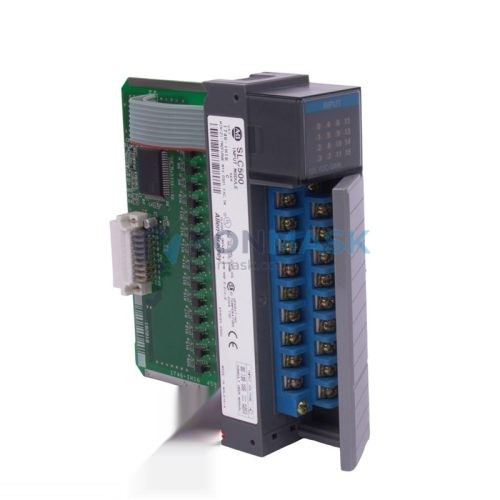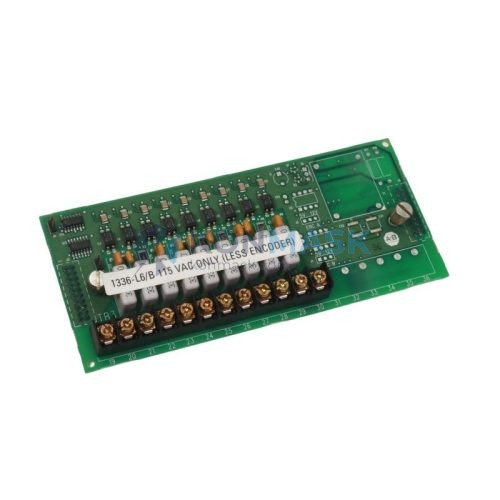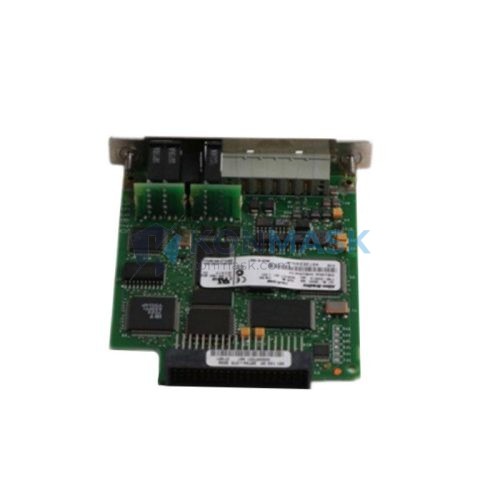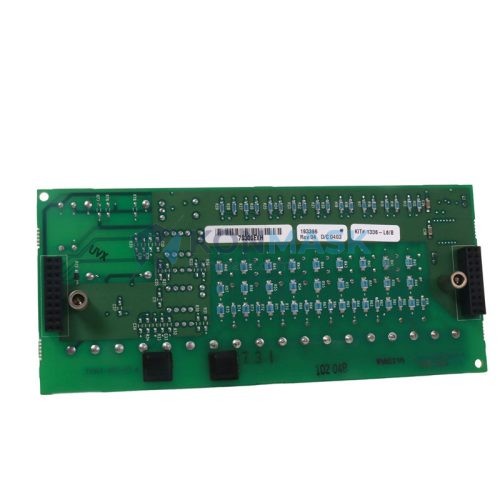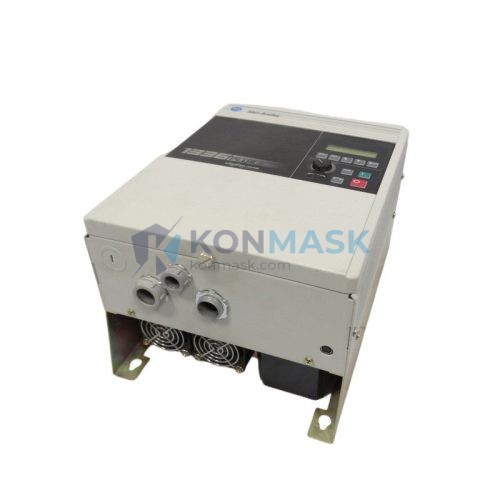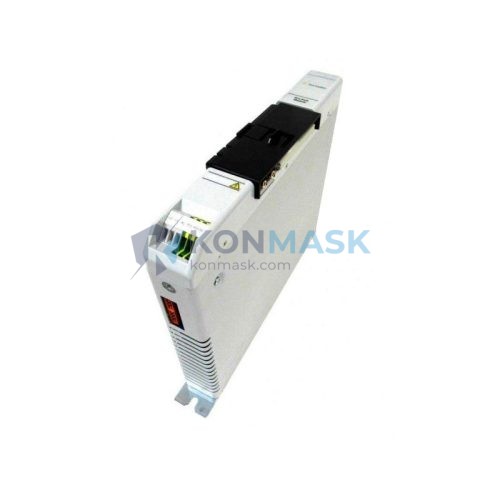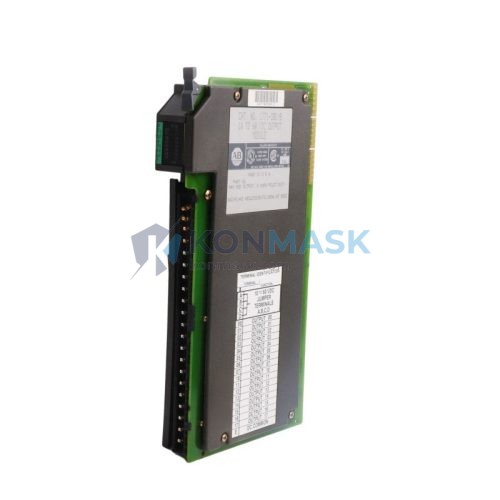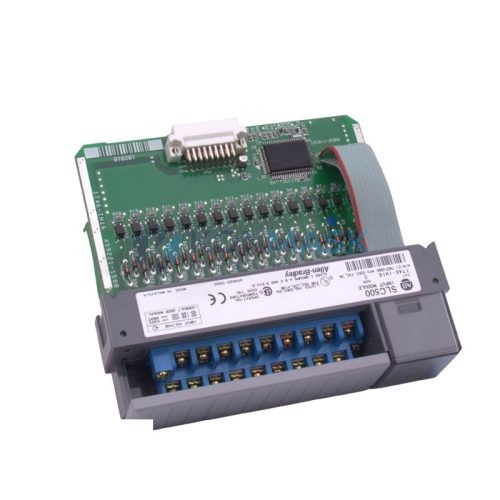

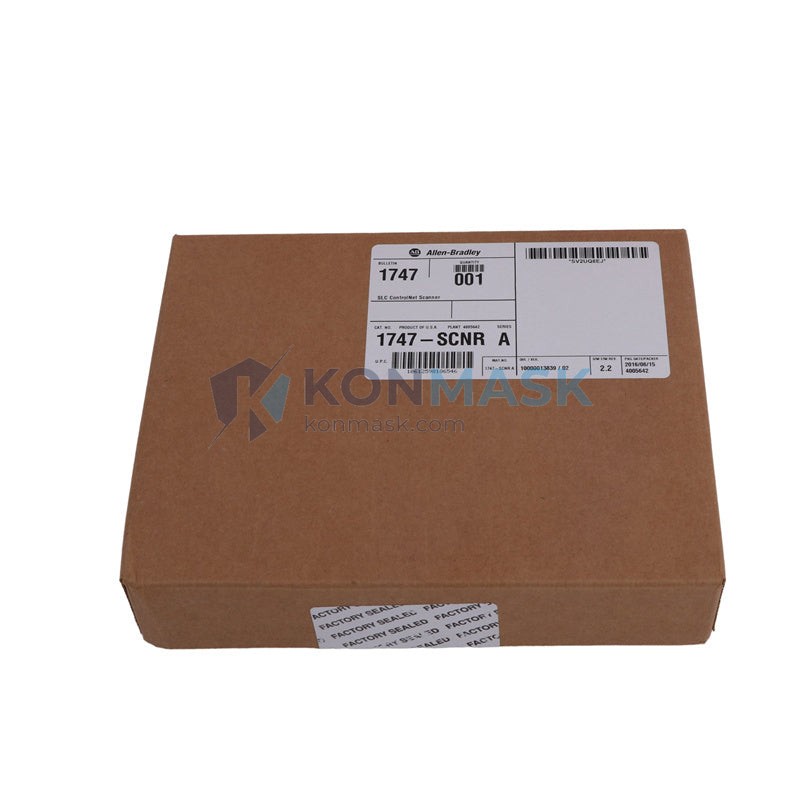
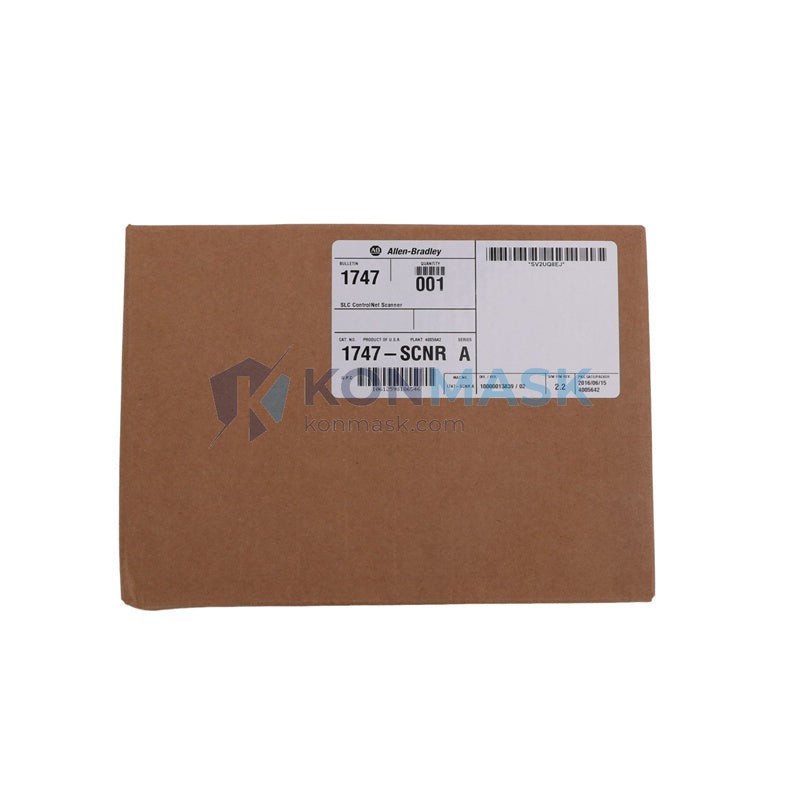
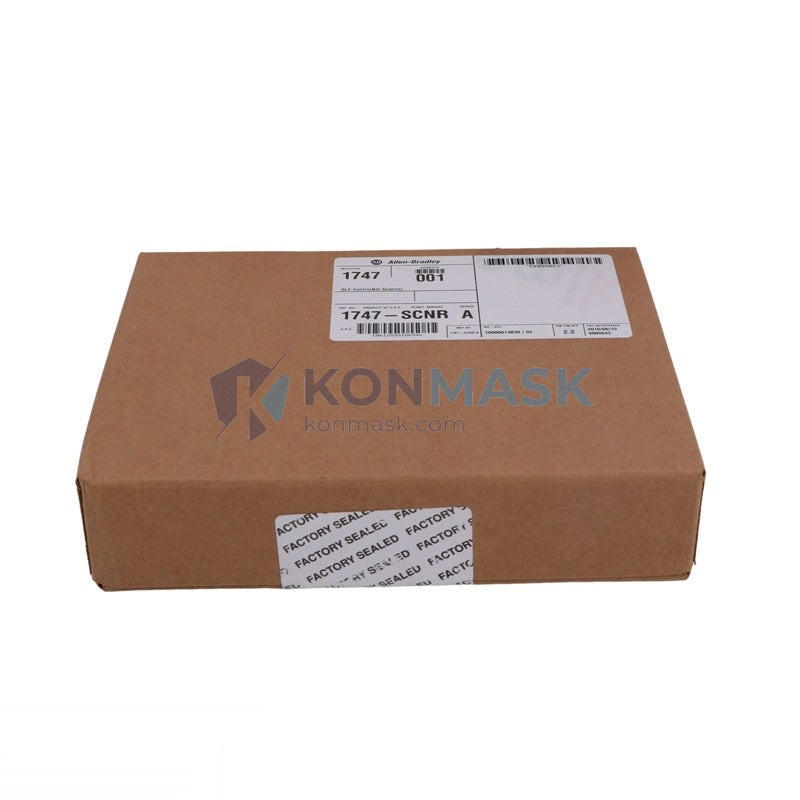
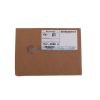
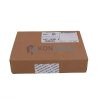
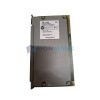
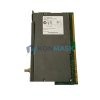
Allen-Bradley 1747-SCNR SLC ControlNet Scanner | SLC 500 Platform
Engineering Background: The Allen-Bradley SLC 500 series has been a cornerstone of discrete and process control architectures across petrochemical, power generation, and water/wastewater facilities for over three decades. Within these installations, ControlNet — a deterministic, repeatable media-access network — serves as the backbone for time-critical I/O and peer-to-peer messaging. The 1747-SCNR is the dedicated ControlNet scanner card for the SLC 500 chassis, enabling the controller to act as a ControlNet originator and manage scheduled (implicit) and unscheduled (explicit) communication with remote I/O adapters, drives, and other ControlNet devices.
Product Positioning: The 1747-SCNR occupies a single slot in any SLC 500 modular chassis (1746 series) and supports up to 48 ControlNet nodes with a maximum of 32 scheduled connections. It is distinct from the 1747-SDN (DeviceNet scanner) and the 1747-KFC15 (ControlNet interface for programming only) — the SCNR is the only SLC 500 module that provides full originator-class ControlNet I/O scanning. It is suited for applications requiring deterministic scan times in the 2–100 ms range and is not intended as a replacement for EtherNet/IP-based architectures where non-deterministic latency is acceptable.
Complete Technical Specifications
Electrical
- Backplane Current Draw: 800 mA @ 5 VDC
- Power Dissipation: 4.0 W (max)
- ControlNet Media: RG-6 coaxial cable (BNC connectors, dual-port redundant media)
- Network Data Rate: 5 Mbps (fixed)
- Maximum Scheduled Connections: 32
- Maximum ControlNet Nodes: 48
- Input Data Table Size: Up to 64 words per connection
- Output Data Table Size: Up to 64 words per connection
Mechanical
- Form Factor: Single-slot SLC 500 I/O module (1746 chassis compatible)
- Dimensions: 94 mm H × 35 mm W × 87 mm D (approximate)
- Weight: ~350 g
- Connector: Dual BNC (Channel A / Channel B for redundant media)
- Indicators: Module OK, Network OK, Channel A/B activity LEDs
Environmental
- Operating Temperature: 0 °C to +60 °C
- Storage Temperature: −40 °C to +85 °C
- Relative Humidity: 5% to 95% non-condensing
- Vibration: IEC 68-2-6 (operational)
- Shock: IEC 68-2-27
- Enclosure Rating: Open-type (requires installation in rated enclosure)
Certifications
- UL Listed (UL 508)
- CE Marked (EMC Directive, Low Voltage Directive)
- ControlNet International Conformance Tested
- CSA Certified
Data source: Rockwell Automation Publication 1747-UM051 (1747-SCNR User Manual) and 1747-TD001 Technical Data Sheet. Specifications subject to firmware revision; verify against installed firmware version.
Proven Application Environments
- Petrochemical / Refinery: Crude distillation unit control panels — SLC 5/05 CPU with 1747-SCNR scanning remote 1794-ACNR15 FLEX I/O racks across a ControlNet trunk, operating continuously at 100 ms RPI under high-vibration, high-temperature conditions.
- Power Generation / Thermal Plant: Boiler feedwater pump control — 1747-SCNR coordinating scheduled I/O with 1336 PLUS II drives over ControlNet, maintaining deterministic torque reference updates at 10 ms scan intervals during load-following operations.
- Municipal Water Treatment: Clarifier and filtration control — SLC 500 rack with 1747-SCNR managing distributed valve actuator I/O across a ControlNet segment, tolerating high-humidity enclosure environments with redundant media cabling.
- Automotive Assembly: Body-in-white welding line — 1747-SCNR synchronizing robot I/O handshake signals with PanelView HMI messaging over ControlNet, requiring sub-20 ms deterministic response for weld sequence interlocks.
- Pulp & Paper / Chemical Processing: Digester pressure control — SLC 5/04 with 1747-SCNR interfacing to remote analog I/O modules, leveraging ControlNet’s noise immunity on long cable runs through electrically noisy mill environments.
- Mining / Mineral Processing: Conveyor belt drive coordination — 1747-SCNR used as originator for multiple 1336 IMPACT drives on ControlNet, enabling coordinated speed reference and status feedback across a 1,000 m plant floor segment.
Engineering Advantages
- For time-critical discrete I/O applications, this ControlNet scanner delivers deterministic, repeatable scan times, because ControlNet’s CTDMA media access protocol guarantees scheduled bandwidth allocation independent of network load.
- For installations with long cable runs through electrically noisy environments, this scanner module maintains signal integrity, because ControlNet’s RG-6 coaxial physical layer provides inherent shielding and supports repeaters for segments up to 1,000 m.
- For multi-drive coordination applications, this scanner enables synchronized torque and speed reference updates across all connected drives, because scheduled connections deliver I/O data at a fixed, configurable RPI without arbitration delays.
- For redundant media requirements in critical process applications, this module supports dual-port Channel A/B cabling, because the hardware includes two independent BNC ports that automatically fail over without controller intervention.
- For facilities with existing SLC 500 infrastructure, this scanner extends the useful life of the installed base, because it integrates directly into any 1746 modular chassis without requiring a controller upgrade or chassis replacement.
- For maintenance teams managing legacy systems, this module’s LED diagnostics (Module OK, Network OK, Channel A/B) provide immediate fault isolation, because each indicator maps directly to a specific layer of the communication stack, reducing mean time to repair.
System Architecture & Signal Flow
Signal Flow: SLC 500 CPU (M0/M1 file) → Backplane → 1747-SCNR scanner → ControlNet trunk (Channel A/B) → Remote ControlNet adapter (e.g., 1794-ACNR15, 1203-CN1) → Remote I/O module → Field device. Scheduled (implicit) connections carry I/O data at the configured RPI; unscheduled (explicit) connections carry MSG instruction data for configuration and diagnostics.
Compatible Modules & Reasons:
- 1794-ACNR15 (FLEX I/O ControlNet Adapter) — direct ControlNet node, supports scheduled I/O with 1747-SCNR as originator
- 1203-CN1 (ControlNet Communication Module for 1336 drives) — enables drive parameter access and I/O over ControlNet
- 1771-ACNR15 (PLC-5 remote I/O rack ControlNet adapter) — allows SLC 500 to scan legacy PLC-5 remote I/O racks via ControlNet bridge
- 2711-ND3 (PanelView ControlNet DH+ Gateway) — supports unscheduled MSG communication for HMI data exchange
Substitution Conditions: The 1747-SCNR has no direct functional equivalent within the SLC 500 platform. Migration to a CompactLogix or ControlLogix platform with a 1756-CNB or 1756-CN2 ControlNet bridge module is the standard upgrade path when the SLC 500 chassis reaches end-of-support. Direct substitution with a 1747-SDN (DeviceNet) or 1747-KFC15 is not possible due to protocol incompatibility.
Sourcing & Quality Verification
Units offered through Konmask.com are sourced from decommissioned OEM production lines, certified industrial surplus distributors, and controlled factory-refurbishment channels. Each unit undergoes the following 4-step verification process before shipment:
- Visual & Mechanical Inspection: PCB, connector pins, BNC ports, and front-panel LEDs inspected for physical damage, corrosion, and counterfeit indicators (label font, hologram, board markings cross-referenced against Rockwell Automation reference samples).
- Firmware Version Verification: Module firmware revision confirmed and documented; units with unsupported or corrupted firmware are quarantined.
- Functional Power-On Test: Module installed in a 1746 test chassis with SLC 5/05 CPU; Module OK LED and Network OK LED status verified; RSNetWorx for ControlNet node discovery performed to confirm network participation.
- Burn-In & Final QC: 24-hour powered burn-in at operating temperature; post-burn-in functional retest; unit serialized and packaged with anti-static protection.
Available Documentation: Test report, firmware revision record, original Rockwell Automation datasheet, certificate of conformance, and (where available) original factory calibration label.
Procurement Process
- Inquiry & Availability Confirmation: Submit the required quantity and any firmware revision requirements via the contact form or email. Stock availability and lead time are confirmed within 24 hours on business days.
- Technical Review & Quotation: The technical team reviews compatibility with the customer’s SLC 500 chassis revision and ControlNet network configuration, then issues a formal quotation with unit test report references.
- Order, QC Release & Shipment: Upon order confirmation, the unit undergoes final QC sign-off, is packaged with full documentation, and ships via tracked courier with export documentation for international orders.
Response Commitment: All technical and commercial inquiries receive a response within 24 hours (business days, UTC+8). Pre-sales engineering support is available for compatibility verification, network design review, and firmware revision guidance.
Technical FAQ
Q: Is the 1747-SCNR compatible with all SLC 500 chassis sizes?
A: Yes. The 1747-SCNR installs in any 1746 modular chassis (4-slot, 7-slot, 10-slot, 13-slot) and is compatible with all SLC 500 CPU modules (SLC 5/01 through SLC 5/05), provided the chassis backplane current budget accommodates the 800 mA @ 5 VDC draw. Verify total backplane current against the chassis power supply rating before installation.
Q: Can the 1747-SCNR substitute for a 1756-CNB ControlNet Bridge in a ControlLogix system?
A: No. The 1747-SCNR is exclusively designed for the SLC 500 (1746) backplane and communicates via the SLC 500 backplane protocol. It is not physically or electrically compatible with the 1756 ControlLogix chassis. For ControlLogix ControlNet connectivity, the correct modules are the 1756-CNB or 1756-CN2.
Q: What certifications are required for use in hazardous-area (Zone 2 / Division 2) installations?
A: The 1747-SCNR itself is not ATEX or IECEx certified for direct installation in hazardous areas. For Zone 2 / Division 2 applications, the module must be installed in a suitably rated purged-and-pressurized (Type X or Type Z) or non-incendive enclosure. Consult the site’s area classification documentation and the enclosure manufacturer’s certification before installation. Konmask.com can provide the module’s UL and CE certificates to support the enclosure certification process.
© 2026 Konmask.com. All rights reserved.
Original Source: https://Konmask.com
Contact: support@konmask.com | +0086 19859288691