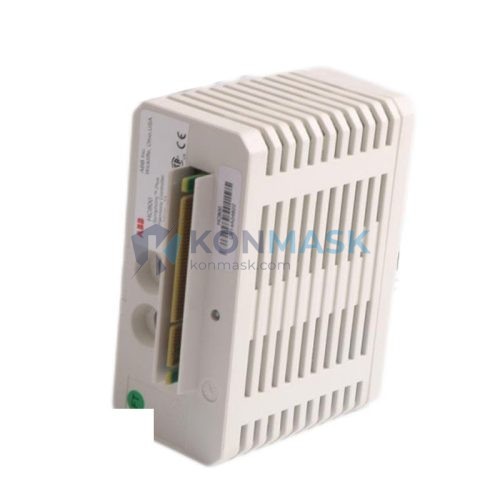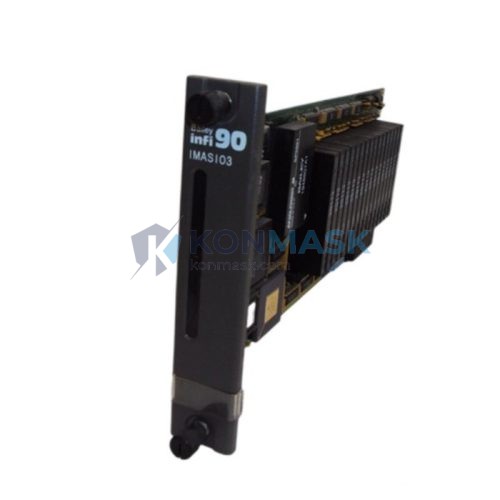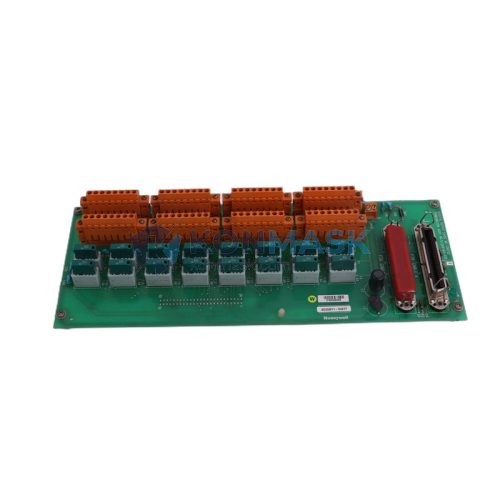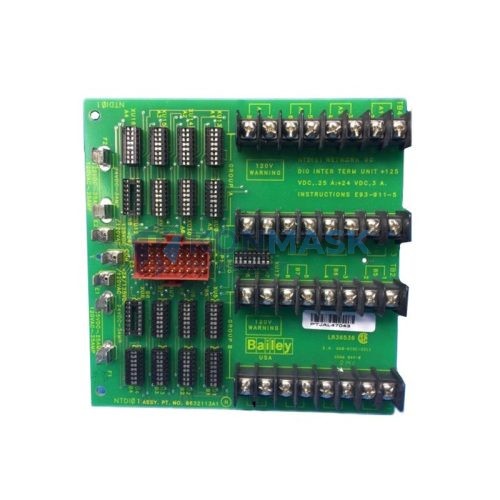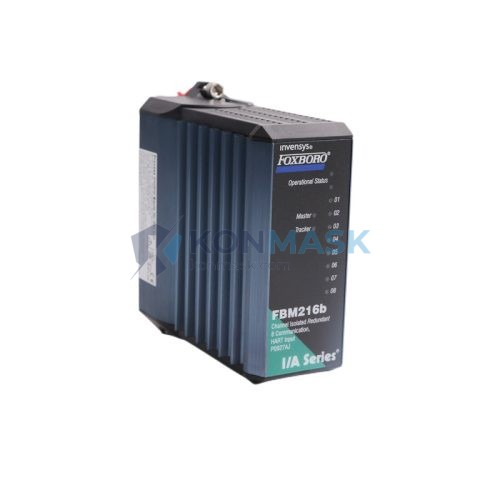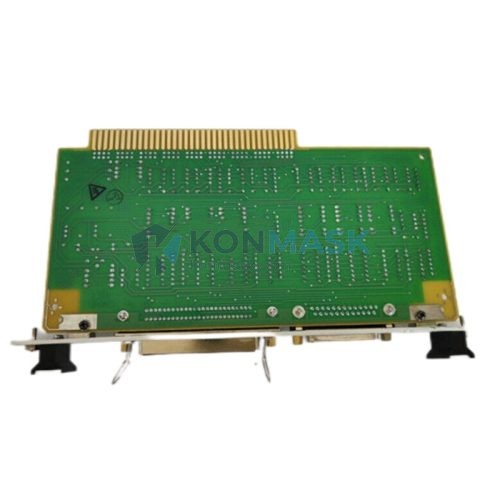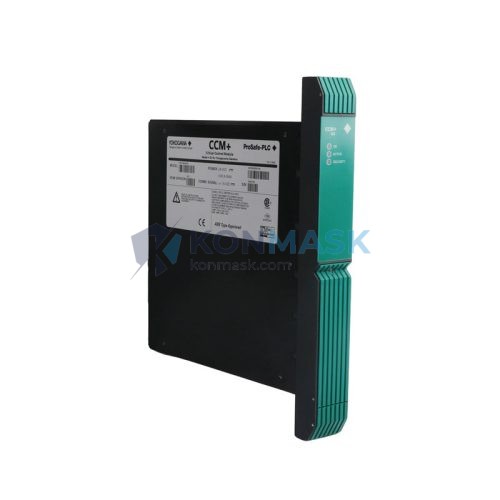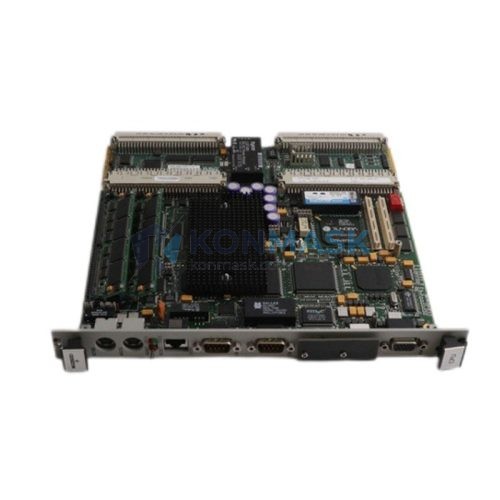

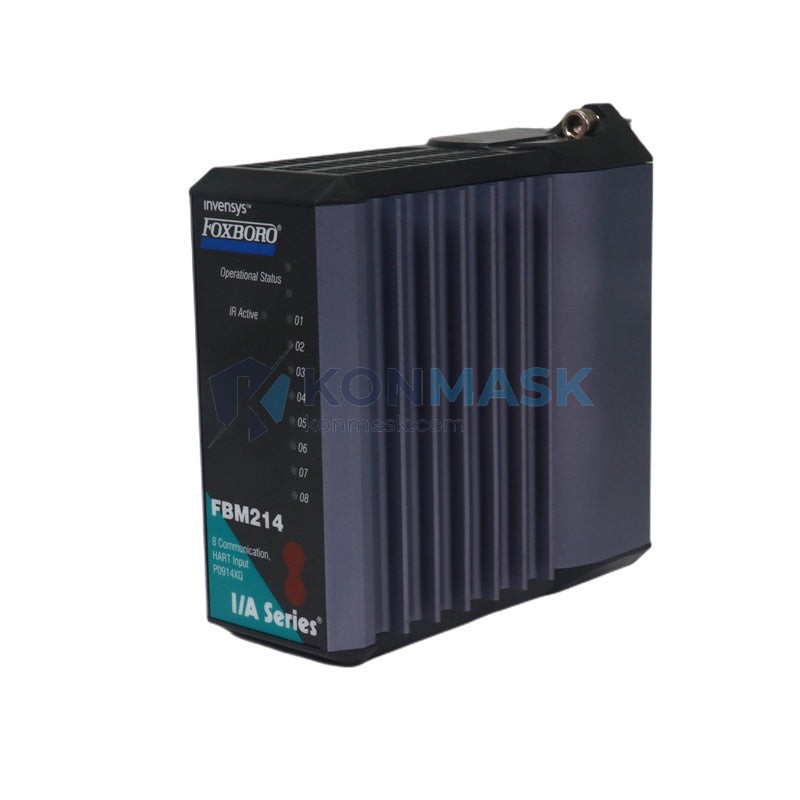
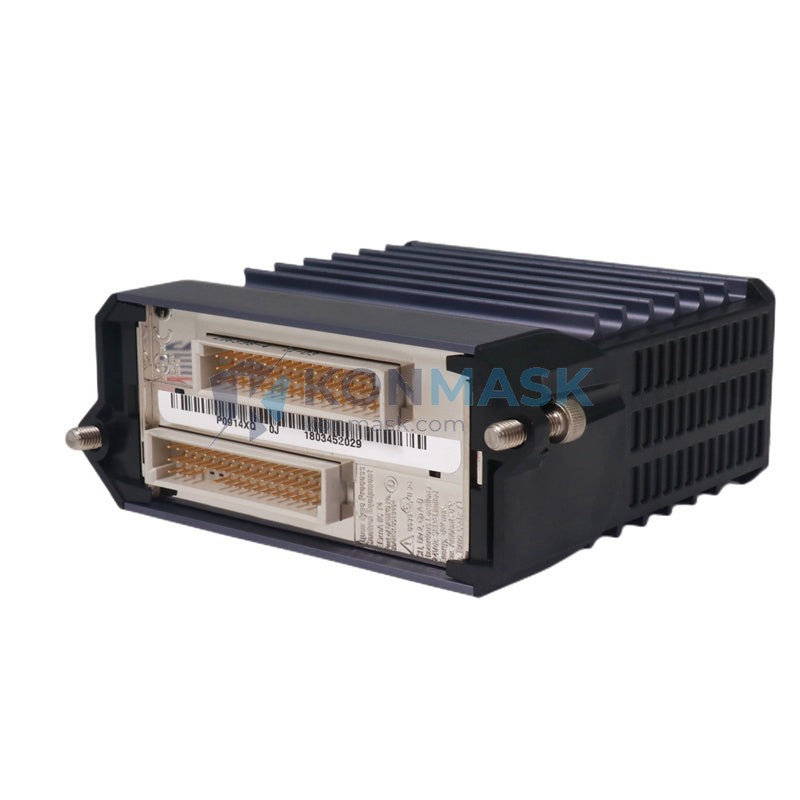
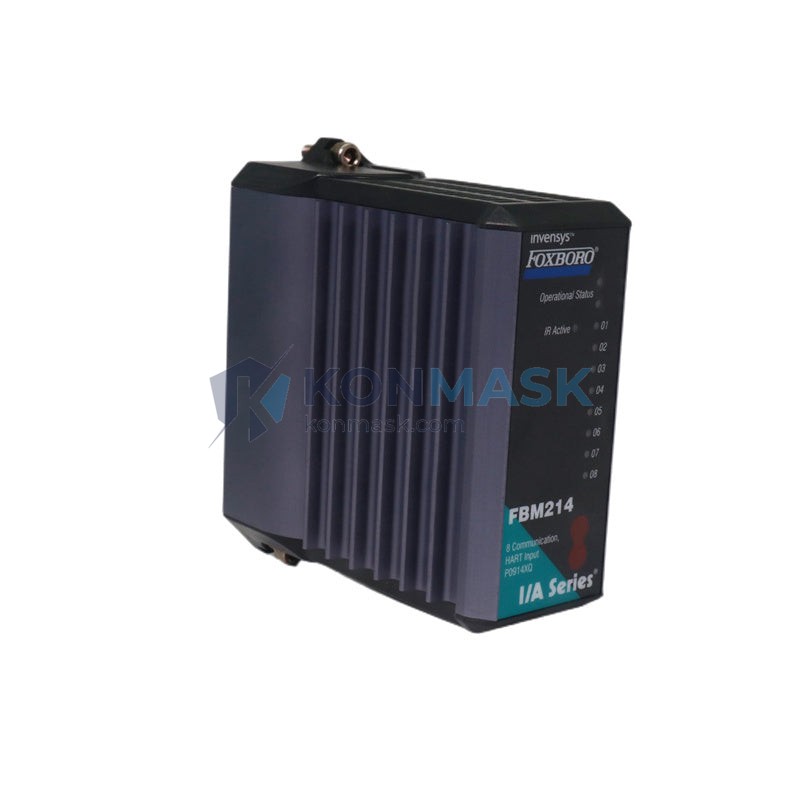
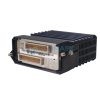
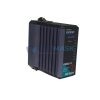
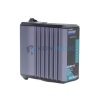
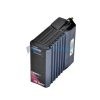
FOXBORO FBM214 – Communication Input Interface Module | I/A Series & Foxboro Evo DCS
Engineering Background: The Foxboro I/A Series (Intelligent Automation Series) and its successor platform, Foxboro Evo, represent one of the most widely deployed Distributed Control System architectures in continuous-process industries globally. Installed across thousands of petrochemical refineries, power generation facilities, and water treatment plants, the I/A Series architecture is built around a modular fieldbus-based I/O subsystem where each FBM (Field Bus Module) performs a discrete, deterministic function within the control loop. The FBM214 occupies the communication interface layer of this architecture — it serves as the protocol bridge between the plant’s field device network and the I/A Series Nodebus or Fieldbus, enabling the controller to receive structured data from serial-communicating field instruments and subsystems without burdening the main processor with raw protocol handling.
Product Positioning: The FBM214 is specifically designed for applications requiring serial communication input — distinguishing it from analog input modules (FBM201/FBM202) and discrete I/O modules (FBM207/FBM211). Its boundary condition is defined by the need to interface with devices that transmit data over RS-232/RS-422/RS-485 serial links using standard or custom protocols (e.g., Modbus RTU, proprietary meter protocols). It is not a replacement for HART-capable modules (FBM203/FBM204) in 4–20 mA loops, nor for high-speed pulse input modules. The FBM214 is the correct selection when the field device communicates digitally over a serial port and the data must be integrated into the I/A Series control strategy as a process variable.
Complete Technical Specifications
Electrical
- Communication Ports: Serial (RS-232 / RS-422 / RS-485), software-configurable
- Baud Rate: Up to 19,200 bps (configurable)
- Protocol Support: Modbus RTU, ASCII, and proprietary serial protocols via configuration
- Power Supply: Derived from I/A Series Fieldbus Carrier (FBM Baseplate); nominal 24 VDC bus
- Isolation: Optical isolation between serial port and internal logic bus
- Input Data Format: Structured serial data frames mapped to process variable tags in the I/A Series database
Mechanical
- Form Factor: Standard FBM plug-in module; compatible with all I/A Series FBM baseplates
- Weight: Approx. 320 g
- Connector: DIN-rail baseplate edge connector (no field wiring directly to module)
- Mounting: Snap-in to FBM baseplate; tool-free removal for hot-swap (where baseplate supports it)
Environmental
- Operating Temperature: 0°C to +60°C (32°F to 140°F)
- Storage Temperature: -40°C to +85°C
- Relative Humidity: 5% to 95% non-condensing
- Vibration: IEC 68-2-6 compliant
- EMC: Designed for industrial EMC environments per IEC 61000 series
Certifications
- CE Marking (EMC and Low Voltage Directive)
- UL/cUL Listed (industrial control equipment)
- Compatible with SIL-rated control strategies when used within validated I/A Series SIL architecture
Data source: Foxboro I/A Series FBM214 Product Specification Sheet (Schneider Electric / Foxboro documentation); field-verified against installed base references. Specifications subject to revision — confirm against current Foxboro datasheet for safety-critical applications.
Proven Application Environments
- Petrochemical Refinery — Crude Distillation Unit: Integrates serial-output flow computers and custody transfer meters into the I/A Series DCS, enabling real-time throughput monitoring under continuous high-temperature process conditions.
- Power Generation — Combined Cycle Gas Turbine Plant: Interfaces with serial-communicating vibration monitoring subsystems and turbine protection relays, feeding structured data into the plant DCS for alarm management and historian logging.
- Water Treatment — Municipal WWTP: Connects serial-output analyzers (pH, dissolved oxygen, turbidity) to the I/A Series controller, supporting automated dosing control loops in 24/7 unattended operation.
- Offshore Oil & Gas Platform — Wellhead Control: Bridges subsea control module serial data uplinks to the topside I/A Series DCS, operating reliably in high-vibration, salt-air environments.
- Chemical Plant — Batch Reactor Control: Receives serial data from weigh-scale controllers and batch sequencers, integrating gravimetric inputs into recipe-driven I/A Series batch strategies.
- Pulp & Paper Mill — Recovery Boiler: Interfaces with serial-output combustion analyzers and black liquor density meters, supporting tight combustion control loops in high-humidity, chemically aggressive environments.
Engineering Advantages
- For applications requiring integration of legacy serial-communicating instruments, this communication module eliminates the need for external protocol converters, because the FBM214 handles protocol translation natively within the I/A Series I/O subsystem, reducing panel space and single points of failure.
- For plants operating mixed-vintage field device populations, this module supports multiple baud rates and serial standards (RS-232/422/485) in a single configurable unit, because the port parameters are set via the I/A Series configuration database rather than hardware jumpers, enabling non-intrusive reconfiguration.
- For control engineers managing SIL-rated loops, this module maintains deterministic scan cycle behavior, because the FBM214 processes serial frames asynchronously and presents data to the Nodebus on a fixed, predictable schedule aligned with the I/A Series control period.
- For maintenance teams in 24/7 continuous process plants, this module supports hot-swap replacement on compatible baseplates, because the I/A Series architecture allows FBM substitution without de-energizing the baseplate, minimizing process interruption during corrective maintenance.
- For procurement engineers sourcing replacement modules, this module is backward-compatible across I/A Series generations (Series 200, 500, and Foxboro Evo), because Foxboro maintained baseplate and Fieldbus protocol continuity across platform revisions, protecting the installed base investment.
- For system integrators performing DCS migrations, this module retains its configuration parameters in the I/A Series ICC (Integrated Control Configurator) database, because module identity and tag assignments are stored at the system level rather than in module firmware, enabling rapid swap-in without re-engineering.
System Architecture & Signal Flow
Signal Flow: Field device (serial output) → RS-232/422/485 cable → FBM214 serial port → optical isolation barrier → internal protocol parser → Fieldbus/Nodebus data frame → I/A Series Fieldbus Interface Module (FIM) → Control Processor (CP) → I/A Series database tag → HMI / Historian / Control Strategy.
Compatible Modules & Infrastructure:
- FBM Baseplates (P0914YE, P0914YF, etc.): FBM214 mounts directly to any standard I/A Series FBM baseplate; compatibility is mechanical and electrical by design.
- Fieldbus Interface Modules (FIM): FBM214 communicates upstream via the I/A Series Fieldbus; any FIM variant (FIM4, FIM8) is compatible.
- Control Processors (CP30, CP40, CP60, CP270, CP280): All I/A Series and Foxboro Evo control processors are compatible, as the FBM214 presents data as standard process variable tags in the ICC database.
Substitution Conditions: The FBM214 may be substituted by the FBM214A (revised hardware revision with identical functional specification) where available. Substitution with FBM215 or FBM216 is not appropriate without engineering review, as those modules serve different I/O functions. Any substitution in a SIL-rated loop requires validation per the site’s Management of Change (MOC) procedure.
Sourcing & Quality Verification
Modules supplied through Konmask.com are sourced from decommissioned plant upgrades, authorized surplus channels, and verified industrial distributors. Each unit undergoes a structured pre-shipment verification process:
- Visual Inspection: Board-level examination for physical damage, corrosion, burnt components, and connector integrity. Modules with evidence of field damage are rejected.
- Label & Revision Verification: Part number, revision level, and serial number are cross-referenced against Foxboro’s published revision history to confirm the module meets the specification for the ordered revision.
- Functional Bench Test: Where test infrastructure is available, modules are powered on a compatible baseplate and serial communication is verified at the configured baud rate and protocol.
- Packaging & ESD Protection: Modules are packed in anti-static bags with foam cushioning and labeled with part number and revision for traceability.
Documentation available upon request: Test report, photographs of physical condition, revision label close-up, certificate of conformance (where applicable).
Procurement Process
- Inquiry Submission: Submit your requirement via the product page, email (support@konmask.com), or phone (+0086 19859288691), specifying the part number, required revision (if applicable), quantity, and delivery timeline.
- Stock Confirmation & Quotation: Stock availability and pricing are confirmed within 24 hours. For urgent plant shutdowns or turnaround requirements, expedited response is available — please indicate urgency in the inquiry.
- Order Fulfillment & Shipping: Orders are processed with same-day or next-business-day dispatch for in-stock units. Export documentation (commercial invoice, packing list, country of origin certificate) is provided for international shipments. Technical support is available post-delivery for installation verification questions.
Technical Support: Pre-sales support covers compatibility confirmation, revision equivalency, and system architecture questions. Post-sales support covers installation guidance and configuration reference. Support is provided by engineers with hands-on I/A Series DCS experience.
Technical FAQ
Q: Is the FBM214 compatible with Foxboro Evo DCS, or only with the legacy I/A Series?
A: The FBM214 is compatible with both the I/A Series and Foxboro Evo platforms. Foxboro Evo is an evolutionary upgrade of the I/A Series architecture and maintains full backward compatibility with I/A Series FBMs, baseplates, and Fieldbus infrastructure. No hardware modification is required to use an FBM214 in a Foxboro Evo system.
Q: Can the FBM214 replace an FBM214A, and vice versa?
A: The FBM214A is a hardware revision of the FBM214 with an identical functional specification. In most applications, the two are interchangeable as drop-in replacements. However, for SIL-rated applications or where the site’s approved equipment list (AEL) specifies a particular revision, the substitution must be reviewed under the site’s MOC procedure. Confirmation of the specific revision requirement is recommended before ordering.
Q: What certifications are required for use in a Zone 2 hazardous area?
A: The FBM214 itself is designed for installation in the safe area (control room or marshalling cabinet). It is not rated for direct installation in Zone 1 or Zone 2 hazardous areas. For hazardous area field device interfaces, appropriate Zener barriers or galvanic isolators must be installed between the field device and the FBM214 serial port. Consult the site’s area classification drawings and the Foxboro I/A Series hazardous area installation guidelines before finalizing the installation design.
© 2026 Konmask.com. All rights reserved.
Original Source: https://Konmask.com
Contact: support@konmask.com | +0086 19859288691