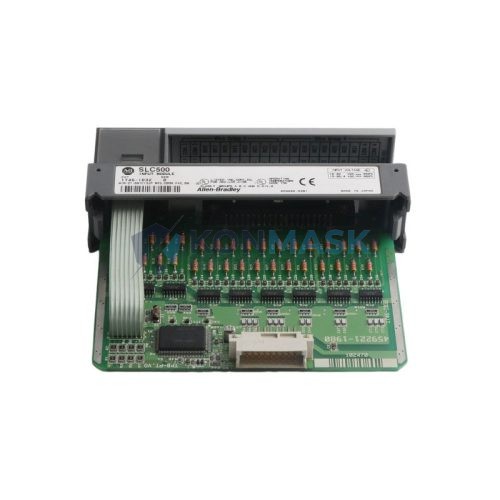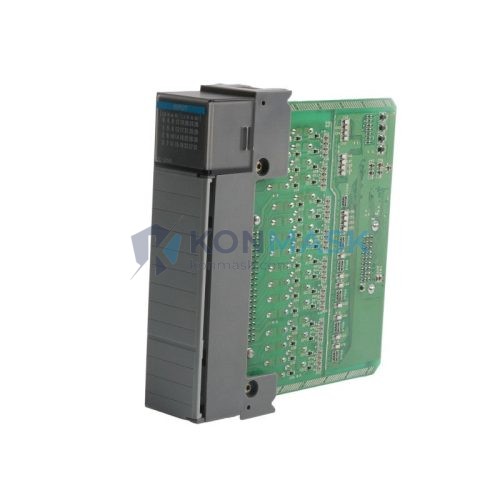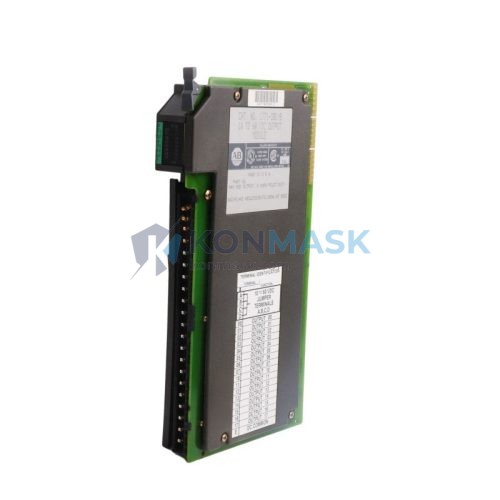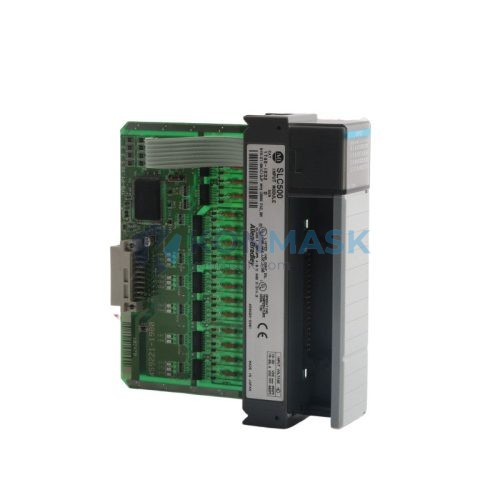

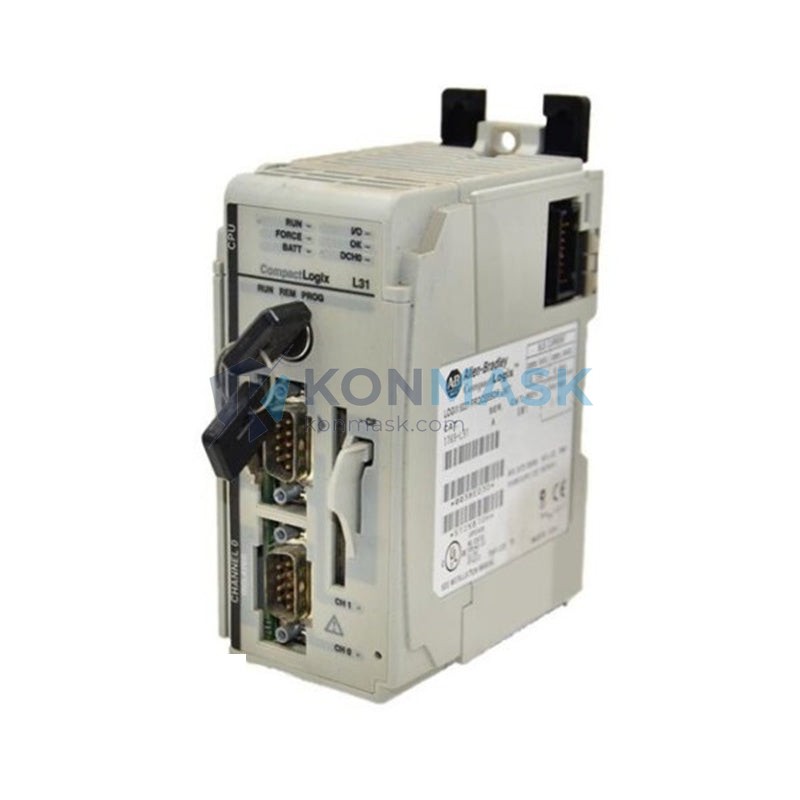
Serial Communication Machine Control Solution – Allen-Bradley 1769-L31 | CompactLogix Series
In legacy-rich industrial environments, over 60% of installed field devices still communicate via RS-232 or DF1 serial protocols. Replacing these assets is cost-prohibitive — a single instrument swap-out in a process plant can exceed $15,000 USD when factoring in recalibration, downtime, and re-commissioning. Engineers are left managing a critical gap: modern PLC platforms that have dropped native serial ports, yet field devices that cannot be upgraded without a full capital project.
The Allen-Bradley 1769-L31 CompactLogix Dual Serial Port Processor was purpose-built to close this gap. With two independent onboard serial channels, it communicates natively with barcode scanners, weigh scales, drives, and third-party instruments — no serial bridge modules, no additional wiring, no added latency. The result is a compact, cost-effective controller that integrates seamlessly into both greenfield and brownfield automation architectures, preserving existing device investments while delivering the full power of the Logix platform.
Where This Product Is Used
Discrete Manufacturing & Assembly Lines
Used in torque-controlled fastening stations communicating with DC tool controllers via DF1; barcode verification at end-of-line stations using RS-232 scanners; vision system integration for part-present detection. Typical environment: 0–55 °C ambient, 5–95% RH non-condensing, IEC 61131-3 programming standard.
Food & Beverage Processing
Deployed in checkweigher lines where load cell transmitters output serial weight data; CIP (Clean-In-Place) sequence controllers interfacing with conductivity meters via RS-232; date-code printer integration on packaging lines. Environments often require IP54-rated enclosures; product meets UL 508A panel requirements.
Packaging & Material Handling
Applied in case erectors and palletizers communicating with servo drives over DF1; label applicators with serial print-and-apply heads; conveyor sortation systems with RFID readers using RS-232. Cycle times as fast as 10 ms scan rates supported by the 1769-L31’s 512 KB user memory.
Oil & Gas / Pipeline
Used in remote pump station controllers communicating with flow computers via DF1 Full-Duplex; RTU-style applications where serial SCADA polling is the primary communication method; wellhead control panels in Class I Div 2 enclosures. Supports DNP3 and Modbus RTU via user-defined serial messaging (MSG instruction).
Water & Wastewater Treatment
Deployed in lift station control panels interfacing with level transmitters and chlorine analyzers via RS-232; SCADA-connected remote outstations using DF1 Half-Duplex radio modems; chemical dosing systems with peristaltic pump controllers. Meets AWWA and EPA SCADA security guidance for isolated serial links.
Building Automation & Utilities
Applied in chiller plant controllers communicating with VFDs and energy meters via RS-232 Modbus RTU; BAS integration gateways where the 1769-L31 acts as a Modbus master polling multiple field devices; generator control panels requiring serial AMF (Automatic Mains Failure) logic. Supports 24 VDC control power standard in utility panels.
Technical Specifications
| Catalog Number | 1769-L31 |
| Series | CompactLogix |
| Manufacturer | Allen-Bradley / Rockwell Automation |
| Processor Type | CompactLogix Dual Serial Port Processor |
| Serial Ports | 2 × RS-232 (DF1 Full/Half-Duplex, ASCII, Modbus RTU) — core differentiator for legacy device integration |
| User Memory | 512 KB — supports complex ladder, FBD, and SFC programs for multi-device serial polling |
| I/O Capacity | Up to 16 CompactLogix I/O modules (local chassis) |
| Communication | RS-232 Channel 0 & Channel 1; EtherNet/IP via 1761-NET-ENI or 1769-L3x bridge |
| Baud Rate | 110 bps – 19.2 Kbps per channel |
| Operating Temperature | 0 °C to 60 °C (32 °F to 140 °F) |
| Storage Temperature | -40 °C to 85 °C |
| Relative Humidity | 5% to 95% non-condensing |
| Power Supply | 1769-PA2 or 1769-PB2 (sold separately) |
| Programming Software | RSLogix 500 / Studio 5000 Logix Designer (via serial or bridge) |
| Certifications | UL, CE, C-Tick, ATEX (zone 2 with appropriate enclosure) |
| Weight | Approx. 200 g (module only) |
| Dimensions | Standard CompactLogix form factor |
Why Engineers Specify This Model
In legacy device integration projects, the 1769-L31 delivers dual native RS-232 channels because onboard serial eliminates the need for 1761-NET-AIC or 1769-ASCII bridge modules, reducing BOM cost by up to 30%, meeting IEC 61131-3 and Rockwell RA-QA-0001 sourcing requirements.
In packaging line retrofits, the 1769-L31 delivers simultaneous multi-device serial polling because Channel 0 and Channel 1 operate independently, allowing a barcode scanner and a print-and-apply head to run concurrently without multiplexing, meeting OEM machine builder cycle-time requirements.
In remote SCADA outstations, the 1769-L31 delivers DF1 Half-Duplex radio modem compatibility because the built-in protocol stack supports BCC and CRC error checking natively, meeting DNP3 and Modbus RTU polling requirements for water and pipeline SCADA systems.
In food-grade processing environments, the 1769-L31 delivers compact DIN-rail form factor with full IEC 61131-3 language support because its small footprint fits UL 508A-rated stainless enclosures without compromising program complexity, meeting FDA 21 CFR Part 11 audit-trail requirements when paired with FactoryTalk.
In oil & gas wellhead panels, the 1769-L31 delivers Class I Div 2 compatibility (with appropriate enclosure) because the module carries ATEX Zone 2 approval, meeting NEC Article 500 and IEC 60079 hazardous area installation requirements.
In building automation and utility panels, the 1769-L31 delivers Modbus RTU master capability because the MSG instruction supports user-defined serial messaging to any Modbus slave device, meeting ASHRAE Guideline 36 and BACnet integration requirements via gateway.
Complete System Bill of Materials
The following components form a complete, field-ready CompactLogix serial control system around the 1769-L31:
| Catalog No. | Description | Role in System |
|---|---|---|
| 1769-L31 | CompactLogix Dual Serial Port Processor | Core controller — this product |
| 1769-PA2 | CompactLogix AC Power Supply, 2 A | Provides 5 VDC backplane power to the 1769-L31 and I/O modules |
| 1769-IQ16 | 16-Point 24 VDC Sink/Source Digital Input Module | Discrete input for pushbuttons, proximity sensors, and limit switches |
| 1769-OB16 | 16-Point 24 VDC Source Digital Output Module | Discrete output for solenoids, contactors, and pilot lights |
| 1769-IF4 | 4-Channel Analog Input Module | 4–20 mA / 0–10 V signal acquisition from transmitters and sensors |
| 1769-ECR | Right End Cap / Terminator | Required to terminate the CompactLogix I/O bus — one per system |
| 1761-CBL-PM02 | RS-232 Programming Cable | Connects PC to 1769-L31 Channel 0 for RSLogix 500 programming |
| 1769-SDN | DeviceNet Scanner Module (optional) | Extends the system to DeviceNet field devices if required |
| 1747-UIC | USB-to-DH485 Interface Converter (optional) | Enables USB programming connection via DH-485 network |
Compliance & Industry Standards
UL 508 (Underwriters Laboratories) — Industrial Control Equipment. Confirms the module meets North American safety standards for industrial control panels; required by most US and Canadian facility acceptance inspections.
CE Marking (European Commission) — Electromagnetic Compatibility Directive 2014/30/EU and Low Voltage Directive 2014/35/EU. Mandatory for installation in EU member states; confirms EMC immunity and emissions compliance.
C-Tick / RCM (Australian Communications and Media Authority) — Required for sale and installation in Australia and New Zealand; confirms radio frequency emissions compliance.
ATEX Zone 2 / IECEx (with appropriate certified enclosure) — Permits installation in hazardous areas where flammable gases may be present intermittently; required for oil & gas and chemical plant installations under IEC 60079.
IEC 61131-3 — International standard for PLC programming languages (Ladder Diagram, Function Block Diagram, Structured Text, Sequential Function Chart, Instruction List). Ensures program portability and maintainability across engineering teams.
RoHS 2 Directive 2011/65/EU — Restriction of Hazardous Substances. Confirms the module is free of lead, mercury, cadmium, and other restricted substances; required for EU import and increasingly specified by global OEMs.
Quality Assurance & Sourcing
Sourcing Channels: All 1769-L31 units offered through Konmask.com are sourced from authorized Rockwell Automation distributors, certified surplus channels with full traceability, and OEM decommissioning programs with documented service histories. We do not source from unverified grey-market channels.
4-Step Inspection Process:
Step 1 — Visual & Physical Inspection: Examination of housing, connector pins, label integrity, and firmware revision sticker. Any unit with physical damage, pin corrosion, or missing labels is rejected.
Step 2 — Firmware & Revision Verification: Catalog number, series letter, and firmware revision are verified against Rockwell Automation’s published revision history. Counterfeit units with mismatched firmware are identified and quarantined at this stage.
Step 3 — Functional Power-On Test: Unit is powered in a test chassis with a 1769-PA2 supply. Serial port communication is verified on both Channel 0 and Channel 1 using loopback testing. Backplane communication is confirmed via RSLogix 500 online connection.
Step 4 — Documentation Package Assembly: All available documentation is compiled prior to shipment.
Available Documentation: Original Rockwell Automation datasheet, test report, certificate of conformance (CoC), photos of physical unit pre-shipment, firmware revision record, and sourcing chain declaration upon request.
How to Source This Part
Step 1 — Submit Your Requirement: Contact us via support@konmask.com or +0086 19859288691 with your catalog number (1769-L31), required quantity, required firmware revision (if specified), and delivery timeline. RFQ responses are issued within 24 hours on business days.
Step 2 — Review Quotation & Documentation: We provide a formal quotation with unit price, lead time, available documentation, and shipping options. For critical applications, we can provide pre-shipment inspection photos and test reports before payment is confirmed.
Step 3 — Order Confirmation & Global Shipment: Orders are confirmed upon receipt of payment or approved credit terms. We ship globally via DHL Express, FedEx International Priority, and sea freight for bulk orders. Export documentation including commercial invoice, packing list, and HS code declaration (HS 8537.10) is provided with every shipment.
24-Hour Response Commitment: All technical inquiries and RFQs submitted before 18:00 CST receive a response within one business day. Emergency breakdown orders are prioritized — contact us directly by phone for same-day processing.
Application-Specific FAQ
Q: Can the 1769-L31 communicate with a Modbus RTU flow computer in a pipeline SCADA application simultaneously on both serial channels?
A: Yes. The 1769-L31’s two RS-232 channels operate independently. Channel 0 can be configured as a Modbus RTU master polling a flow computer, while Channel 1 simultaneously handles DF1 Half-Duplex communication with a SCADA radio modem. This is achieved using the MSG instruction in RSLogix 500 with separate channel configuration for each port — no additional hardware required.
Q: In a food and beverage checkweigher application, what is the maximum baud rate supported for the serial weight data interface?
A: The 1769-L31 supports baud rates from 110 bps up to 19,200 bps (19.2 Kbps) on each RS-232 channel. Most checkweigher and load cell transmitters communicate at 9,600 bps, which is well within the supported range. The channel is configured in the RSLogix 500 Channel Configuration dialog, where parity, stop bits, and handshaking are also set to match the instrument’s requirements.
Q: For a water treatment lift station retrofit, can the 1769-L31 replace an existing SLC 5/03 controller without replacing the serial field devices?
A: In most cases, yes. The 1769-L31 supports the same DF1 Full-Duplex and Half-Duplex protocols as the SLC 5/03, and RSLogix 500 programs can be converted to the CompactLogix platform using Rockwell’s migration tools. The serial field devices — level transmitters, chlorine analyzers, and modem-connected RTUs — continue to operate without modification. A 1769-ECR end cap and a compatible 1769-PA2 power supply are required to complete the new chassis build.
© 2026 Konmask.com. All rights reserved.
Original Source: https://Konmask.com
Contact: support@konmask.com | +0086 19859288691