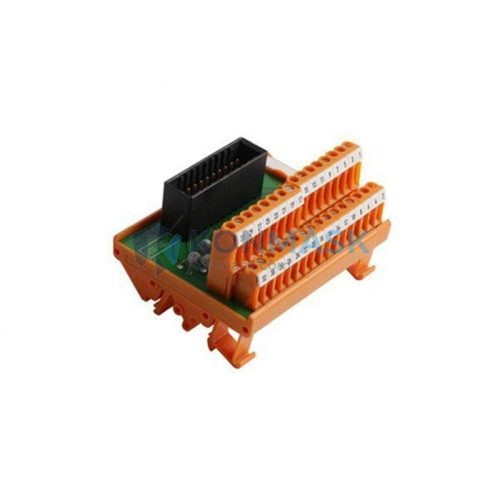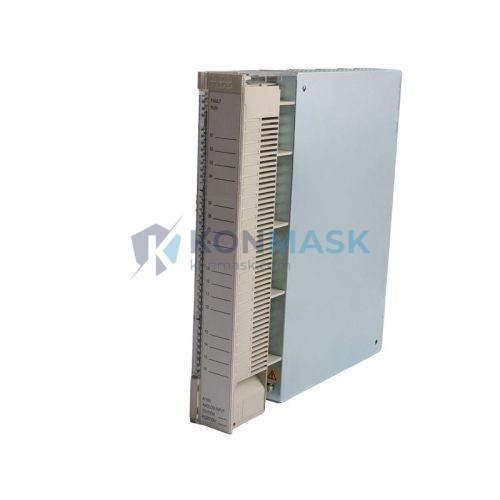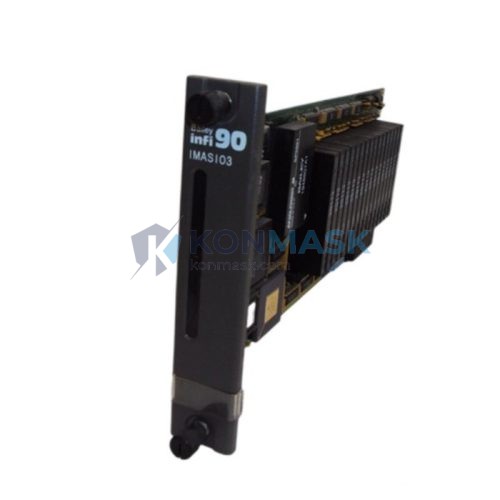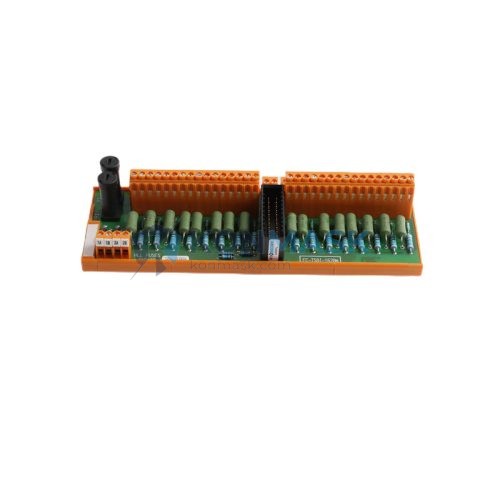

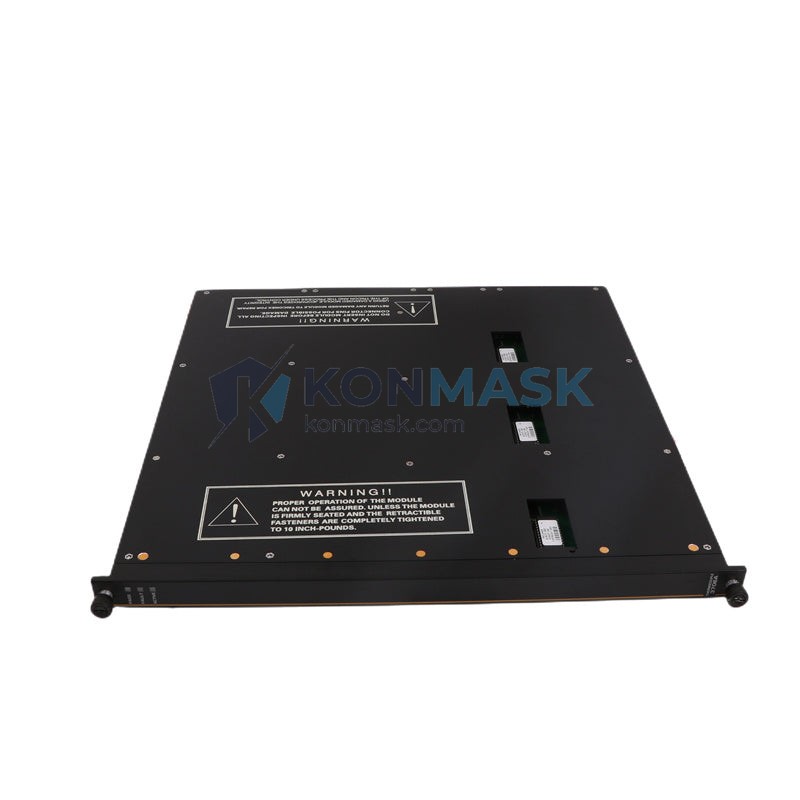
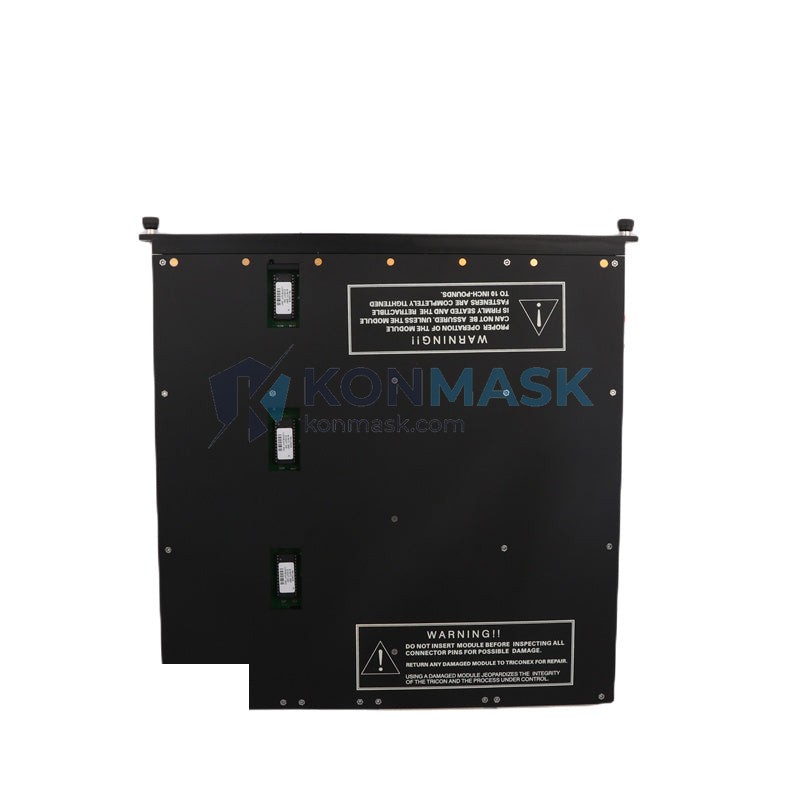
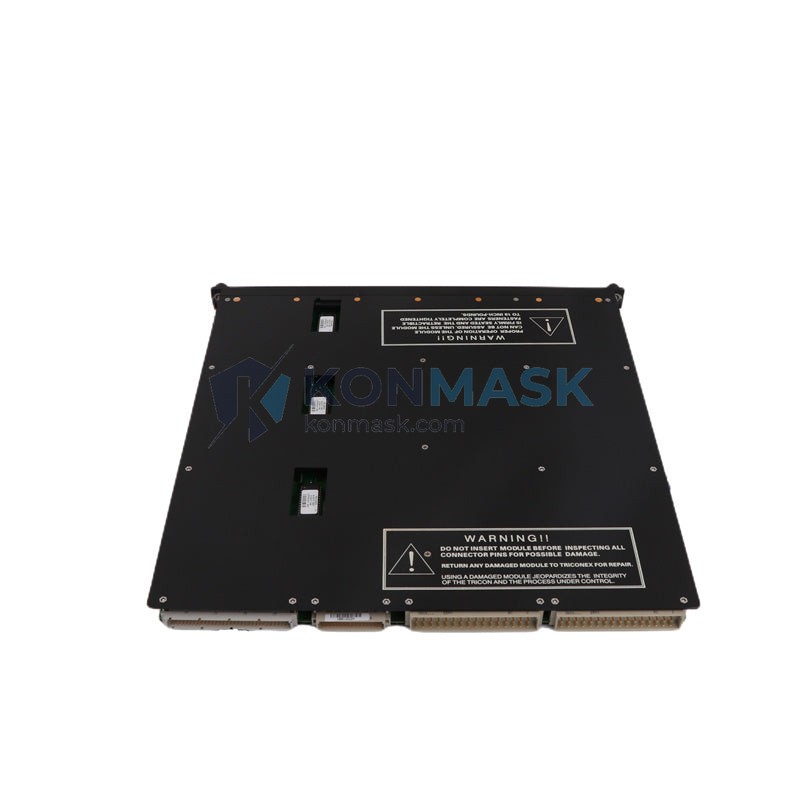
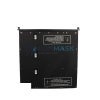
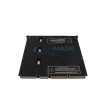
TRICONEX 3706A Analog Input Module — 16-Channel AI | Tricon TMR Safety Platform
Engineering Background: The Triconex Tricon Triple Modular Redundant (TMR) control system is the de facto standard for Safety Instrumented Systems (SIS) in high-hazard process industries. Deployed across emergency shutdown (ESD), high-integrity pressure protection (HIPPS), and burner management systems (BMS), the Tricon architecture achieves fault tolerance through three independent processing legs that vote on every I/O signal in real time. The 3706A is the analog input workhorse of this platform — it is the boundary between the physical process and the safety logic solver, converting field-level 4–20 mA and 1–5 V signals into digitized values that the Tricon main processor evaluates against trip setpoints.
Product Positioning: The 3706A is a 16-channel analog input module designed for the Tricon v9/v10 chassis. It differs from the 3703E (8-channel) and the 3721 (thermocouple input) by offering higher channel density with universal current/voltage input compatibility, making it the preferred choice for large-scale process plants where rack space and wiring cost are primary constraints. It is not interchangeable with Trident or TriGP platform modules. Suitable for applications requiring SIL 2 or SIL 3 loop integrity where the field transmitter is HART-capable or conventional 4–20 mA.
Complete Technical Specifications
Electrical
- Input Channels: 16 (single-ended)
- Input Signal Range: 4–20 mA / 1–5 V DC (software-selectable per channel)
- Input Impedance: 250 Ω (current mode); >1 MΩ (voltage mode)
- Resolution: 12-bit ADC
- Accuracy: ±0.1% of full scale
- Common Mode Rejection: >80 dB at 50/60 Hz
- Open-Wire Detection: Yes (per channel)
- Power Consumption: ≤4 W (from chassis backplane, 5 VDC)
- Isolation: 500 V RMS channel-to-chassis
Mechanical
- Form Factor: Single-slot Tricon I/O module
- Dimensions: Standard Tricon module footprint (fits all Tricon v9/v10 chassis)
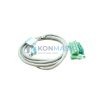
- Connector: 50-pin field wiring connector (mating terminal panel required)
- Weight: Approx. 0.45 kg
- Hot-Swap: Supported (no process interruption during replacement)
Environmental
- Operating Temperature: 0°C to +60°C
- Storage Temperature: −40°C to +85°C
- Relative Humidity: 5% to 95% non-condensing
- Vibration: IEC 60068-2-6 compliant
- EMC: CE marked; meets IEC 61000-4 series
Certifications
- Functional Safety: IEC 61508 SIL 3 capable (as part of Tricon TMR system)
- Hazardous Area: FM Class I Div 2 / ATEX Zone 2 (system-level)
- Marine: DNV GL (system-level approval)
Data sourced from Schneider Electric / Triconex Tricon I/O Module Reference Manual (document 9600-0101-0100) and published product datasheets. Specifications subject to revision; consult the latest Triconex documentation for safety-critical applications.
Proven Application Environments
- Petroleum Refining — Crude Distillation Unit — High-temperature process: Monitors 4–20 mA transmitters for column pressure and temperature, feeding the ESD logic solver under continuous high-temperature cycling.
- LNG Liquefaction — Compressor Train — Vibration-rich environment: Reads vibration proxy signals from 4–20 mA transducers on rotating machinery, triggering compressor trip within the Tricon TMR voting cycle.
- Thermal Power Generation — Boiler Drum Level — High-availability requirement: Provides triple-redundant drum level measurement inputs to the BMS, maintaining SIL 2 loop integrity across planned and unplanned outages.
- Water Treatment — Chlorination Dosing — Corrosive atmosphere: Interfaces with chemical dosing transmitters in humid, chemically aggressive environments, leveraging the module’s 500 V channel isolation to prevent ground-loop interference.
- Offshore Oil & Gas — Wellhead Control Panel — Hazardous area: Deployed in Zone 2 classified enclosures as part of a certified Tricon system, monitoring wellhead pressure and flow for HIPPS activation.
- Chemical Plant — Reactor Temperature Control — Batch process: Acquires 16 independent thermowell transmitter signals per module slot, enabling dense I/O packing in space-constrained reactor control cabinets.
Engineering Advantages
- For high-density I/O applications, this analog input module delivers 16 channels per single chassis slot, because the 3706A’s multiplexed ADC architecture eliminates the need for additional expansion racks that would otherwise increase wiring cost and cabinet footprint.
- For safety-critical loops requiring SIL 3 integrity, this module maintains TMR voting on every analog channel, because each of the three Tricon legs independently samples and digitizes the same field signal before the main processor performs 2-out-of-3 arbitration.
- For plants operating under live-process constraints, this module supports hot-swap replacement without process shutdown, because the Tricon backplane continues voting on the remaining two legs during the brief module exchange window.
- For sites with mixed transmitter types, this module accepts both 4–20 mA and 1–5 V inputs on a per-channel basis, because the input conditioning circuit is software-configurable via TriStation 1131, eliminating the need for external signal converters.
- For environments with high electrical noise, this module provides >80 dB common mode rejection at 50/60 Hz, because the differential input stage and on-board filtering suppress power-line interference before the ADC conversion stage.
- For maintenance teams requiring rapid fault diagnosis, this module provides per-channel open-wire detection with diagnostic status reporting to the Tricon main processor, because early fault annunciation reduces mean time to repair and prevents spurious trips caused by undetected wiring failures.
System Architecture & Signal Flow
Field transmitters (4–20 mA, loop-powered or externally powered) connect to the 3706A via the mating terminal panel (e.g., 3000-3706 or equivalent). Each channel’s signal is independently sampled by three parallel analog conditioning circuits — one per TMR leg — and converted by dedicated 12-bit ADCs. The digitized values are passed to the Tricon Main Processor Module (MP) via the TMR backplane bus, where the 2-out-of-3 voter resolves any single-leg discrepancy before presenting a validated process value to the TriStation 1131 application logic.
Compatible Chassis: Tricon v9 (9-slot, 15-slot) and v10 chassis. The 3706A occupies any standard I/O slot and is recognized automatically by the Tricon MP firmware v10.x and above.
Compatible Main Processors: 3008 (v9), 3006 (v9), 3007 (v9/v10 transition), 3009 (v10). Not compatible with Trident or TriGP platforms.
Substitution Conditions: The 3706A may replace the 3706 (earlier revision) with no configuration change required, provided firmware is v9.6 or above. It does not substitute for the 3703E (8-channel) without I/O address remapping in TriStation 1131. Confirm chassis slot addressing before substitution in live systems.
Sourcing & Quality Verification
Stock is sourced from decommissioned plant upgrades, authorized distributor overstock, and long-term storage facilities. All units undergo a structured incoming inspection before listing.
4-Step Verification Process:
- Visual Inspection: Board-level examination for corrosion, component damage, burn marks, and connector pin integrity. Units with any physical anomaly are rejected.
- Firmware & Revision Check: Label verification of hardware revision and firmware version against Triconex revision history. Revision mismatches are disclosed prior to sale.
- Functional Bench Test: Where test equipment is available, modules are powered in a Tricon chassis and channel-level diagnostics are reviewed via TriStation 1131 or equivalent diagnostic tool.
- Packaging & ESD Protection: Modules are packed in anti-static bags with foam cushioning and labeled with revision, test date, and inspector ID before shipment.
Documentation available upon request: Inspection report, hardware revision label photograph, functional test log (where applicable), certificate of conformance, and export compliance documentation (HS code, country of origin).
Procurement Process
- Inquiry Submission: Submit the required quantity, hardware revision preference (if any), and delivery timeline via the product page or directly to support@konmask.com. Include the target chassis model and firmware version if known.
- Quotation & Stock Confirmation: A response with confirmed stock availability, unit price, lead time, and shipping options will be provided within 24 hours on business days. Expedited response is available for urgent plant requirements.
- Order Fulfillment: Upon order confirmation, units are re-inspected, packed to IEC 60068-2-32 drop-test standards, and dispatched with full tracking. Export documentation (commercial invoice, packing list, certificate of origin) is included as standard.
Technical Support: Pre-sale support covers compatibility verification, revision matching, and chassis slot planning. Post-sale support covers installation guidance, TriStation 1131 configuration reference, and warranty claim processing. Contact: support@konmask.com | +0086 19859288691.
Technical FAQ
Q: Is the 3706A compatible with Tricon v10 chassis running firmware v10.3?
A: Yes. The 3706A is fully compatible with all Tricon v10 chassis and is recognized by MP firmware v10.x without any configuration change. Verify the chassis slot address assignment in TriStation 1131 matches the physical slot position after installation.
Q: Can the 3706A substitute for a 3703E in an existing system?
A: Not directly. The 3703E is an 8-channel module; the 3706A provides 16 channels. Substitution requires remapping I/O addresses in the TriStation 1131 project file and re-downloading the application to the Tricon MP. This change must be managed under the plant’s Management of Change (MOC) procedure. Consult the site safety engineer before proceeding.
Q: What SIL rating applies to a loop using the 3706A, and does it require a specific transmitter certification?
A: The Tricon TMR system, including the 3706A, is certified to IEC 61508 SIL 3 at the system level. The achievable SIL for a specific safety instrumented function (SIF) depends on the entire loop — transmitter, logic solver, and final element. The 3706A does not impose a transmitter certification requirement, but the overall SIL calculation must account for the transmitter’s PFD (Probability of Failure on Demand). A SIL 2 or SIL 3 rated transmitter is recommended for high-integrity loops.
© 2026 Konmask.com. All rights reserved.
Original Source: https://Konmask.com
Contact: support@konmask.com | +0086 19859288691