

The CISA advisory for Schneider Electric PowerLogic P7, published on June 25, 2026, is a good reminder that protection relay RFQs need stronger evidence than many buyers send. A relay may look like a standard electrical spare from the front of a panel, but its option code, firmware, terminals, communication module, power supply range, and configuration role can all decide whether the quoted item is useful.
Konmask sees this often in urgent RFQs. A buyer sends one front photo and asks for “same relay.” The supplier then has to ask for the side label, terminal view, firmware, panel role, and condition requirement. That back-and-forth costs time, and time is exactly what the plant is trying to save. A better RFQ starts with the evidence an engineer would need to approve the match.
Start with safe identification photos
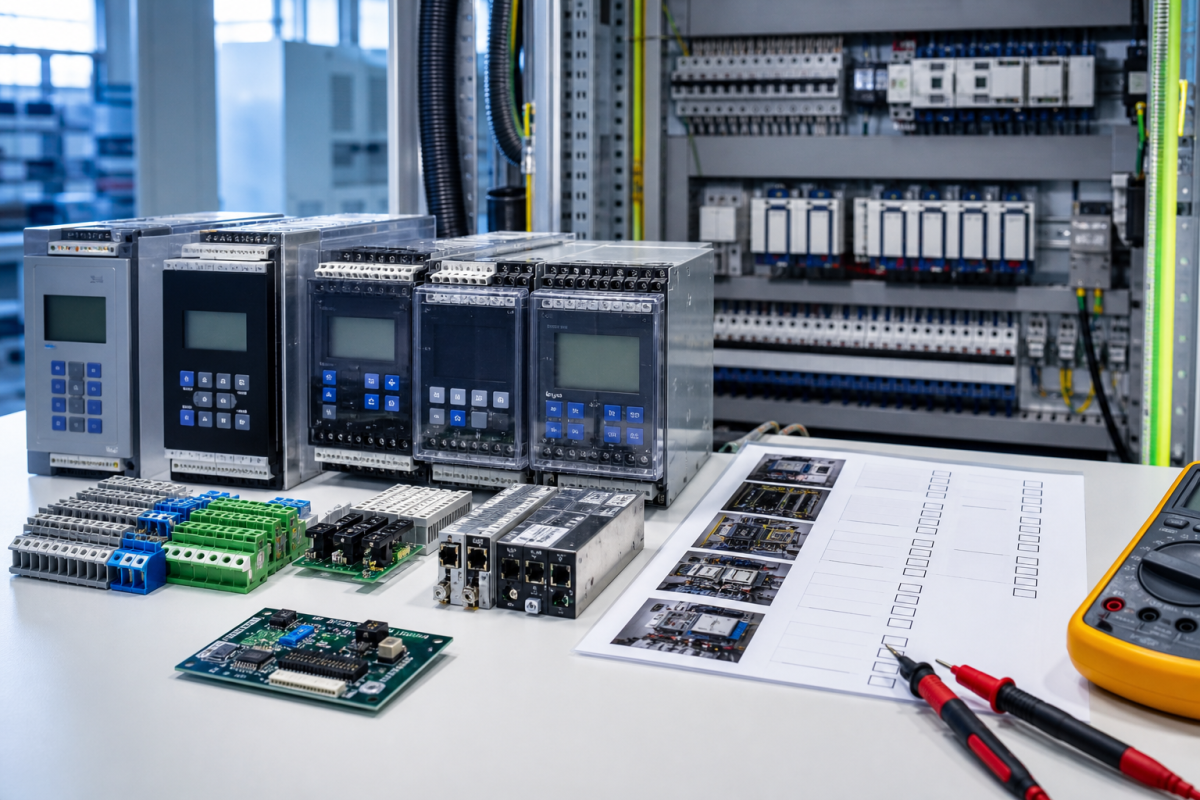
For a relay RFQ, send clear photos of the front, side label, model plate, terminal area, communication ports, accessory modules, and installed panel context. If firmware can be captured safely, include it. If the relay protects a transformer, feeder, generator, or critical motor, state the operating consequence without sharing sensitive protection settings.
This is the same discipline described in the Konmask industrial automation RFQ guide: exact model evidence first, price comparison second. When buyers reverse that order, they compare quotes that may not describe the same technical item.
Separate exact match from possible substitute
A recent advisory may lead to firmware updates, spare stocking, bench testing, or replacement. Those are different actions. The RFQ should say whether the plant requires an exact match, will consider a substitute after engineering review, needs a repair option, or wants a spare for test purposes. If this is not stated, suppliers may quote options that look cheap but create engineering uncertainty.
For protection relays, substitutes are sensitive. Engineering must check protection functions, I/O, communication protocol, power supply, mounting, terminal layout, firmware, configuration transfer, and testing requirements. A relay that powers on is not necessarily acceptable for the panel.
Condition should also be explicit. Factory sealed, new surplus, refurbished, tested used, and repair exchange all have a place, but not in the same risk category. For a critical relay, ask for actual photos, accessory confirmation, warranty terms, packing details, and dispatch timing.
Do not send settings casually
Buyers should not include passwords, protection settings, network credentials, or confidential configuration files in an ordinary RFQ. Send safe context instead: relay role, model, firmware if known, quantity, deadline, destination, and whether engineering has a current backup. If deeper support is needed, use an approved support process rather than an open purchasing email.
Receiving inspection should mirror the RFQ. Compare the delivered relay against photos, labels, ports, terminals, accessory count, and visible condition. If the item is a possible substitute, mark it as conditional so it is not pulled during an emergency without engineering approval.
Konmask also recommends keeping rejected-match history. When an offer is declined because of a terminal difference, firmware concern, option code, or communication mismatch, save that reason. The next buyer can then avoid repeating the same check during the next outage.
For multi-site buyers, a simple accepted-match table can prevent repeat work. Record the exact model, firmware family, option code, panel role, accessory set, accepted condition, and rejected alternatives. When another plant sends a similar relay request, procurement can check the table before opening a new sourcing loop. The table should not replace engineering review, but it gives the next RFQ a much cleaner starting point.
Budget approval also becomes easier when the RFQ states the operational reason. A relay required for a main incomer or process-critical motor deserves a different conversation from a noncritical test spare. Buyers should mark whether the request supports immediate replacement, firmware-risk mitigation, planned shelf stock, or bench testing. That small classification helps managers compare price against downtime exposure instead of treating every relay as the same commodity.
When the relay arrives, take receiving photos before it disappears into stores. Capture the label, terminal area, included accessories, and packing condition. Those photos can become the next RFQ reference and can also prove whether a supplier delivered the condition and kit scope that was quoted.
If the buying team is unsure whether a relay is exact or conditional, do not hide that uncertainty in the purchase file. Mark the quote as “engineering review required” and keep the approval trail with the spare record. That one note prevents a warehouse pull during a future outage from becoming an unplanned protection engineering debate later for everyone involved onsite.
FAQ
Does a relay advisory mean I need to buy a new relay?
Not automatically. First review vendor guidance, exposure, firmware, configuration backup, and the consequence of a failed update or relay outage.
Which photos should be included in a protection relay RFQ?
Send the front, side label, model plate, terminal area, communication ports, installed panel, and accessory modules.
Can a similar relay be quoted?
Yes, but only as a possible substitute until engineering checks functions, terminals, firmware, communication, mounting, and commissioning needs.
Where should buyers send identification details?
Use the Konmask contact channel with safe photos, model details, quantity, condition requirement, destination, and deadline.
Send Konmask your relay photos and safe identification evidence before comparing prices. We can help reduce wrong-match risk and make the RFQ easier for engineers to approve.
© 2026 Konmask. All rights reserved. Official Website: https://www.konmask.com Inquiry: support@konmask.com | WhatsApp/Tel: +86 19859288691
