

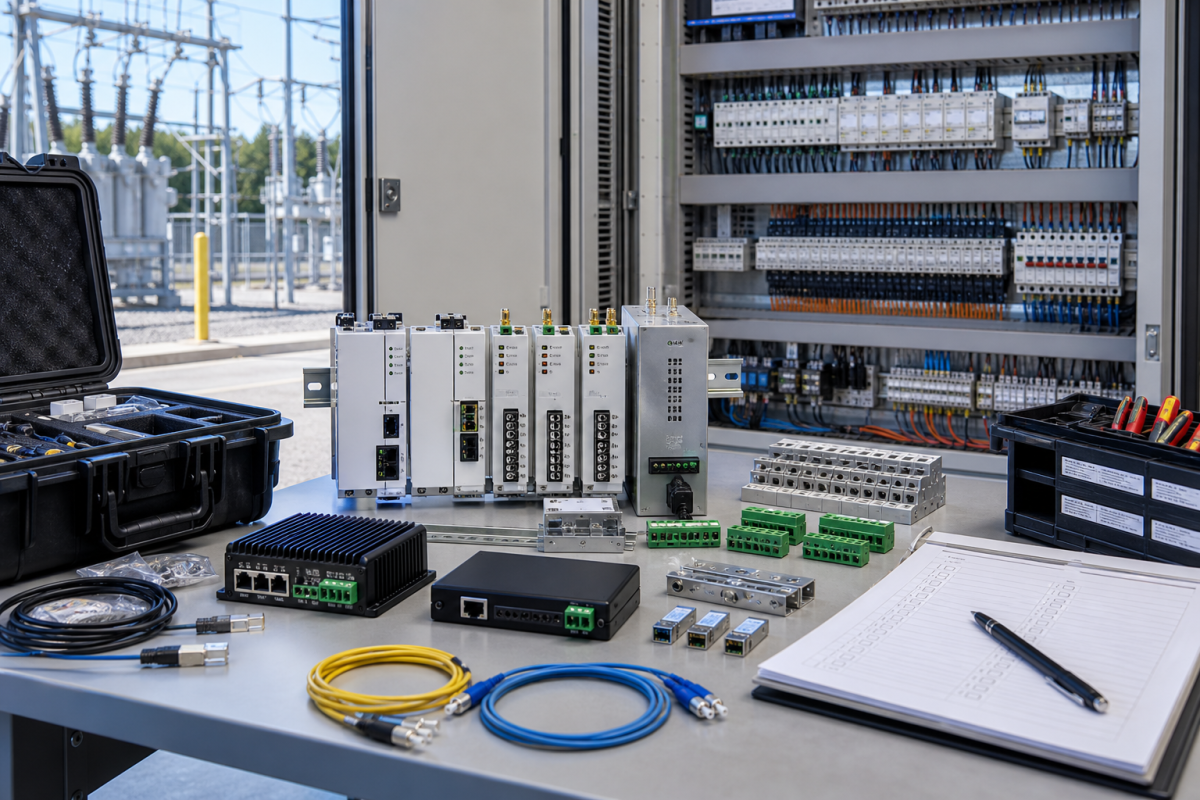
CISA advisory ICSA-26-181-07 for Delta Electronics DVP12SE PLC was released on June 30, 2026. For buyers, the advisory is not only a cybersecurity item. It is a reminder that compact PLC RFQs need exact model evidence, accessory scope, and backup context before price comparison starts. A small controller can stop a machine just as effectively as a large rack system if the wrong replacement is ordered.
Konmask receives many urgent compact PLC requests with one front photo and a machine name. That is rarely enough. The DVP12SE family may involve communication ports, expansion modules, terminal plugs, firmware level, power supply, memory status, and machine-specific program ownership. If those details are missing, the supplier must ask basic questions while the plant is waiting.
Start with complete identification
A Delta DVP12SE PLC RFQ should include front photo, side label, terminal area, communication ports, installed cabinet context, expansion modules, and any safe firmware or model screen. If the controller is installed in an OEM machine, state the machine role and whether the program backup is current. Do not send confidential logic files in an ordinary RFQ.
This matches the Konmask industrial automation RFQ guide: identify the exact item first, then compare price. Compact PLCs are especially easy to misquote because the main unit, terminal parts, and expansion accessories can be separated in old stockrooms.
Define whether the spare is device-only or field-ready
For planned shelf stock, a device-only controller may be acceptable if the plant has reusable terminal plugs, cables, and backup files. For emergency replacement, a field-ready kit may need terminal blocks, communication adapters, power supply, memory device, cable, mounting clips, and documentation. The RFQ should ask suppliers to state what is included.
Condition language matters too. Factory sealed, new surplus, refurbished, tested used, and repair exchange options carry different risk. For a critical machine controller, ask for actual photos, label evidence, accessory confirmation, dispatch timing, and warranty terms. The lowest price is not the best quote if it lacks the parts needed to install.
Substitute offers should be marked carefully. A similar Delta PLC or compatible controller is not approved until engineering checks power, I/O, communication, firmware, software compatibility, program transfer, and panel fit. Keep possible substitutes separate from exact matches in the purchase file.
Keep the advisory reason in the record
If the purchase is triggered by the Delta advisory, note that in the spare record. The next buyer should understand whether the part was bought for immediate replacement, update-risk mitigation, bench testing, or shelf replenishment. That context affects how the spare should be stored and inspected.
Receiving inspection should compare the delivered PLC against the RFQ photos. Check model, ports, terminals, accessory count, condition, packaging, and included documents. If firmware cannot be confirmed at receipt, mark it unknown rather than assuming. Good uncertainty is safer than quiet guesswork.
For multi-site buyers, keep accepted-match and rejected-match notes. If one site rejects a quote because of a port, terminal, or firmware mismatch, that lesson can save another site from repeating the same sourcing loop.
Buyers should also record the approval status of each offer. Use clear labels such as exact match, possible substitute, repair option, or rejected. A possible substitute may be useful later, but it should not be stored or described as an exact replacement. This simple classification prevents confusion when a different buyer or technician opens the file months later.
If the plant expects a firmware update or program restore, ask engineering to confirm the recovery owner before the order is placed. A controller can arrive on time and still miss the window if nobody can load the program, validate I/O, or reconnect the machine. For compact PLCs, the programming cable and software access can be just as important as the controller.
Finally, keep the quote reusable. Save the RFQ photos, final quote, received-item photos, and any engineering comments together. That file becomes the starting point for the next Delta DVP12SE PLC request instead of another round of basic identification.
For urgent machine-down requests, send the deadline in operational language. “Line stopped” and “planned shelf stock” should not receive the same response. If the machine can wait for an exact unit, say so. If production needs the fastest approved option, ask for exact match, repair, and conditional substitute options separately so engineering can decide quickly.
Konmask also recommends including destination and import constraints early. Compact PLCs are small, but customs paperwork, battery or media accessories, and courier timing can still affect delivery. A supplier cannot protect the window if the shipping requirement appears after the quote is accepted.
FAQ
Does the DVP12SE advisory mean I must replace the PLC?
Not automatically. Review vendor guidance, exposure, firmware, backup quality, and machine criticality before deciding whether to update, stage, or replace hardware.
What photos should be sent for a compact PLC RFQ?
Send the front, side label, terminal area, communication ports, expansion modules, installed cabinet, and any safe firmware or model screen.
Can a similar Delta PLC be quoted as a substitute?
Only as conditional. Engineering must approve power, I/O, firmware, software compatibility, communication, program transfer, and panel fit.
Where should buyers send details?
Use the Konmask contact channel with safe photos, model details, quantity, condition requirement, destination, and deadline.
Send Konmask your Delta DVP12SE PLC photos, accessory needs, backup status, quantity, and deadline. We can help turn a vague compact PLC request into a quoteable RFQ.
© 2026 Konmask. All rights reserved. Official Website: https://www.konmask.com Inquiry: support@konmask.com | WhatsApp/Tel: +86 19859288691
