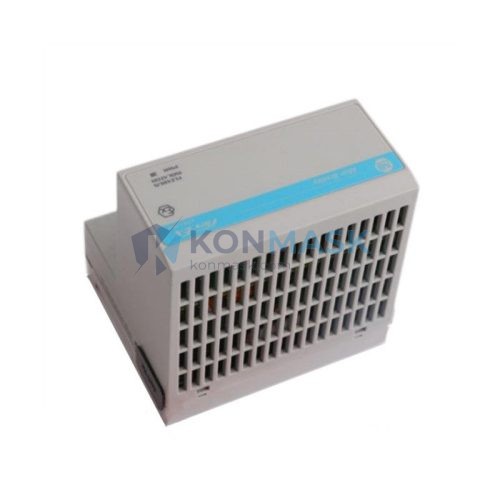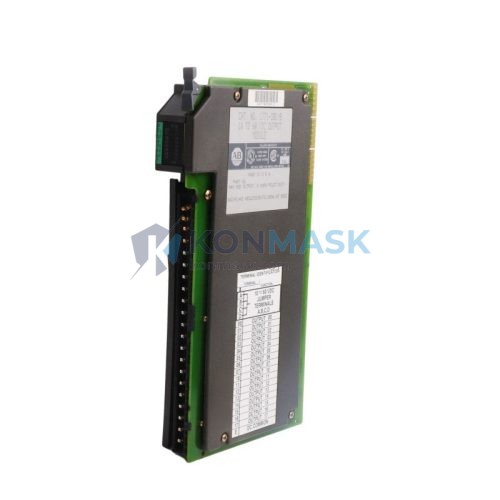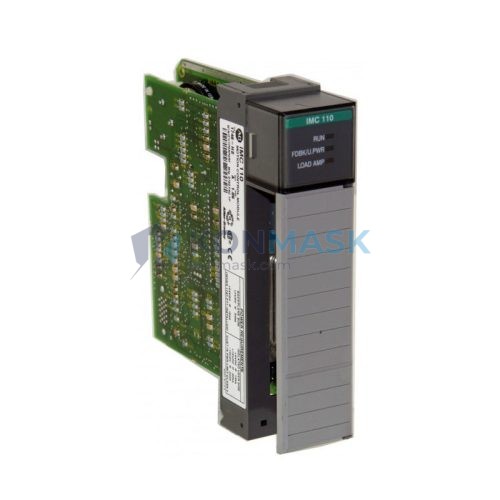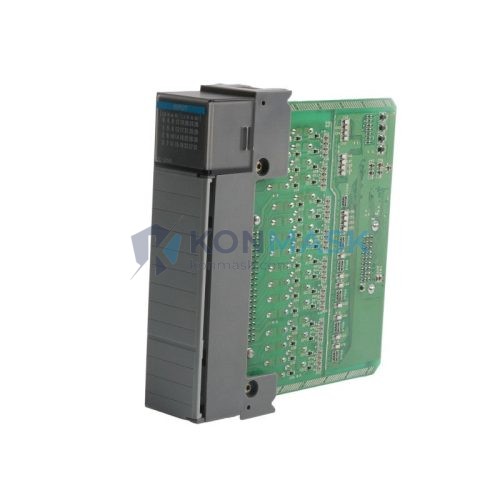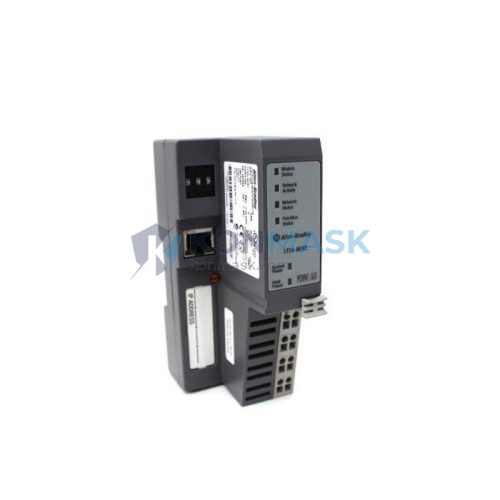

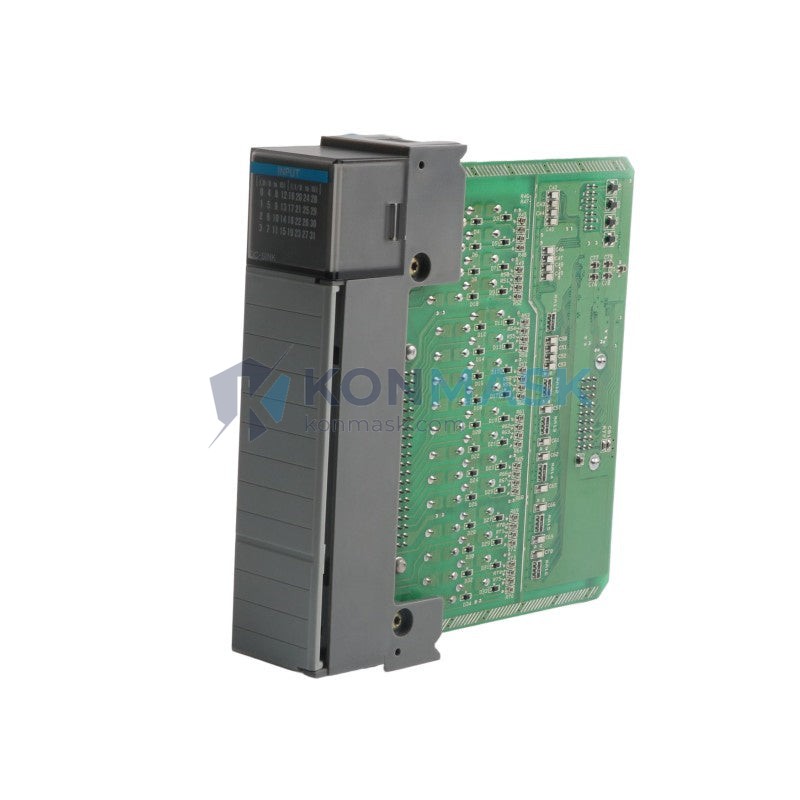
Allen-Bradley 1747-DCM Direct Communication Module | SLC 500 Platform
Engineering Background: The Allen-Bradley SLC 500 series represents one of the most widely deployed small-to-mid-range PLC platforms in industrial automation history, with an installed base spanning petrochemical processing, power generation, water/wastewater treatment, and discrete manufacturing. Within the SLC 500 architecture, inter-processor and inter-device communication is a critical infrastructure layer — the 1747-DCM (Direct Communication Module) occupies this role by enabling peer-to-peer data exchange over the DH-485 network without consuming the processor’s scan cycle for communication overhead.
Product Positioning: The 1747-DCM is specifically designed for applications requiring direct, processor-independent communication between SLC 500 systems or between an SLC 500 and compatible operator interface devices. Unlike the 1747-KE (which bridges DH-485 to RS-232) or the 1747-SDN (DeviceNet scanner), the 1747-DCM operates as a dedicated communication co-processor, offloading network management from the main CPU. It is the correct selection when the application demands deterministic peer messaging, multi-drop network topologies up to 32 nodes, and isolation of communication faults from the control program. It is not intended as a gateway to Ethernet/IP or ControlNet — for those architectures, the 1756 ControlLogix platform with appropriate bridge modules is the appropriate path.
Complete Technical Specifications
Electrical
- Backplane Current Draw: 250 mA @ 5 VDC
- Power Dissipation: 1.25 W (typical)
- Communication Port: DH-485 (RS-485 physical layer), 9-pin D-shell connector
- Network Baud Rates: 1200, 2400, 4800, 9600, 19200 bps (switch-selectable)
- Maximum Network Nodes: 32
- Maximum Cable Length: 1219 m (4000 ft) at 1200 bps; 304 m (1000 ft) at 19200 bps
- Isolation: Optical isolation on DH-485 port
Mechanical
- Form Factor: Single-slot SLC 500 I/O chassis module
- Dimensions: 111 mm H × 35 mm W × 87 mm D (4.37″ × 1.38″ × 3.43″)
- Weight: Approximately 170 g (0.37 lb)
- Mounting: SLC 500 modular chassis (1746-A4, 1746-A7, 1746-A10, 1746-A13)
- Slot Compatibility: Any I/O slot (not processor slot)
Environmental
- Operating Temperature: 0 °C to +60 °C (32 °F to 140 °F)
- Storage Temperature: −40 °C to +85 °C (−40 °F to +185 °F)
- Relative Humidity: 5% to 95% non-condensing
- Vibration: 2 g @ 10–500 Hz (IEC 68-2-6)
- Shock: 30 g operational, 50 g non-operational (IEC 68-2-27)
- Pollution Degree: 2 (IEC 664)
Certifications
- UL Listed: UL 508 (Industrial Control Equipment)
- CE Marked: EMC Directive 2014/30/EU; Low Voltage Directive 2014/35/EU
- CSA Certified: C22.2 No. 142
- RoHS Compliant
Specification data sourced from Rockwell Automation Publication 1747-UM011 (SLC 500 Modular Hardware Style User Manual) and 1747-DCM product release notes. Verify against current Rockwell Automation documentation for safety-critical applications.
Proven Application Environments
- Petrochemical Refining: Distillation column control systems | SLC 5/04 multi-rack configurations | Continuous 24/7 operation with DH-485 peer messaging between process and safety interlock PLCs
- Power Generation: Coal/gas-fired boiler auxiliary systems | Burner management and feedwater control | Multi-node DH-485 networks linking turbine auxiliaries to DCS interface panels
- Water & Wastewater Treatment: Lift station and pump station automation | Remote I/O expansion with local HMI | Low-baud-rate DH-485 over long cable runs in outdoor enclosures
- Pharmaceutical Manufacturing: Batch reactor control | FDA 21 CFR Part 11 compliant SCADA integration | Deterministic peer messaging for recipe management between SLC units
- Automotive Assembly: Conveyor and transfer line control | Multi-PLC coordination on DH-485 | High-cycle environments requiring communication fault isolation from machine control
- Pulp & Paper: Winder and rewinder drive coordination | SLC 500 networks with PanelView operator terminals | Sustained operation in high-humidity, vibration-intensive mill environments
Engineering Advantages
- For multi-PLC peer messaging applications, this communication module offloads network management from the SLC processor, because the 1747-DCM operates as an independent communication co-processor — preserving CPU scan time for control logic execution.
- For long-distance field installations, this module supports cable runs up to 1219 m on DH-485, because the RS-485 physical layer with optical isolation provides inherent noise immunity in electrically harsh industrial environments.
- For legacy system maintenance, this module enables direct drop-in replacement in existing SLC 500 chassis, because it occupies a standard single I/O slot with no firmware changes required to the host processor.
- For operator interface integration, this module supports simultaneous connection of PanelView terminals and programming devices on the same DH-485 segment, because the token-passing protocol manages bus arbitration without processor intervention.
- For safety-sensitive applications, this module provides optical isolation on the DH-485 port, because ground loop currents and transient voltages from adjacent equipment are decoupled from the backplane logic circuitry.
- For cost-sensitive MRO procurement, this module is interchangeable across all SLC 500 modular chassis variants, because the backplane interface and slot addressing are standardized across the 1746-Axxx chassis family.
System Architecture & Signal Flow
The 1747-DCM resides in any I/O slot of an SLC 500 modular chassis. The host SLC processor communicates with the module via the backplane using the M0/M1 file interface (integer file-based messaging). The module independently manages the DH-485 token ring, initiating and receiving MSG instructions as directed by the processor program. Signal flow: SLC Processor → Backplane M0/M1 Files → 1747-DCM → DH-485 Network → Remote Node (SLC, PanelView, or compatible device).
Compatible Modules & Devices:
- 1747-L20, 1747-L30, 1747-L40, 1747-L511, 1747-L514, 1747-L524, 1747-L531, 1747-L532, 1747-L541, 1747-L542, 1747-L543, 1747-L551, 1747-L552, 1747-L553 (all SLC 5/01 through 5/05 processors)
- 2711-series PanelView terminals with DH-485 port
- 1747-PIC (Personal Interface Converter) for programming via DH-485
Substitution Conditions: The 1747-DCM is not directly substitutable with the 1747-KE (RS-232 bridge) or 1747-SDN (DeviceNet scanner) — these serve different network architectures. For applications migrating to Ethernet/IP, the 1761-NET-ENI or 1747-AENTR adapter provides a migration path while retaining the SLC 500 chassis investment.
Sourcing & Quality Verification
Units supplied through Konmask.com are sourced from decommissioned OEM production lines, authorized distributor surplus, and verified MRO channels. Each unit undergoes the following inspection protocol before dispatch:
- Visual Inspection: PCB, connector pins, faceplate label, and backplane edge connector examined for physical damage, corrosion, or counterfeit indicators (label font, Rockwell hologram, catalog number format).
- Functional Power-On Test: Module installed in SLC 500 test chassis; LED status verified (PWR, COMM, NET indicators); backplane communication handshake confirmed with SLC 5/04 processor.
- DH-485 Network Test: Module placed on a 3-node DH-485 test network; MSG instruction round-trip verified at 9600 and 19200 bps; no CRC errors over 500 consecutive transactions.
- Firmware Revision Check: Series letter and firmware revision recorded and disclosed in shipment documentation.
Documentation available upon request: Test report, series/revision disclosure, photos of physical unit, Rockwell Automation original datasheet (1747-DCM), and certificate of conformance.
Procurement Process
- Inquiry Submission: Submit your required quantity, target delivery date, and any series/revision preferences via the product page or directly to support@konmask.com. Include your application context if compatibility verification is needed.
- Quotation & Stock Confirmation: A response with confirmed stock status, unit price (quantity breaks available for orders ≥5 units), lead time, and shipping options will be provided within 24 hours on business days.
- Order Fulfillment: Payment confirmed → unit re-inspected and photographed → shipped with tracking. Express courier (DHL/FedEx) available for urgent MRO requirements. Export documentation (commercial invoice, packing list, COO) included for international shipments.
Technical support: Pre-sale compatibility verification, post-sale installation guidance, and cross-reference assistance are available via email and phone. Support is provided by engineers with hands-on SLC 500 system experience — not a call center script.
Technical FAQ
- Q: Can the 1747-DCM replace a 1747-KE in an existing installation?
- A: No — these are functionally distinct modules. The 1747-KE bridges DH-485 to an RS-232 serial port (typically for connection to a PC or HMI with RS-232). The 1747-DCM is a peer communication module that participates directly in the DH-485 token ring as a network node. Replacing one with the other requires a wiring change, a different cable type, and modification of the MSG instruction configuration in the SLC program.
- Q: Is the 1747-DCM compatible with SLC 5/01 fixed-hardware processors (1747-L511)?
- A: The 1747-DCM requires a modular SLC 500 chassis (1746-Axxx series). The SLC 5/01 fixed-hardware units (1747-L20B, etc.) do not have an expansion chassis — the 1747-DCM cannot be used with fixed-hardware SLC processors. It is compatible with all SLC 5/01 through 5/05 processors installed in modular chassis.
- Q: Does the 1747-DCM carry any safety or hazardous location certifications for use in Zone 2 / Class I Div 2 environments?
- A: The standard 1747-DCM carries UL 508, CSA, and CE certifications for general industrial use. It is not independently certified for Class I Division 2 or ATEX Zone 2 hazardous locations. For hazardous area installations, the module must be installed in a purged/pressurized enclosure (NFPA 496 Type X or Z) or an intrinsically safe barrier system must be applied to the DH-485 field wiring. Consult the Rockwell Automation hazardous location installation guidelines (Publication 1770-4.1) and your local authority having jurisdiction (AHJ) before installation.
© 2026 Konmask.com. All rights reserved.
Original Source: https://Konmask.com
Contact: support@konmask.com | +0086 19859288691